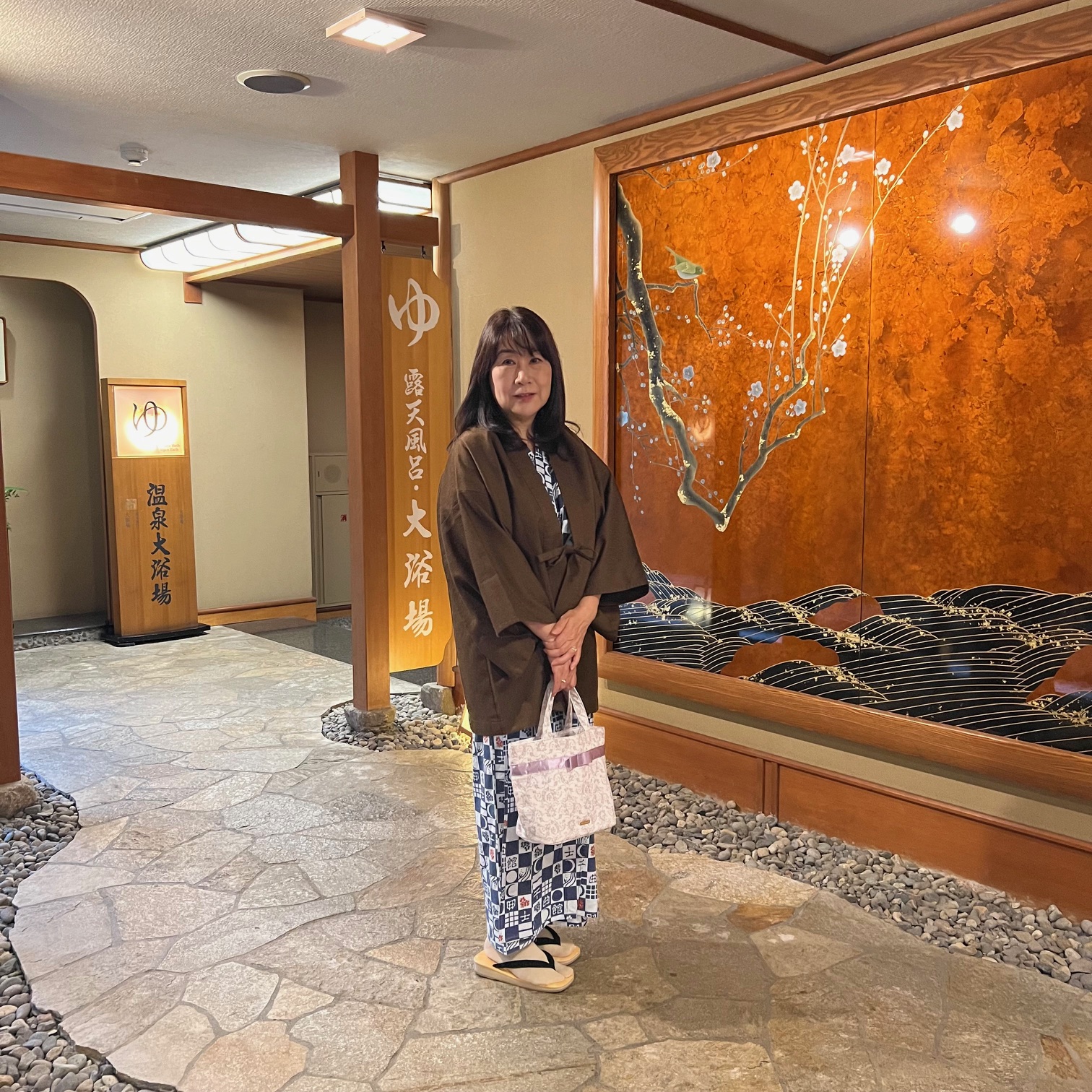
[Sponsored Article]
This is the second part of our stay at Club Wyndham Chikumakan in Kamiyamada Onsen, Nagano.
In our first article, we introduced the guest rooms and shared which room types may be more comfortable for travelers who prefer Western-style beds and easier movement.
Read our Club Wyndham Chikumakan room review
This time, we are focusing on the hot spring baths and dining experience.
Kamiyamada Onsen is well known among hot spring enthusiasts, so we were especially excited to experience the baths.
Four Hot Spring Bathing Areas at Club Wyndham Chikumakan
Club Wyndham Chikumakan has several indoor and open-air hot spring baths arranged across four bathing areas.
The men's and women's bathing areas are divided, so during a one-night stay, the baths available to each guest may depend on the bathing schedule.
Here are the bathing areas we experienced and viewed during our stay.
Zozan-no-Yu and Choryu-no-Yu: Indoor and Open-Air Baths with a Waterfall View
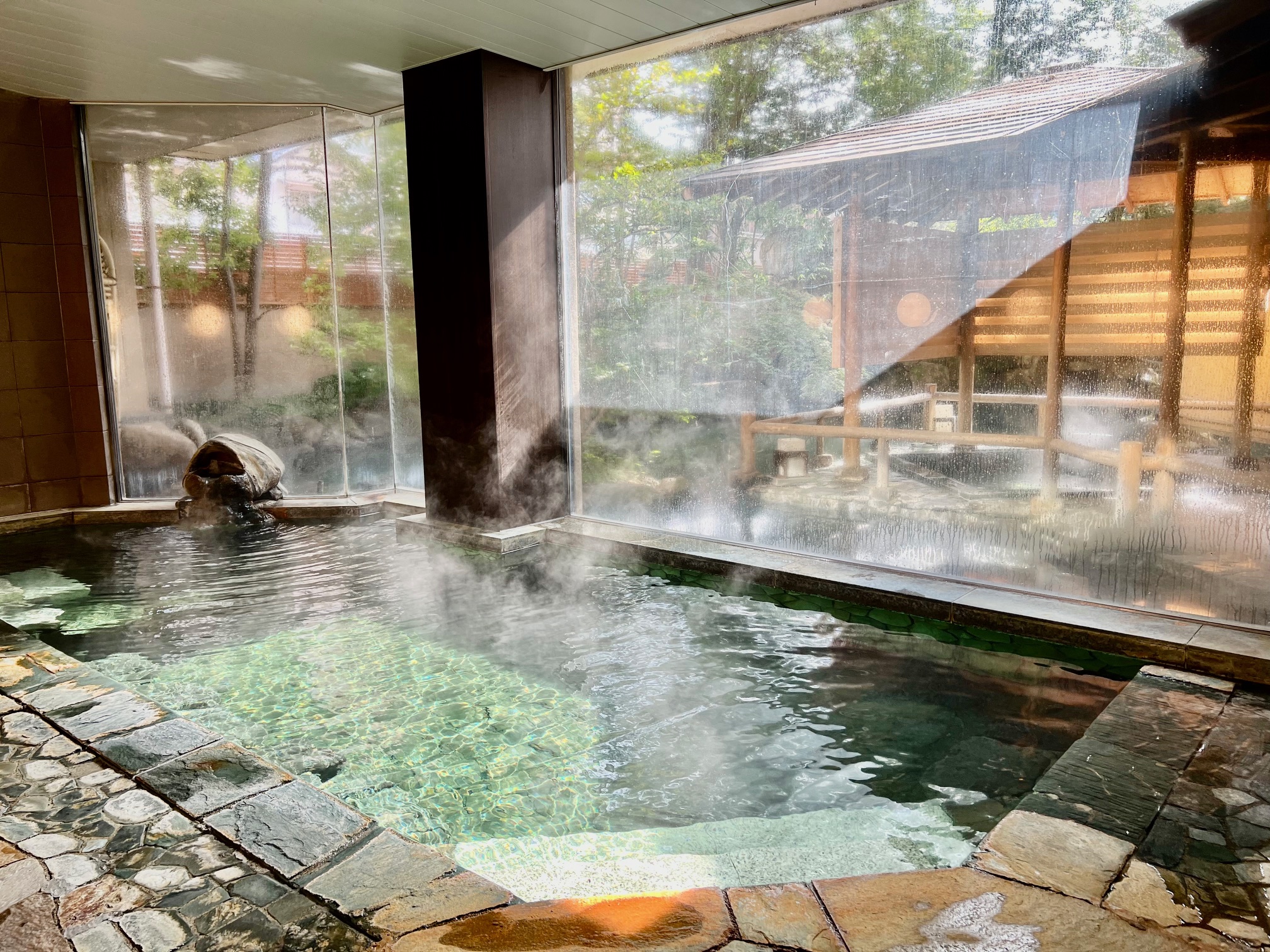
Zozan-no-Yu is an indoor bath with a view of a pond and waterfall through large windows.
The water felt around 40°C to us, making it pleasantly warm without feeling excessively hot.
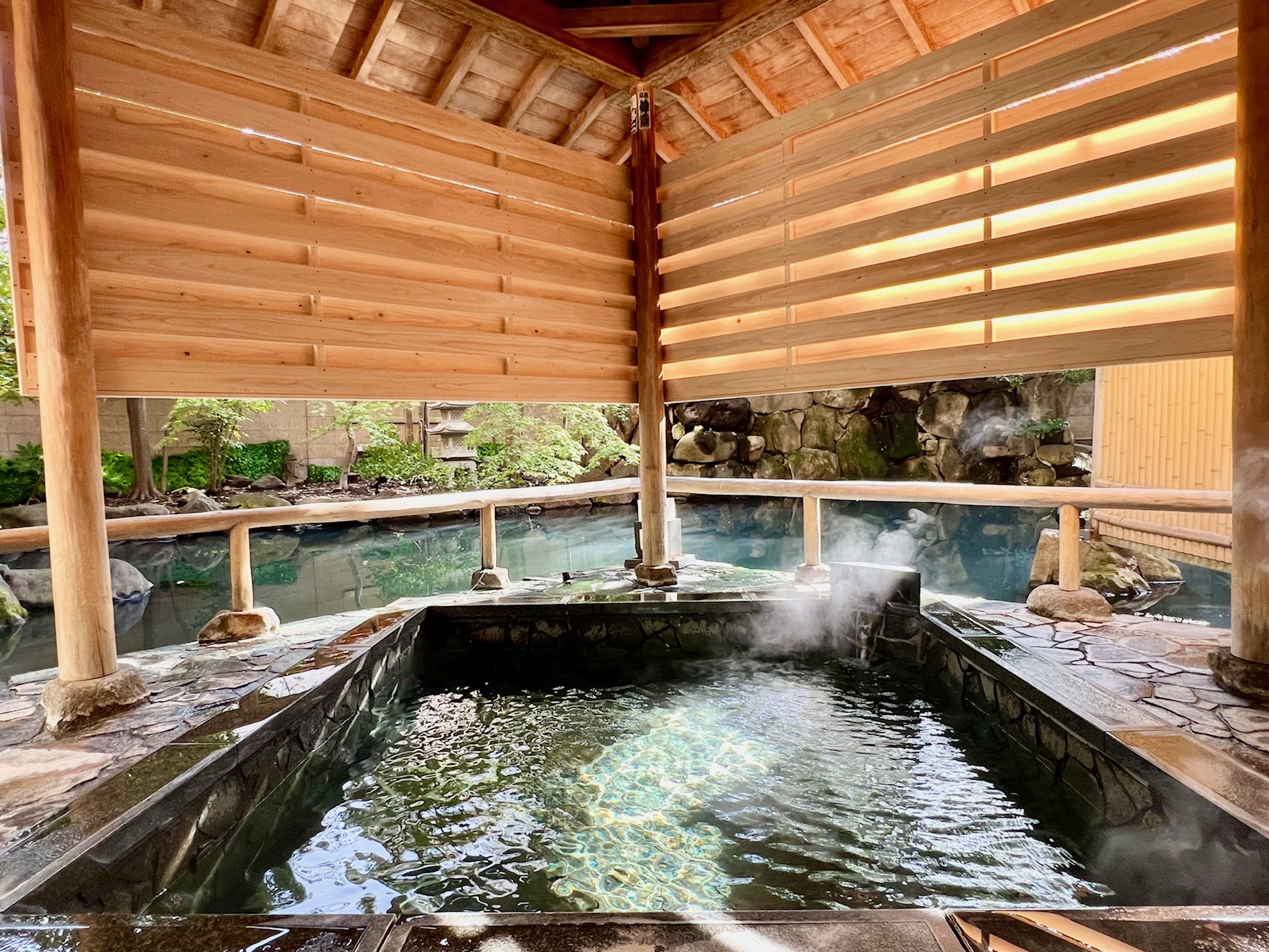
This is the open-air Choryu-no-Yu bath.
The surrounding scenery was beautiful.
There were even koi swimming in the outdoor pond.
When we visited in the morning, we could soak in the open-air bath while enjoying the fresh air and watching the koi.
It was a wonderfully peaceful way to start the day.
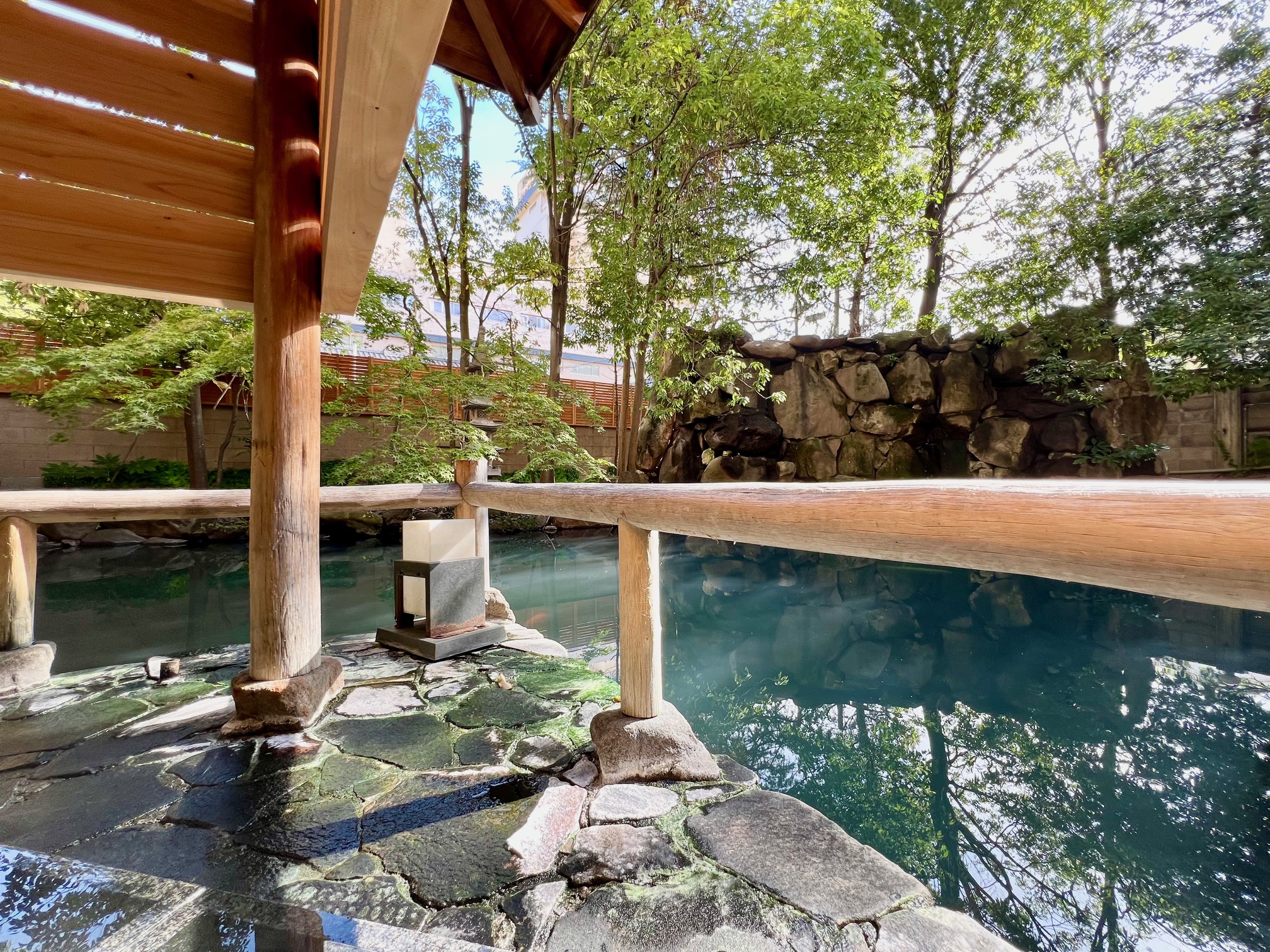
The combination of hot spring water, the sound of the waterfall and the garden scenery made this one of the most relaxing parts of our stay.
Sumako-no-Yu and Teiju-no-Yu: Two Different Water Temperatures
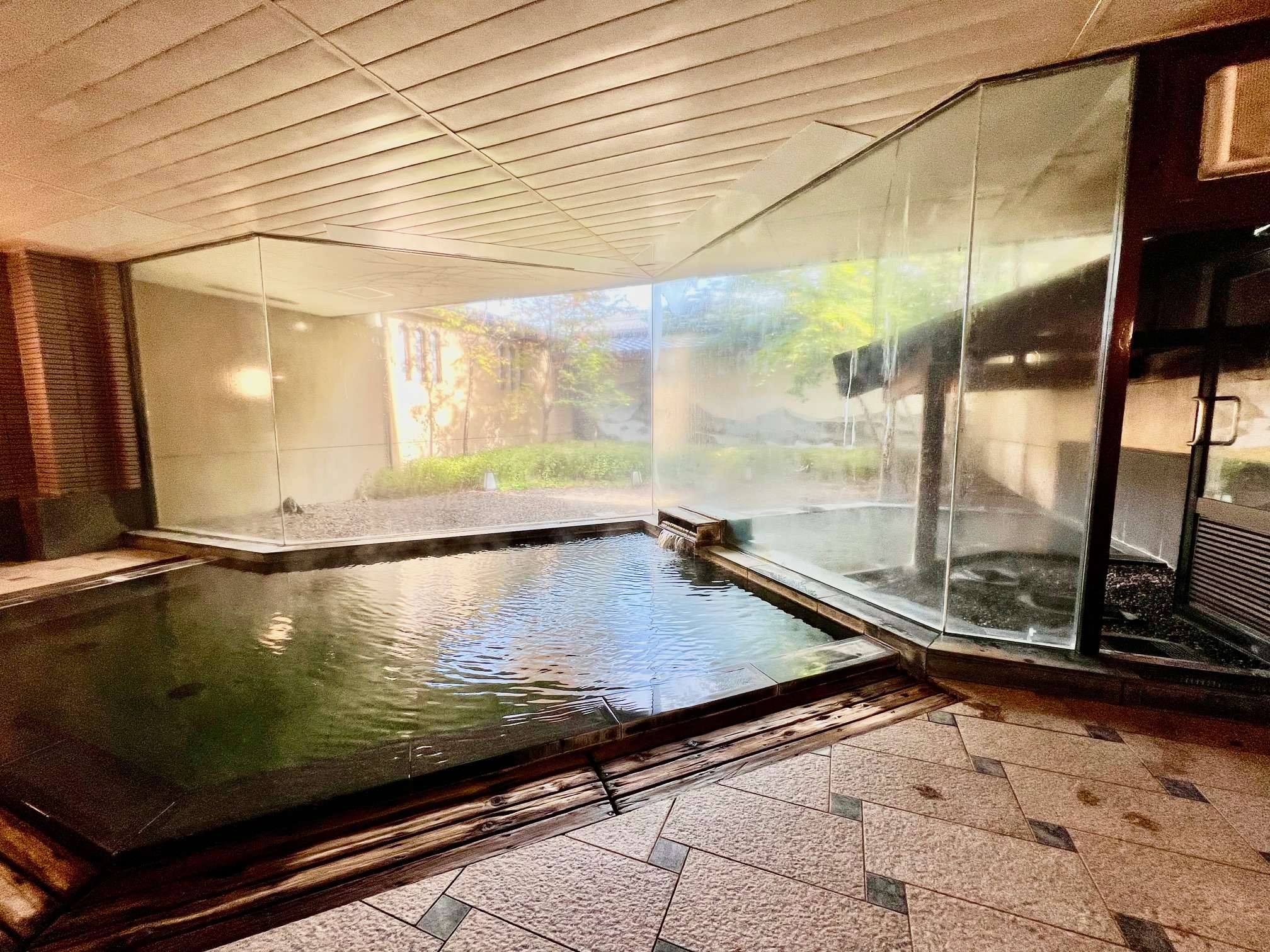
Next is Sumako-no-Yu.
The water temperature felt just right for us, and this became one of our favorite baths.
There were quite a few guests staying at the ryokan, but perhaps because everyone had different dinner times, the bath was almost empty when we used it.
That made the experience feel especially peaceful.
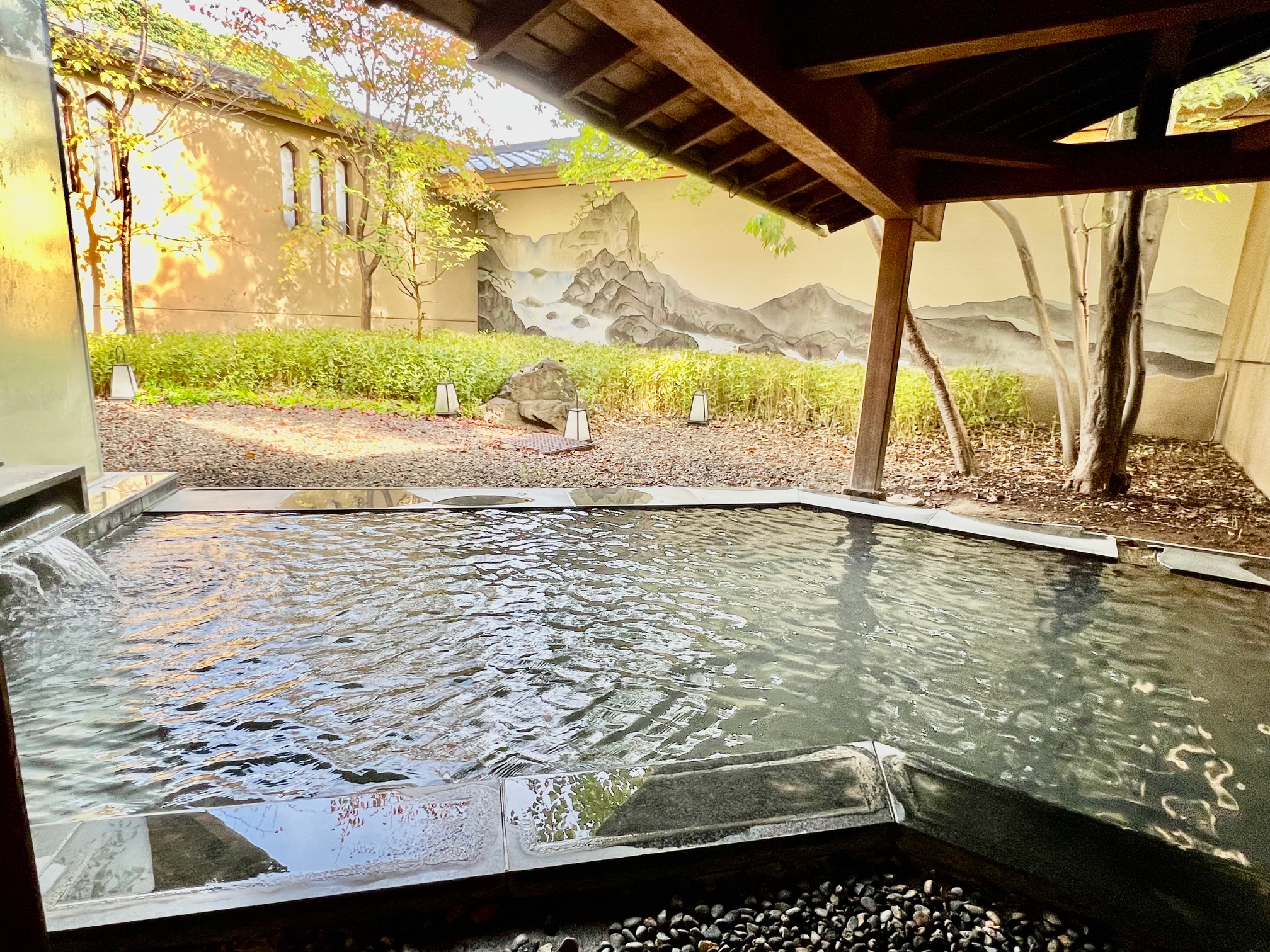
The open-air bath paired with Sumako-no-Yu is Teiju-no-Yu.
This bath felt cooler, making it easier to soak for a little longer.
Until this trip, we had assumed hot spring baths were usually kept at similar temperatures, so it was interesting to experience the differences between the baths.
Hisen-no-Yu: A Calm Japanese-Style Indoor Bath
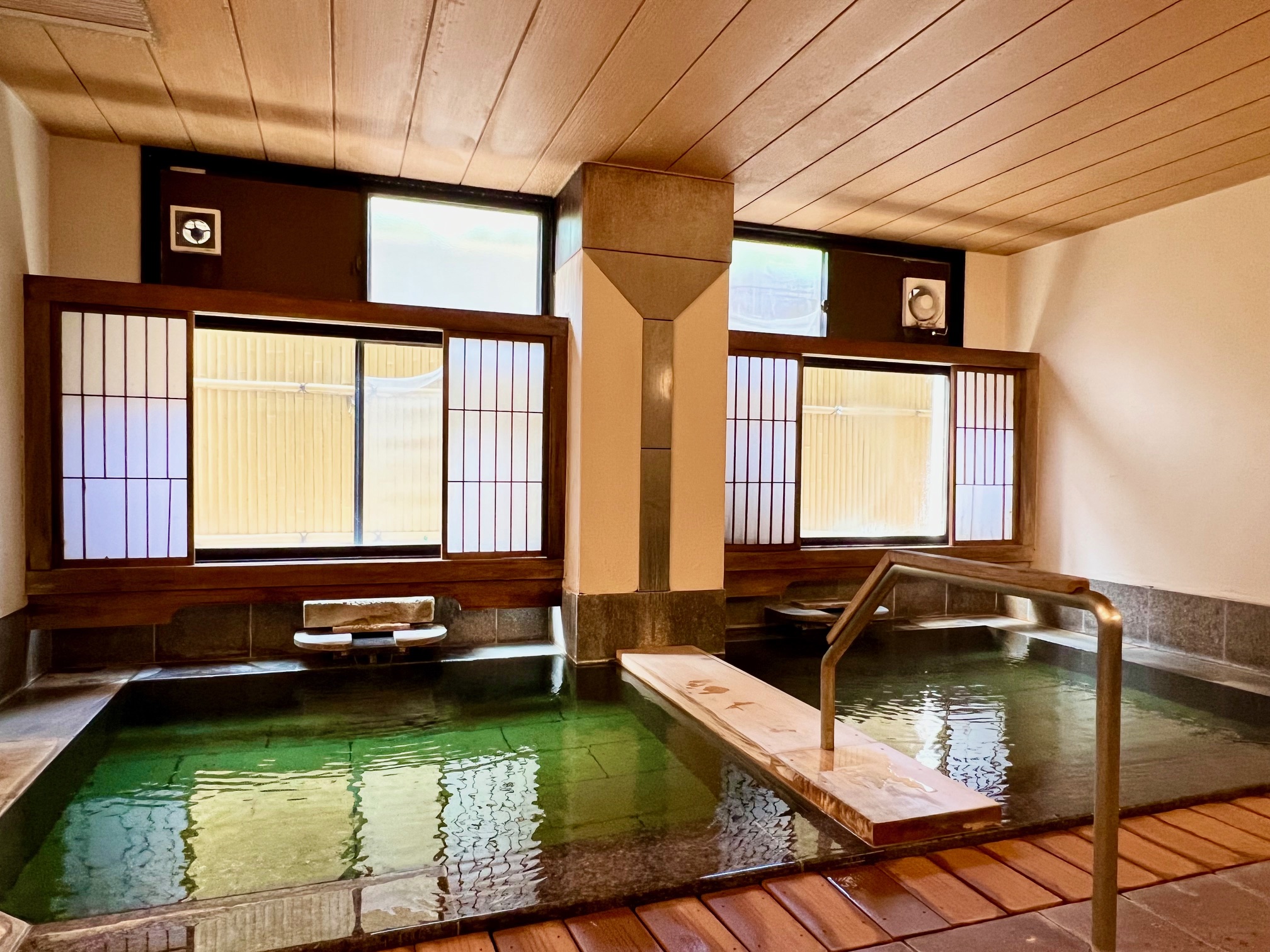
Hisen-no-Yu has a calm Japanese atmosphere, enhanced by the shoji-style window design.
This bath was on the men's side during our stay, so one of the men in our group used it.
He told us that the bath on the right felt cooler, while the one on the left was comfortably warm.
Taisho Roman-no-Yu: Stained Glass and Two Hot Spring Sources
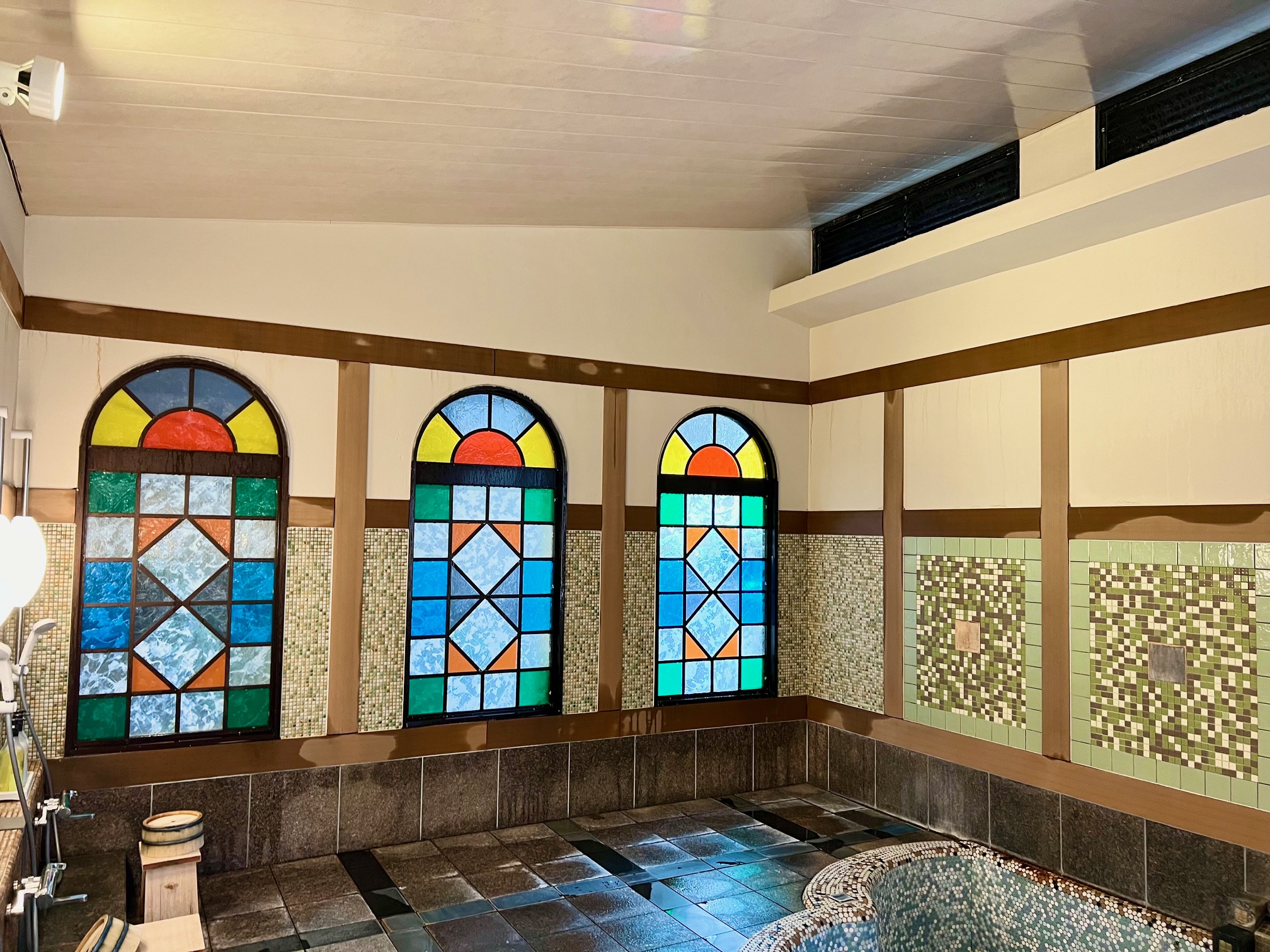
This is Taisho Roman-no-Yu.
Its nostalgic stained glass and small round tiles give the bath a distinctive retro atmosphere.
We were told that the bathing area was designed to recreate the appearance of the original bath from around the time the ryokan was founded.
It was unlike most hot spring baths we had seen before.
The bathing area has two tubs.
During our stay, we were told that one used water from the Chikuma hot spring source, while the other used water from the Kamiyamada source.
Being able to experience two different hot spring sources in one bathing area felt quite special.
The water was relatively mild in temperature, so we spent some time relaxing while looking at the stained glass.
After the Onsen: Complimentary Ice Pops and Bottled Coffee Milk
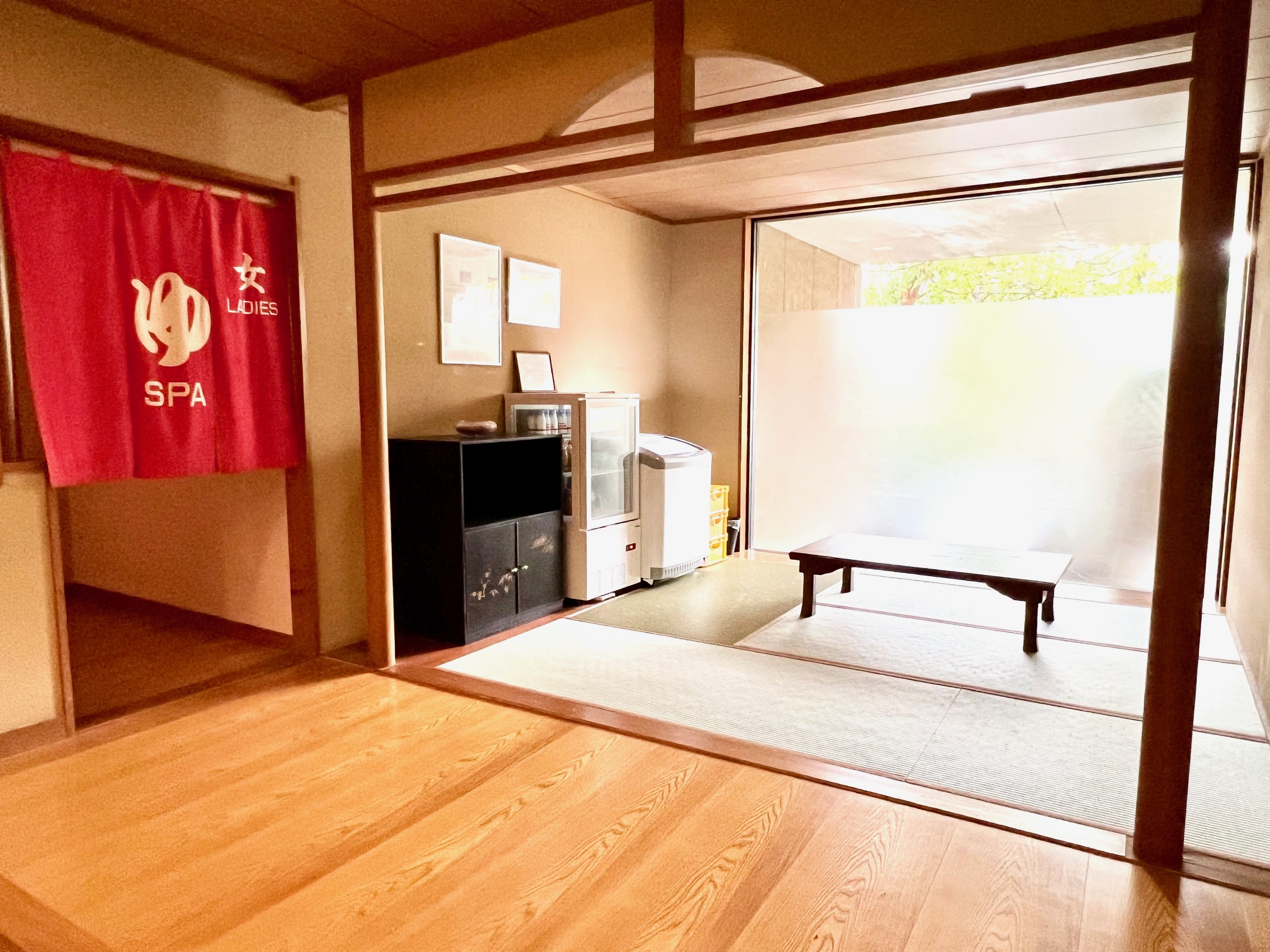
After the bath, guests could relax in a small rest area.
During our stay, ice pops, coffee milk and regular milk were available free of charge.
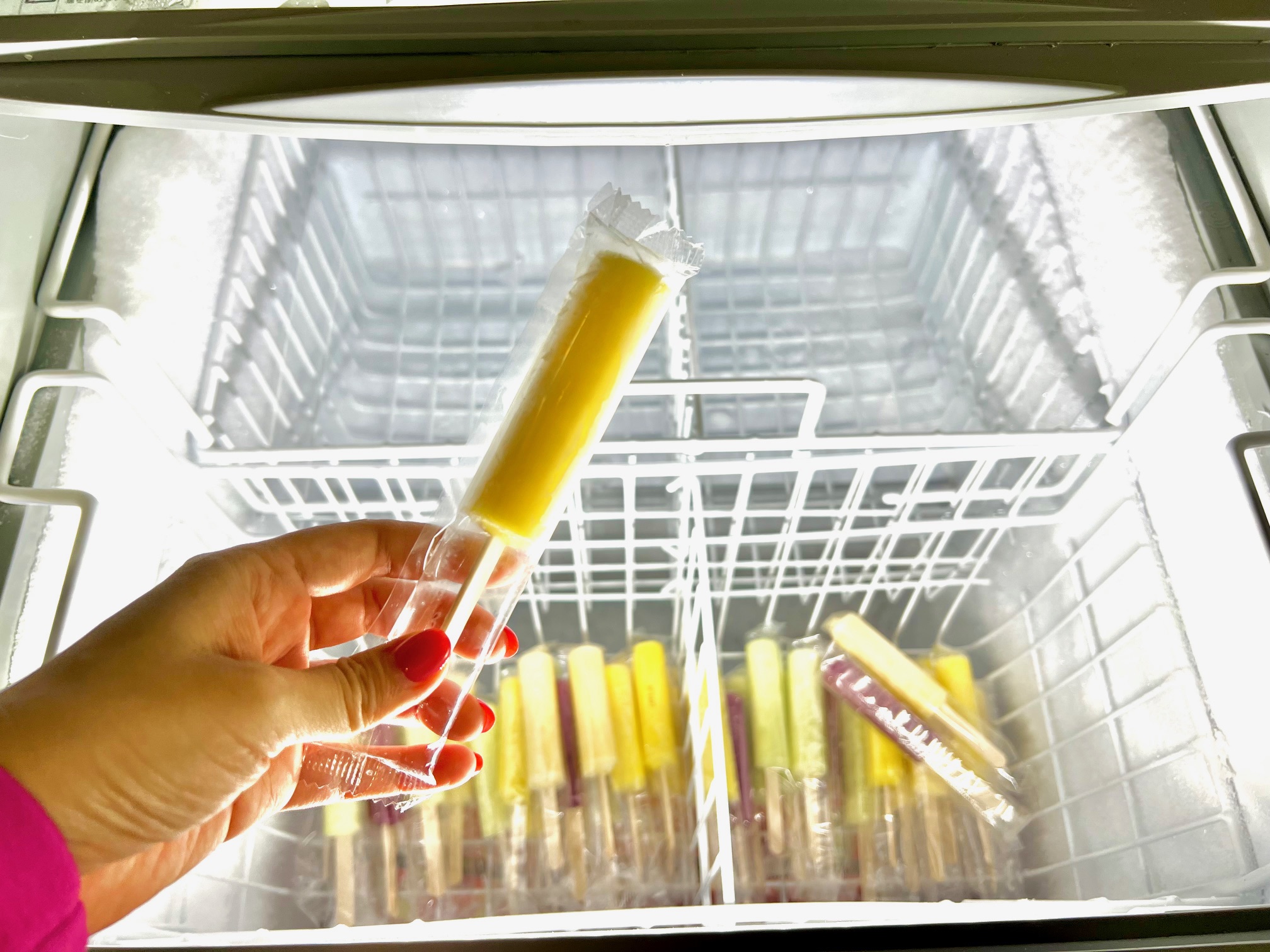
Having a cold ice pop immediately after soaking in the hot spring felt surprisingly good.
The small size was just right.
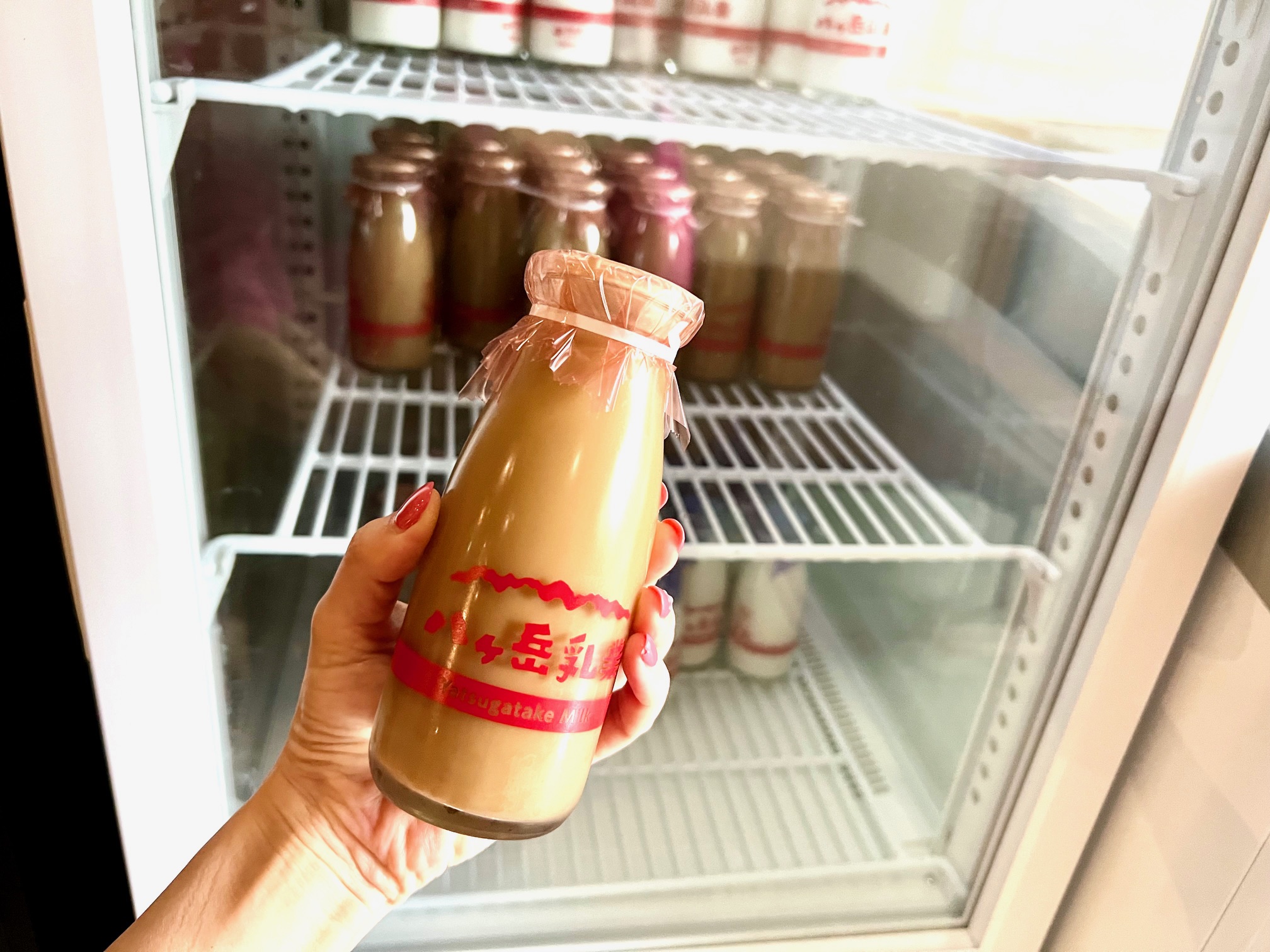
The coffee milk came in a traditional glass bottle.
Bottled coffee milk after a public bath is something of a nostalgic Japanese experience, so international visitors may find this little detail especially fun.
Mamarin took hers back to the room and enjoyed it while relaxing.
Complimentary services can change, so check the latest information during your stay.
Dinner: Kaiseki Cuisine Featuring Shinshu Ingredients
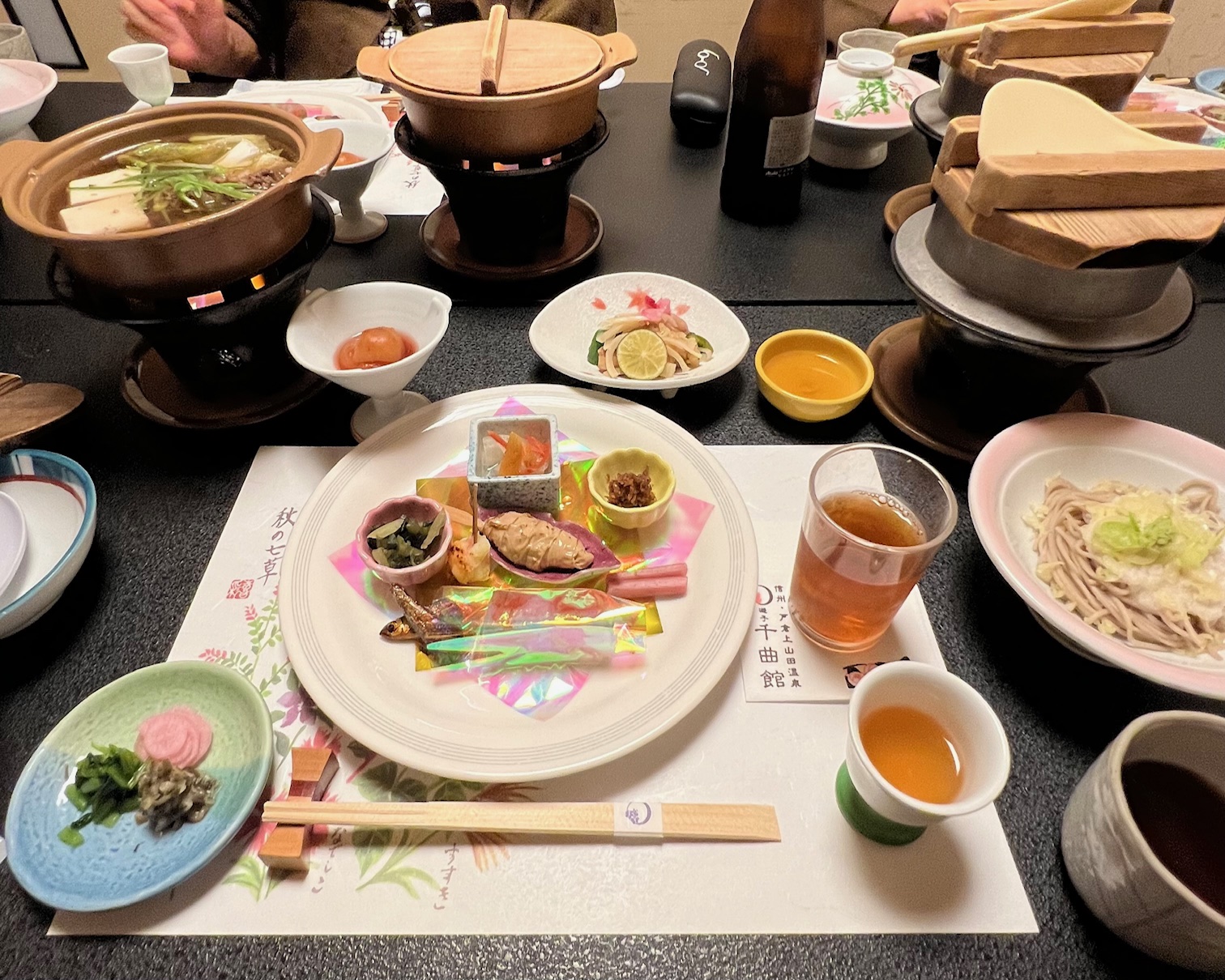
One of the pleasures of staying at a Japanese ryokan is dinner.
At Club Wyndham Chikumakan, we enjoyed kaiseki cuisine featuring seasonal ingredients and specialties from Shinshu, the traditional name for the Nagano region.
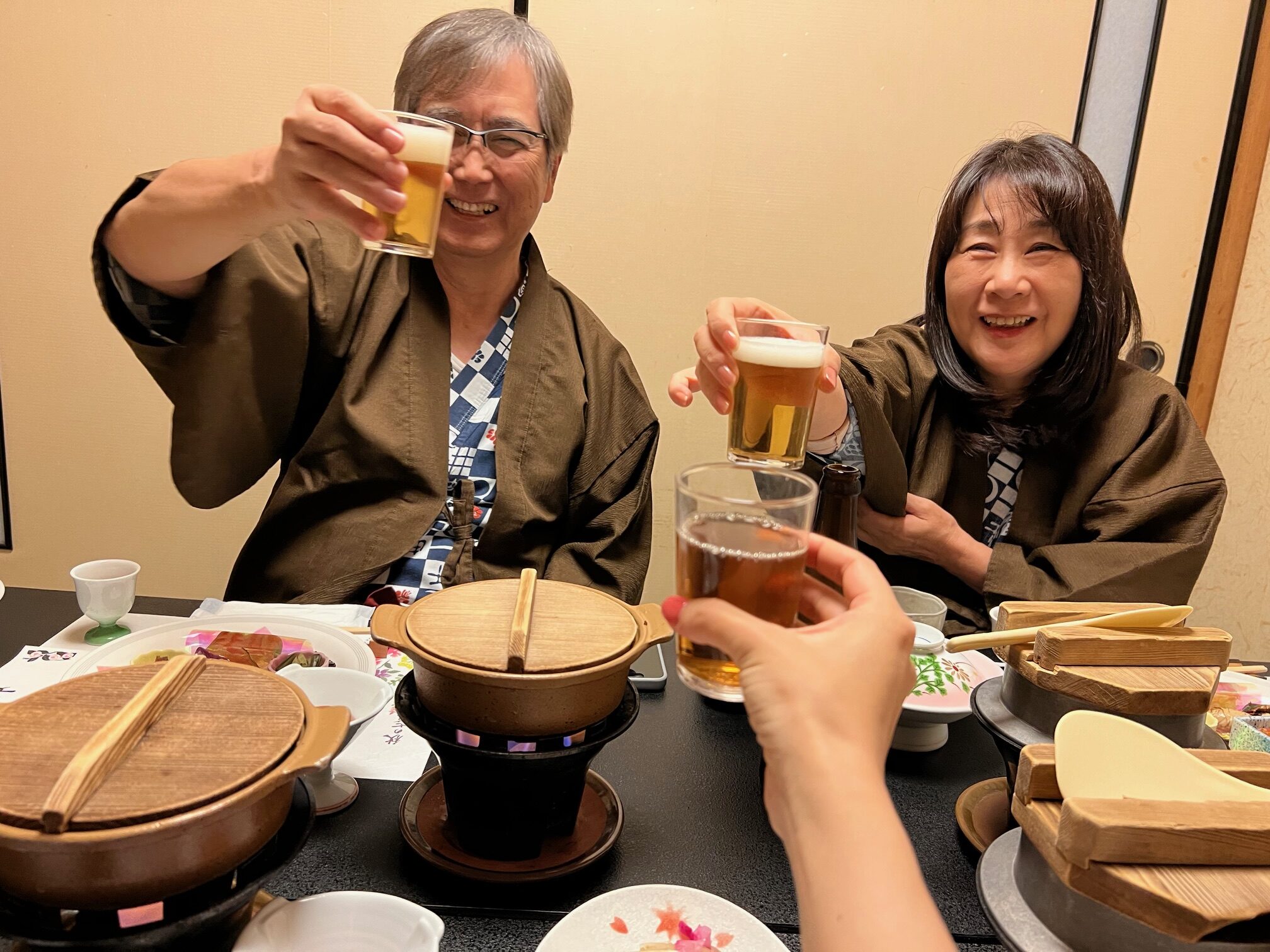
We started with a beer after our hot spring bath.
There is something especially satisfying about sitting down for dinner after relaxing in an onsen.
During our stay, dinner was served in a private dining room, allowing us to enjoy the meal quietly without sharing the space with other groups.
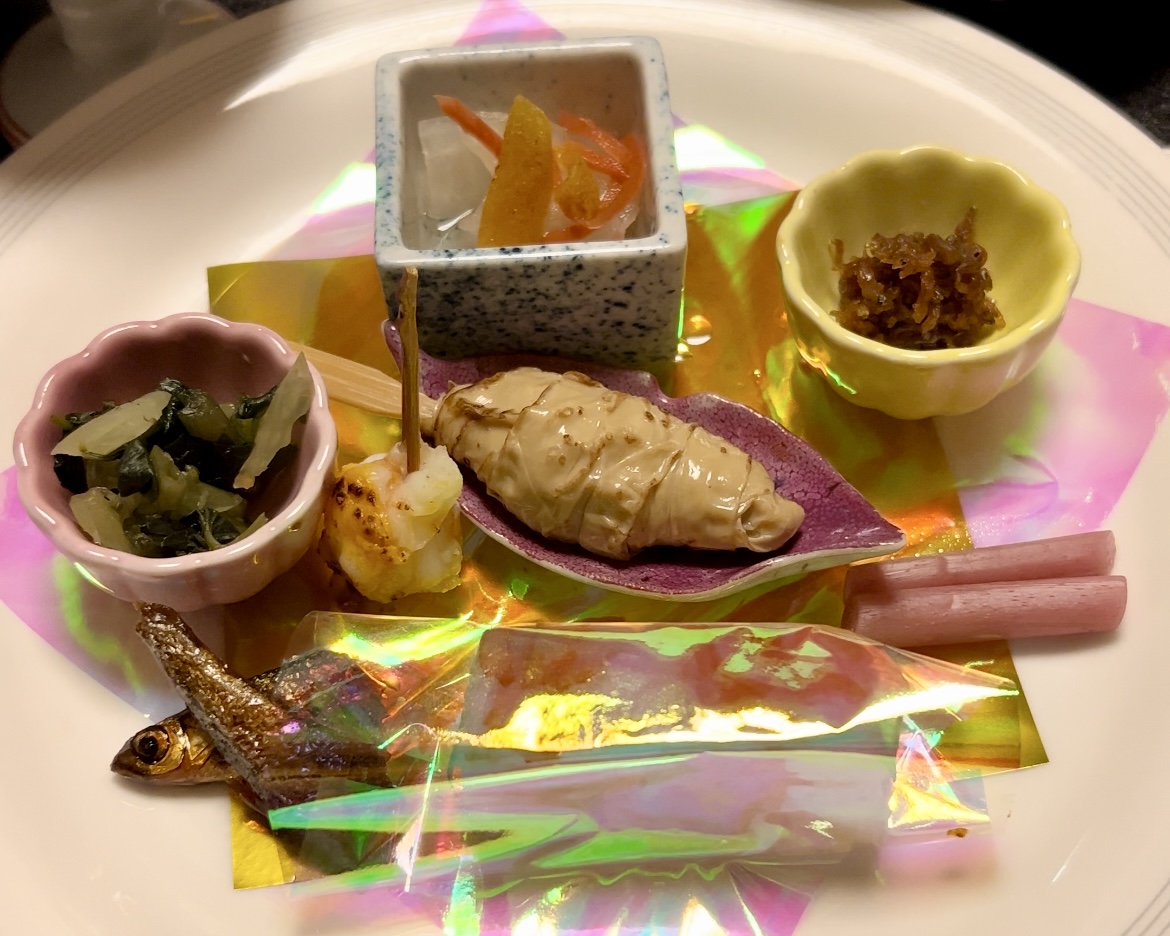
We enjoyed all of the dishes.
One of our favorites was a yuba roll.
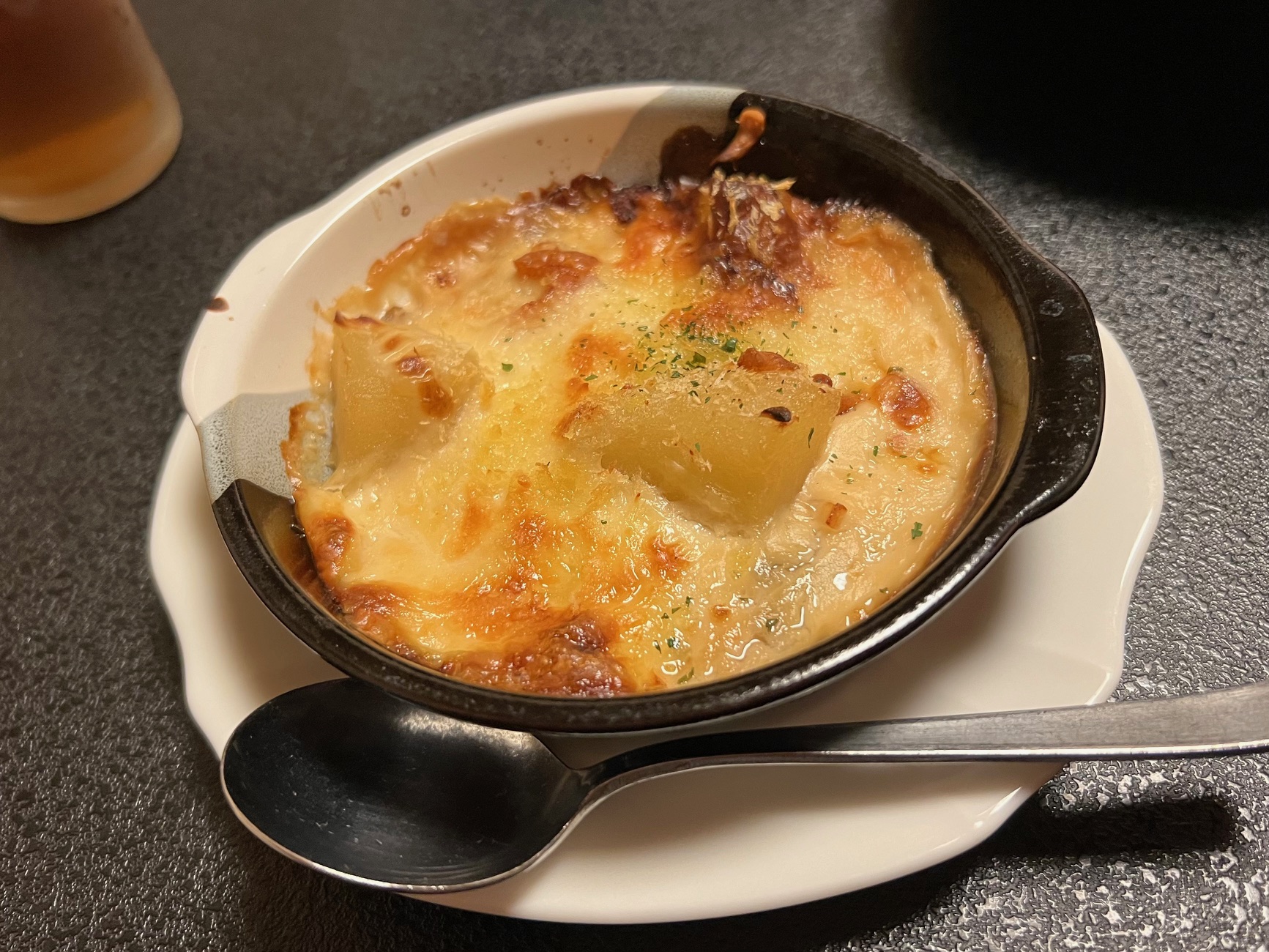
We also tried a gratin made with Shinshu apples.
Using apple in a savory dish was unusual for us, and we really enjoyed it.
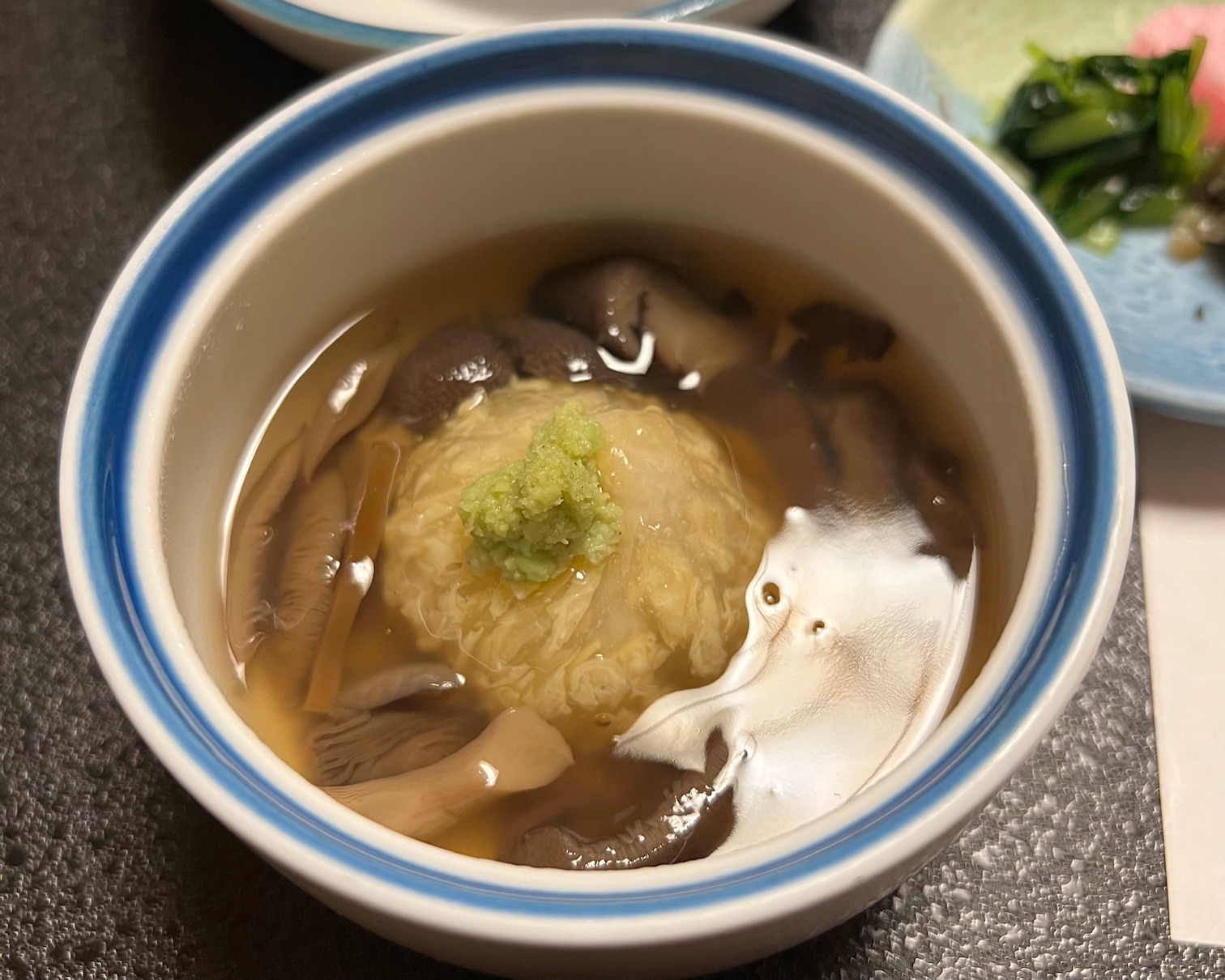
This simmered dish was topped with a thick sauce and had a very soft texture.
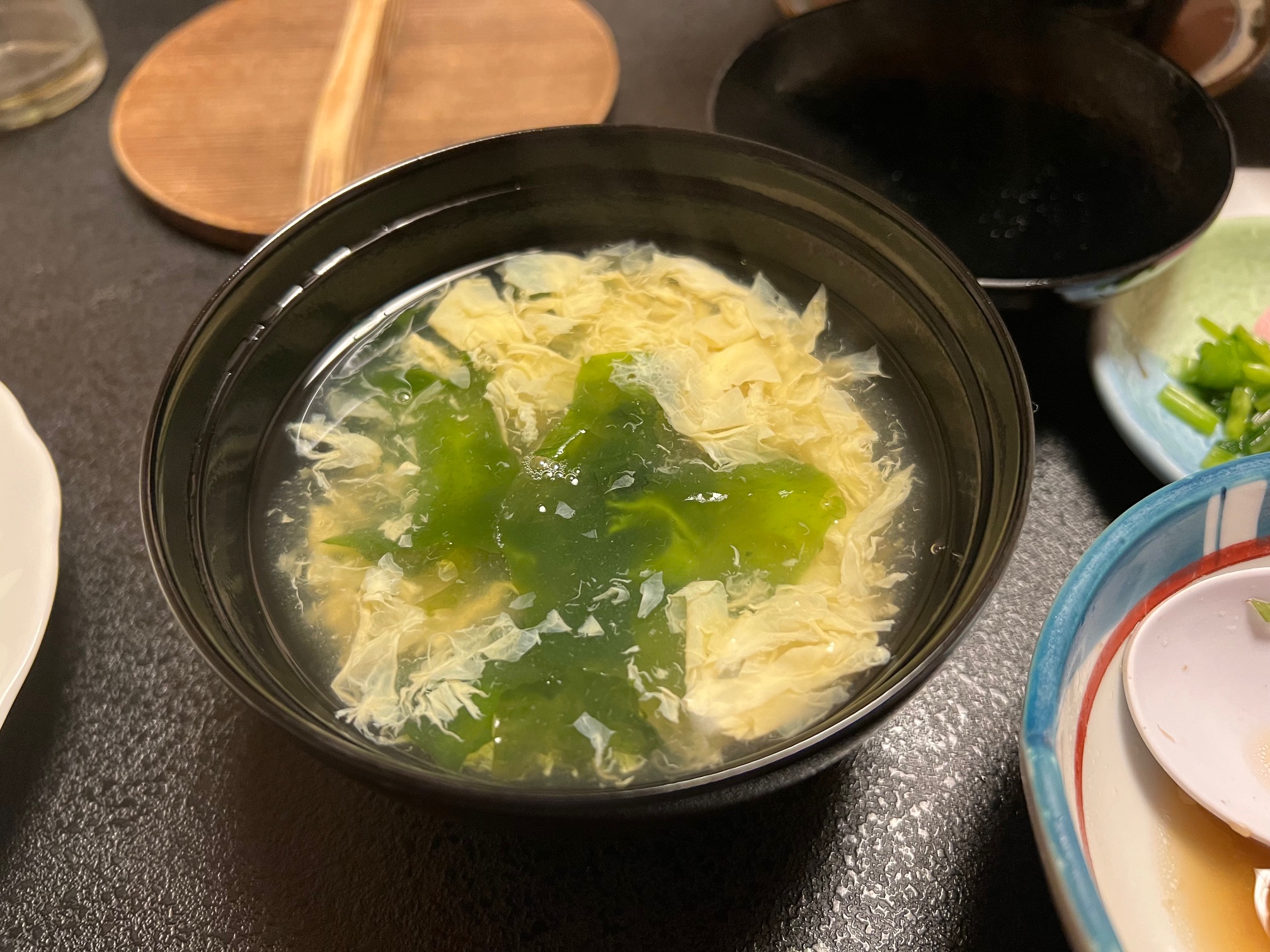
We were also served a light soup with fluffy egg.
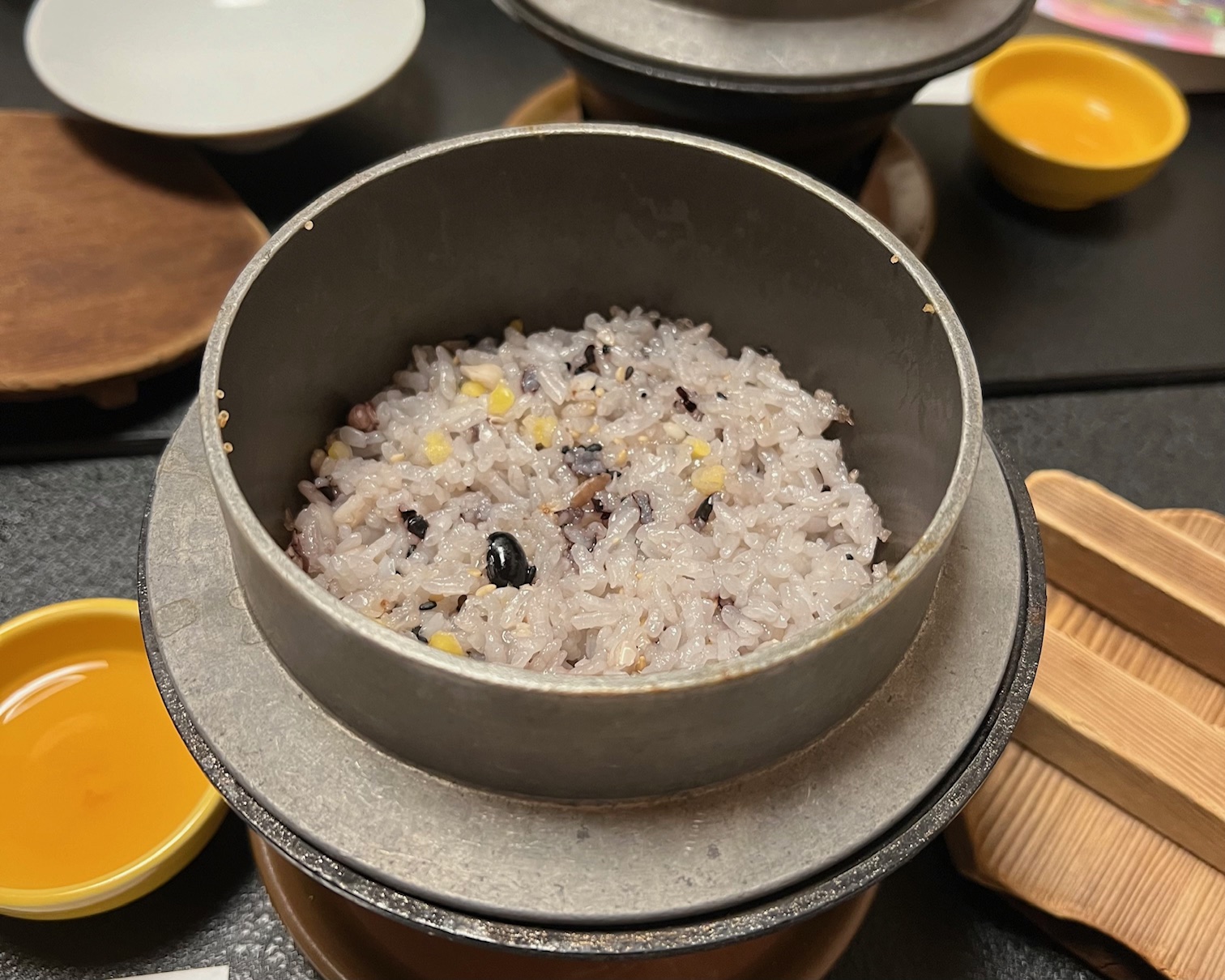
We could not finish all of the rice, so it was made into rice balls for us to enjoy later as a late-night snack.
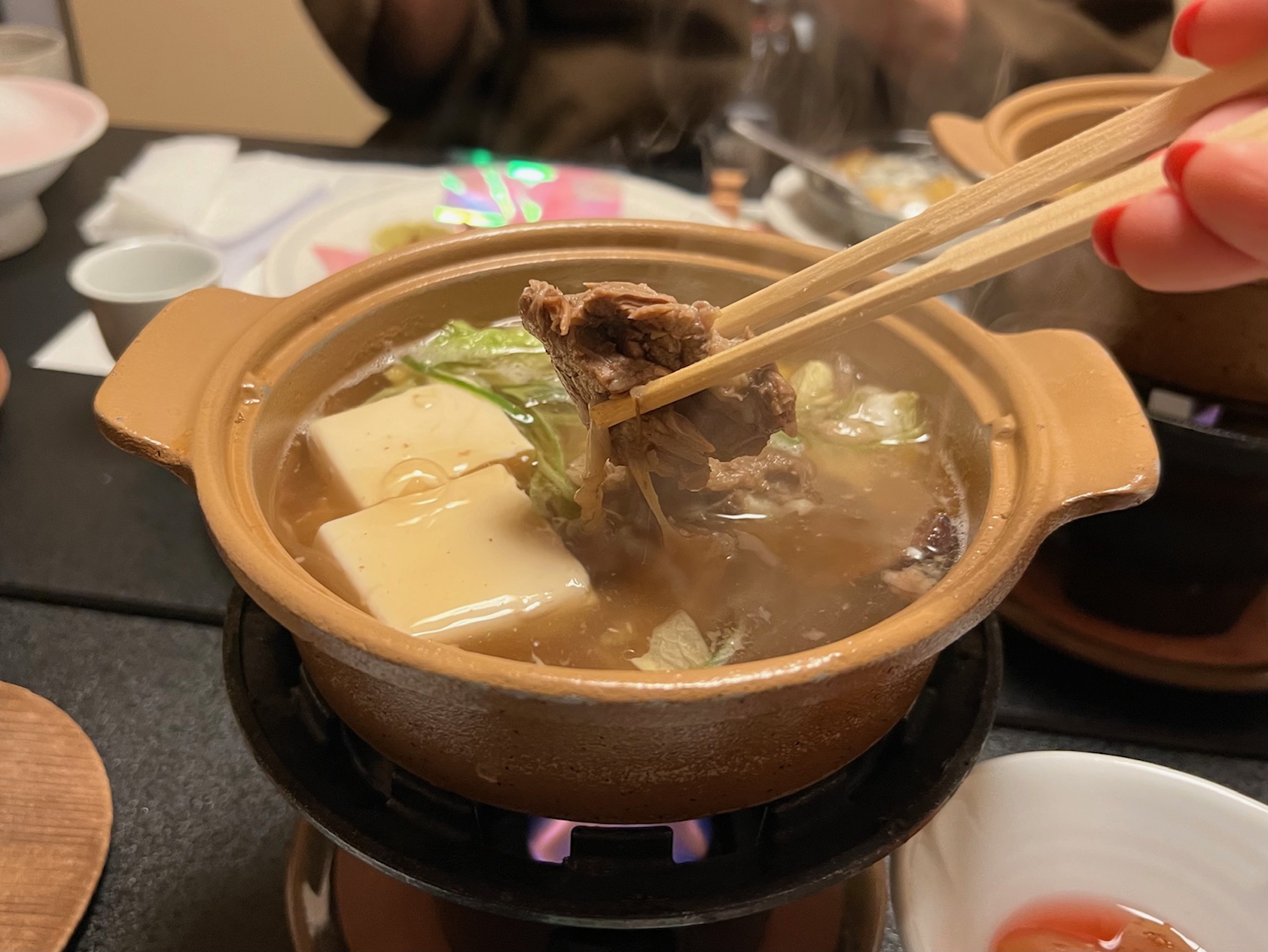
There was also a hot pot.
The beef tendon was soft and tender, and we particularly liked the smooth texture of the tofu.
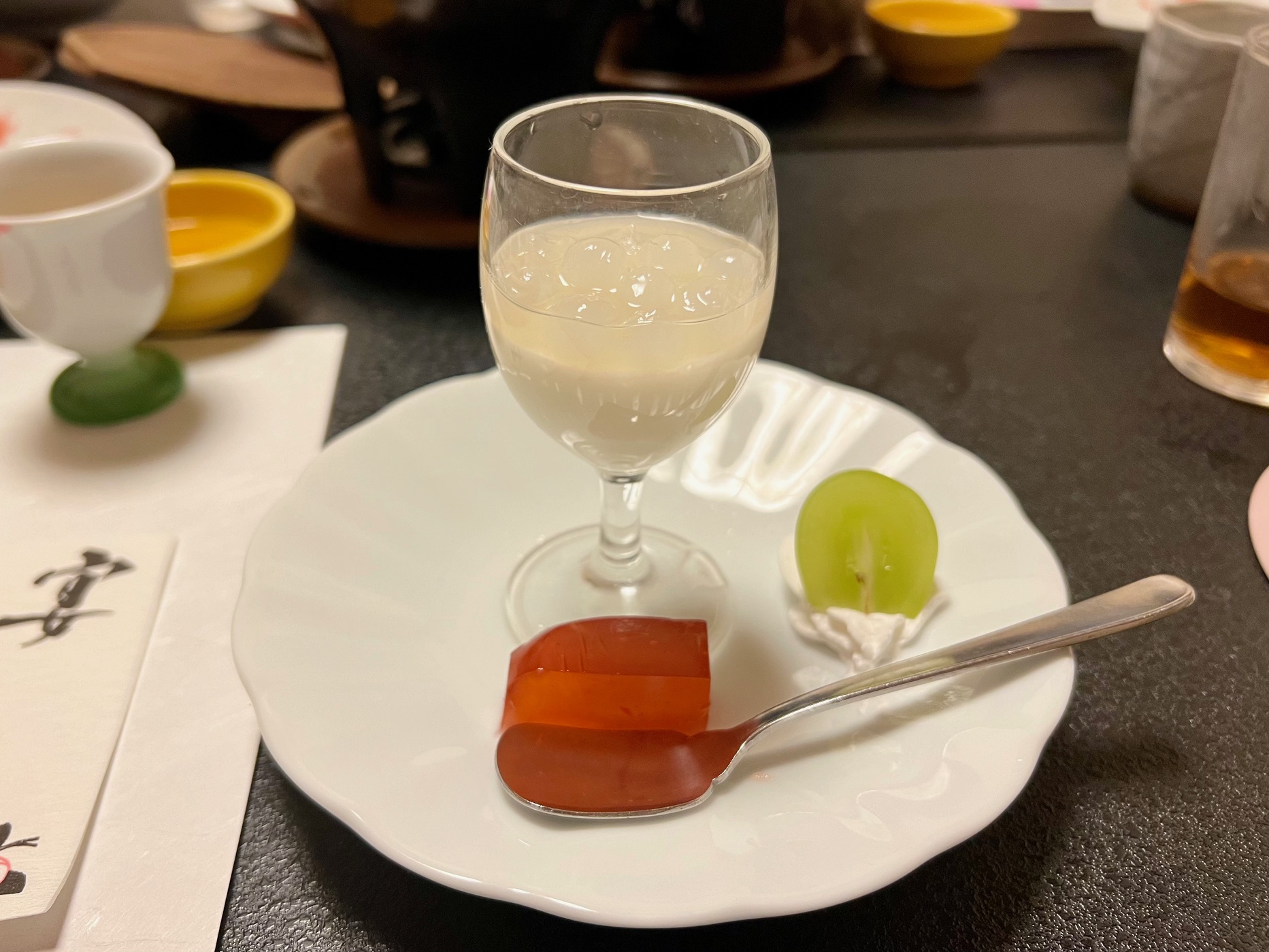
And of course, there was dessert.
Our dessert included almond tofu, jelly and Shine Muscat grapes.
There is always room for dessert!
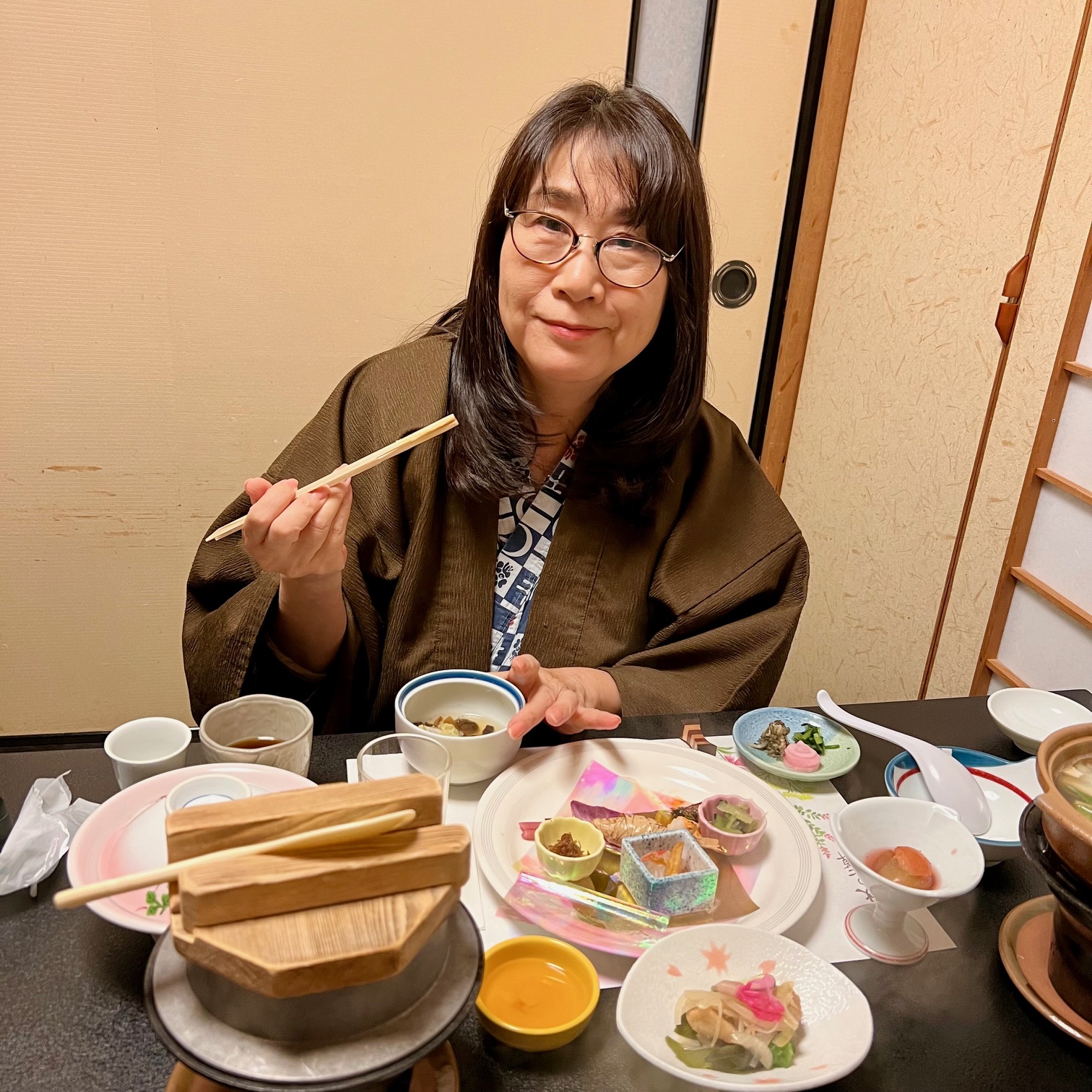
The entire meal was generous and filling.
We enjoyed being able to taste several different ingredients associated with Nagano and Shinshu.
Traditional Japanese Breakfast with Local Nagano Ingredients
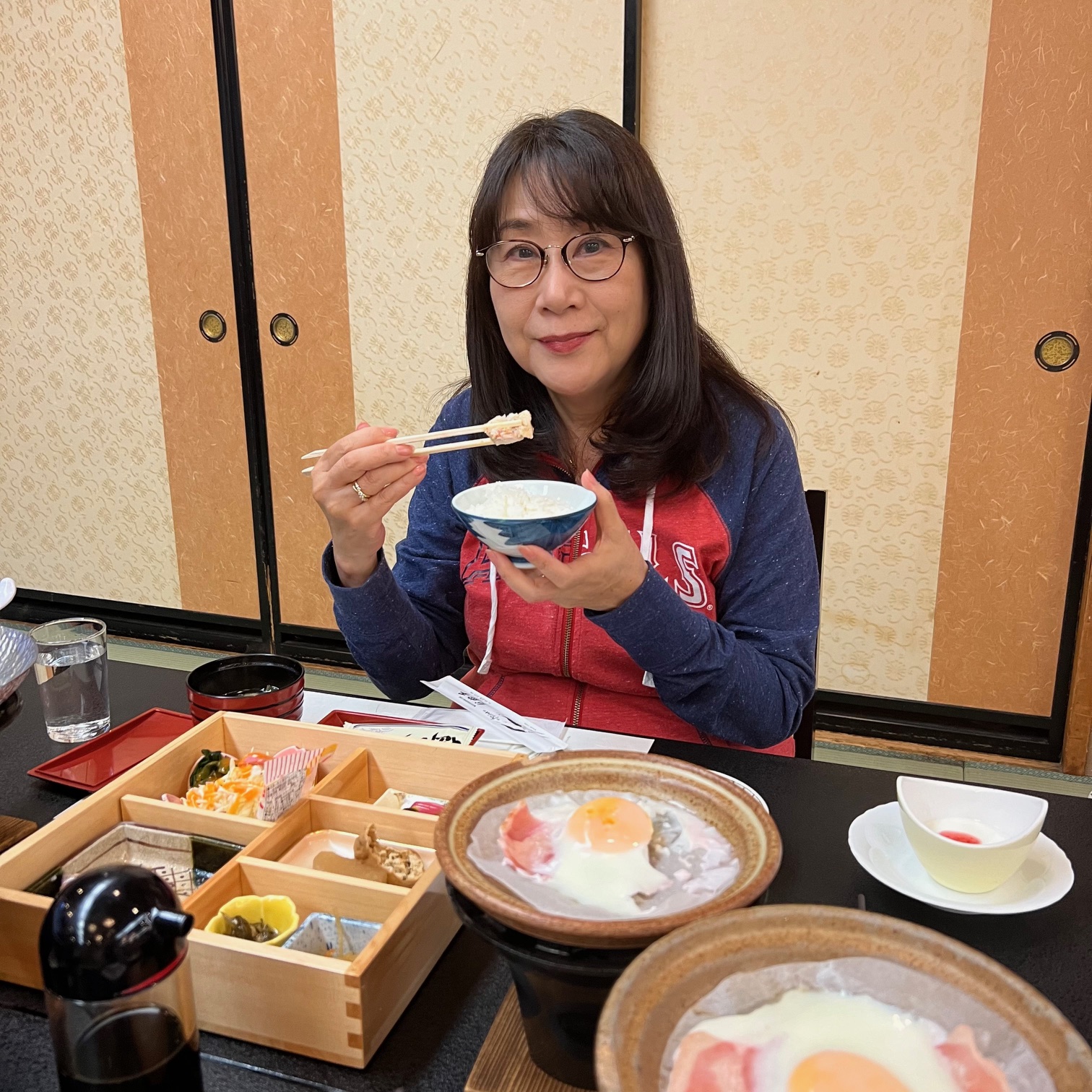
The following morning, we had a traditional Japanese-style breakfast.
Local ingredients were featured here as well.
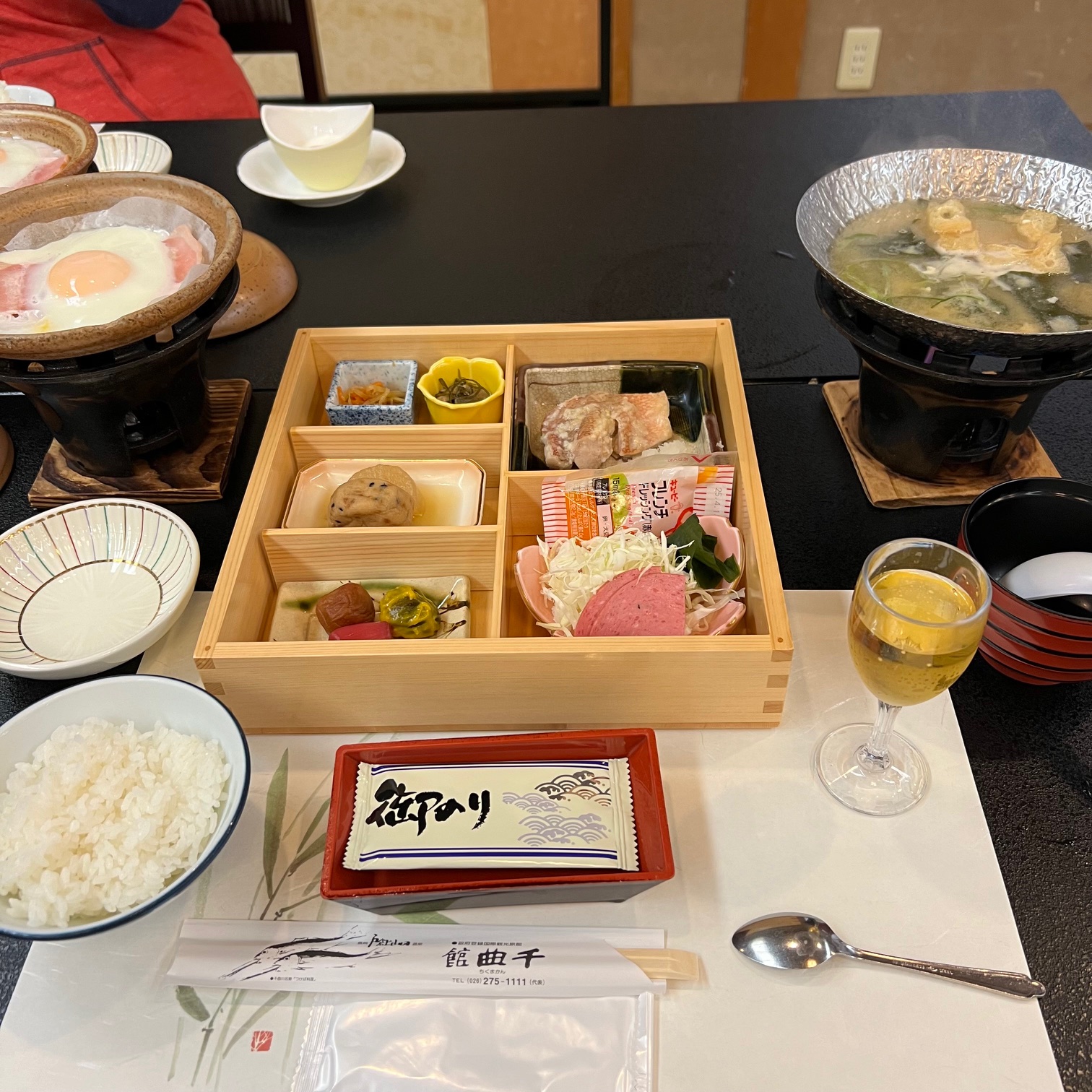
During our stay, breakfast included:
- Koshihikari rice from Nagano Prefecture
- Miso soup made with Shinshu miso
- Shinshu apple juice
- Several small Japanese side dishes
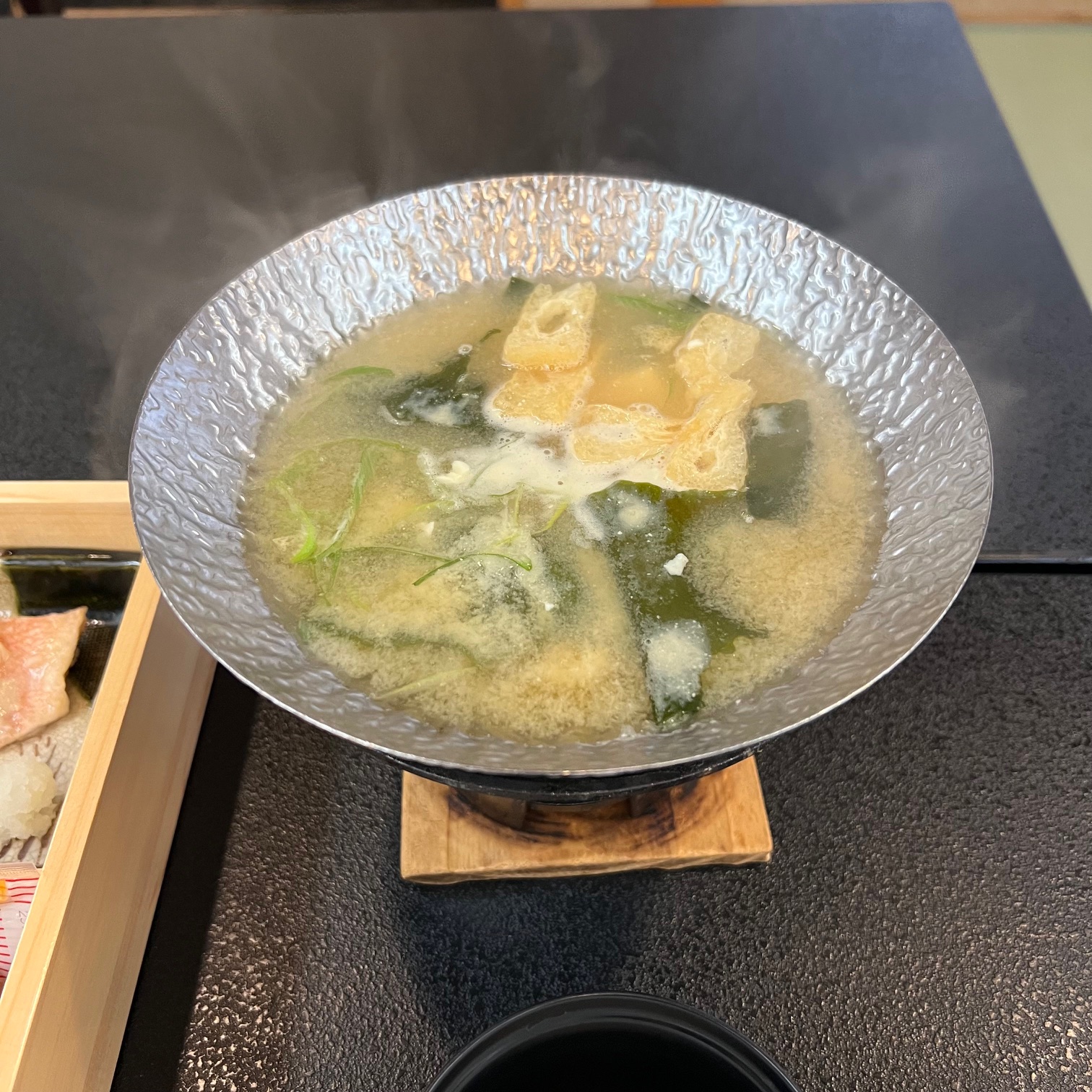
The hot miso soup was particularly delicious.
Shinshu miso had a gentle sweetness and mellow flavor that we really liked.
We enjoyed it so much that we later bought some miso from a souvenir shop in town to take home.
At breakfast, we also had a chance to speak with the hotel staff.
They gave us recommendations for lunch restaurants and nearby sightseeing spots, which was very helpful.
Our Overall Impression of the Onsen and Dining
For us, the combination of the hot spring baths and traditional meals was one of the highlights of staying at Club Wyndham Chikumakan.
What We Enjoyed
- Several hot spring baths with different atmospheres and water temperatures
- An open-air bath overlooking a pond with koi
- The nostalgic stained-glass design of Taisho Roman-no-Yu
- Complimentary ice pops and bottled coffee milk after bathing during our stay
- Private kaiseki dining featuring Shinshu ingredients
- A traditional Japanese breakfast with Nagano rice, Shinshu miso and apple juice
For international travelers looking for a traditional Japanese ryokan experience in Nagano, the combination of onsen, seasonal dining and Japanese hospitality makes this a memorable style of stay.
Visit the Club Wyndham Chikumakan Official Website
Read Our Club Wyndham Chikumakan Room Review
If you are deciding which room type to book, our first article covers the Standard Room, Executive King Room and Superior Twin Room in detail.
Club Wyndham Chikumakan Room Review: Traditional Ryokan in Nagano

