Business Class looks wonderfully comfortable,
but once you see the price,
it can be difficult to justify.
On the other hand,
spending around 10 hours in Economy Class on a long-haul flight can feel a little daunting too.
That is where
Premium Economy
comes in.
We sometimes choose Premium Economy for long-haul international trips.
After actually flying in it,
we found that even a little extra space can make a noticeable difference to how comfortable the flight feels
and how tired we feel when we arrive.
But then I started wondering:
“Is Premium Economy about the same size on every airline?”
The answer is no.
Seat dimensions vary between airlines,
and even
the same airline and the same aircraft type can have different seat specifications depending on the configuration.
So in this article,
I compared Premium Economy seat pitch by aircraft
using information published by each airline.
Seat dimensions and aircraft specifications are based on information published by the airlines as of October 2026. Aircraft, seat configurations and operating routes may change. Always check the airline's official website or booking screen for the latest information before booking.
What Is “Seat Pitch” in Premium Economy?
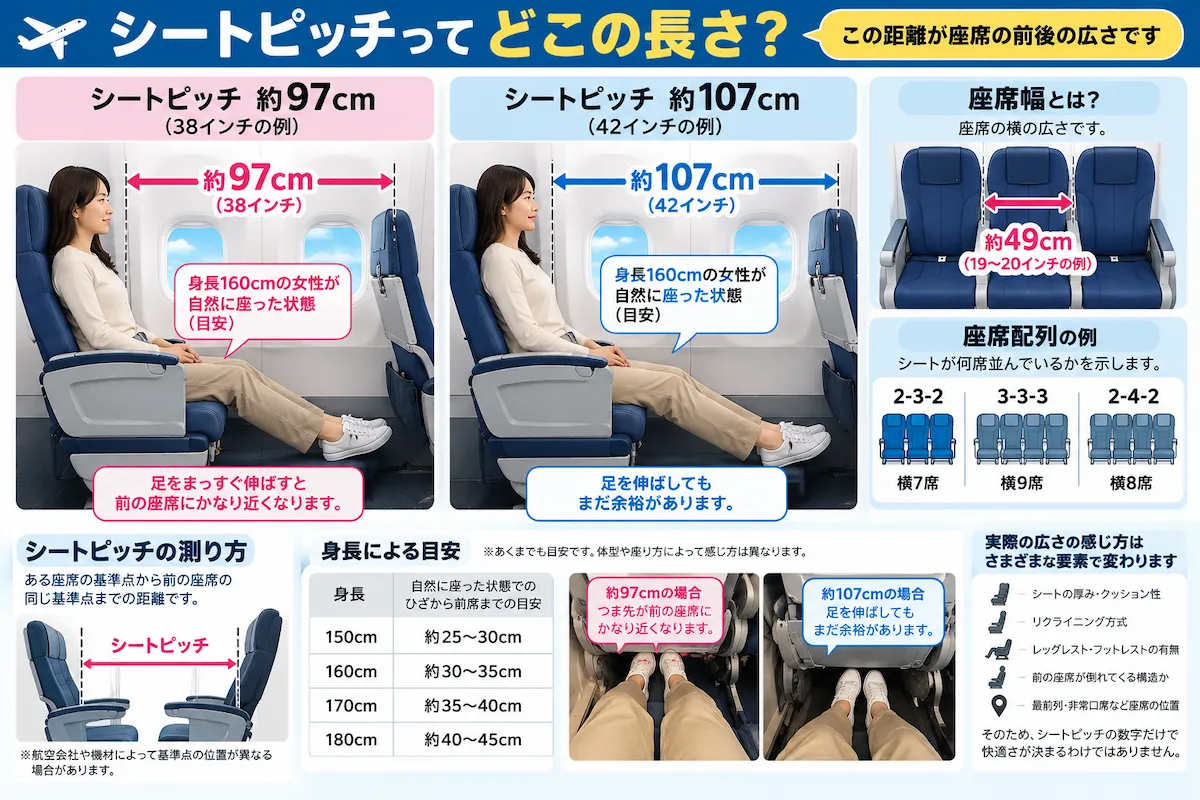
One number you will often see when comparing airline seats is
seat pitch.
Seat pitch is the distance from a reference point on one seat
to the same point on the seat in front.
In general,
a larger seat pitch means more space in the front-to-back direction.
However,
the amount of space you actually feel also depends on factors such as:
- Seat thickness
- Recline mechanism
- Leg rest and footrest design
- Whether the seat in front reclines into your space
- Your seat position, such as the front row
A larger seat pitch does not automatically mean the seat will always feel the most comfortable, but it is one of the most useful measurements when comparing seats.
Premium Economy Seat Size Comparison
Here is a comparison of Premium Economy specifications published by several airlines for representative aircraft configurations.
| Airline | Aircraft / Configuration | Seat Pitch | Seat Width | Key Features |
|---|---|---|---|---|
| JAL | B787-9 JAL SKY PREMIUM |
Approx. 107 cm 42 in |
Approx. 49 cm | 2-3-2 layout Fixed Back |
| ANA | B787-9 206-seat configuration |
Approx. 101 cm 40 in |
— | New configuration Approx. 5 cm more pitch than older configuration |
| ANA | B787-9 246-seat / 215-seat configuration |
Approx. 97 cm 38 in |
Approx. 49 cm 19.3 in |
Leg rest Footrest |
| EVA Air | B787-9 New configuration |
Approx. 106 cm 42 in |
— | 2-3-2 layout 28 seats |
| Air New Zealand | B787-9 V2 |
Approx. 104–106 cm 41–42 in |
— | Seat pitch varies by aircraft configuration |
| Air New Zealand | B787-9 V3 / V4 |
Approx. 104 cm 41 in |
— | New cabin Fixed back-shell seat |
| Emirates | A380 | Up to approx. 102 cm 40 in |
Approx. 49.5 cm 19.5 in |
2-4-2 layout Calf rest & footrest |
* 1 inch = 2.54 cm. Where an airline publishes dimensions in centimeters, the airline's own figure is prioritized. Seat specifications may vary by aircraft.
When you compare them like this,
you can see that even though they are all sold as
“Premium Economy,”
the amount of front-to-back space can be quite different.
What I found especially interesting is that
the airline name alone does not tell you exactly what kind of seat you will get.

JAL B787-9: Around 107 cm and a 2-3-2 Layout
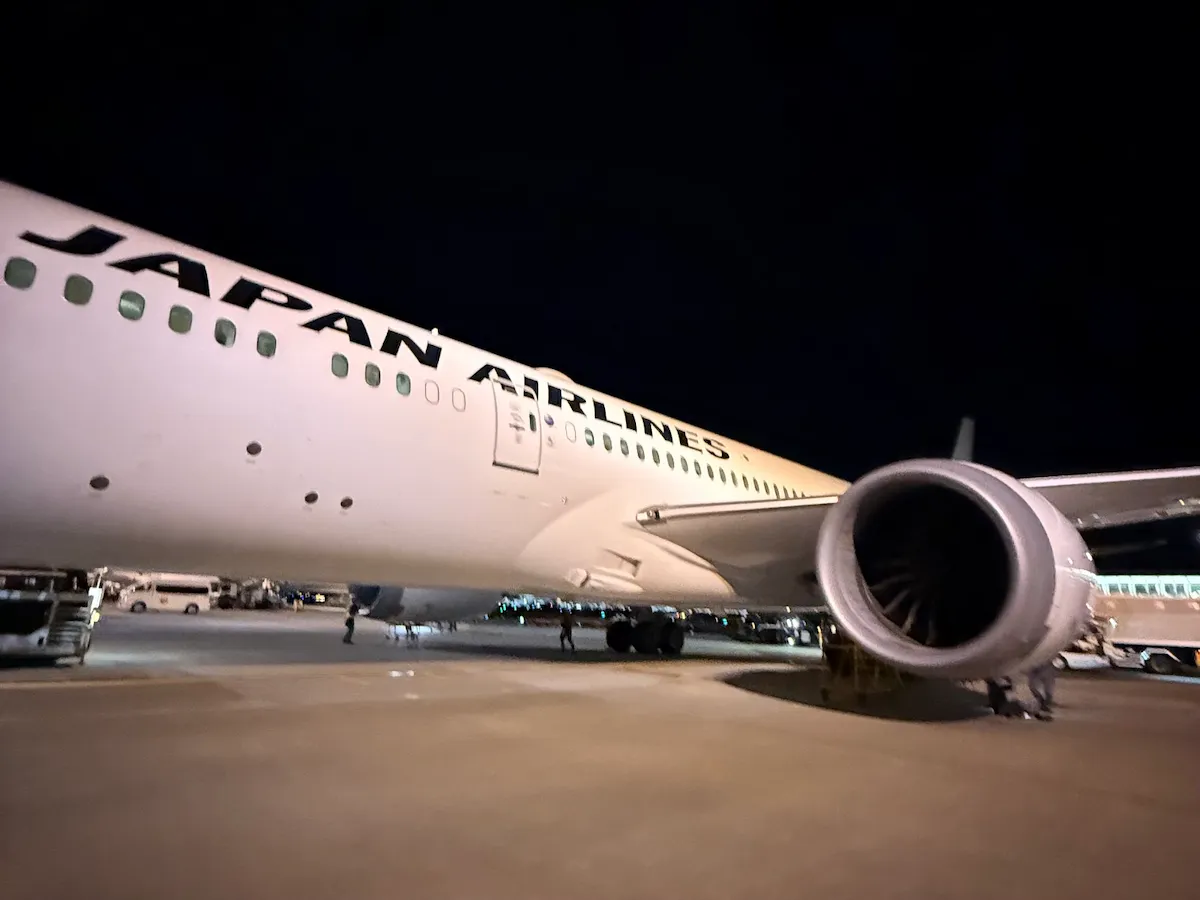
JAL's B787-9
JAL SKY PREMIUM
has a seat pitch of around 107 cm
and a seat width of around 49 cm.
The cabin uses a
2-3-2 layout with seven seats across.
It also uses a Fixed Back design,
which means the seatback itself does not recline backward into the passenger behind.
With only two seats by the window,
it also looks convenient for couples or a parent and child travelling together.
For comparison,
JAL's international Economy Class
JAL SKY WIDER
has a seat pitch of around 84 cm.
Simply comparing the numbers,
that is about
23 cm less than Premium Economy's approximately 107 cm.
When you hear “23 cm,”
doesn't that sound like quite a difference?
ANA: Even the Same B787-9 Can Differ by Around 5 cm
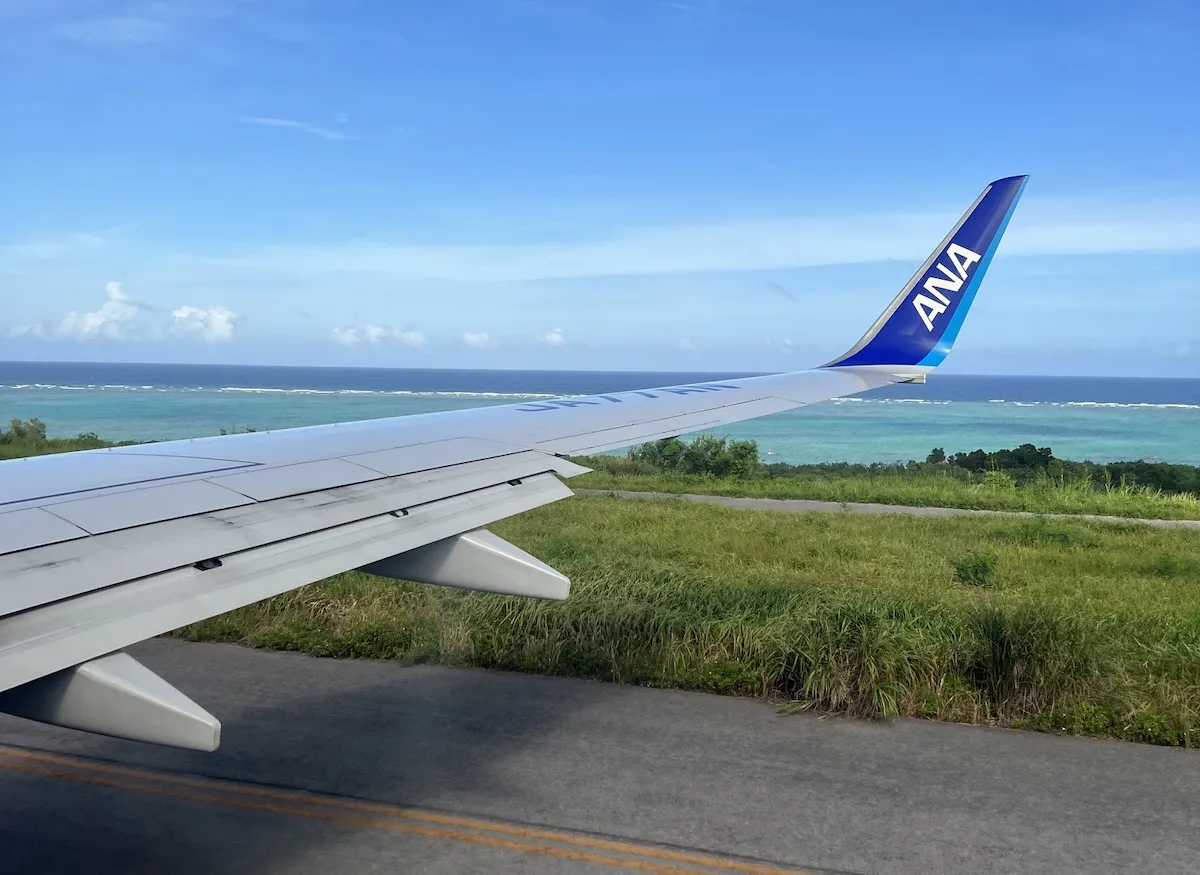
One of the most interesting things I found while researching this article was ANA.
ANA operates several different B787-9 seat configurations.
Premium Economy on the
246-seat and 215-seat configurations
has a seat pitch of 38 inches
(about 97 cm)
and a seat width of 19.3 inches
(about 49 cm).
Meanwhile,
the
206-seat configuration has a 40-inch seat pitch
(about 101 cm).
In other words:
ANA
↓
B787-9
↓
Premium Economy
can all be exactly the same,
yet the amount of space between rows can still differ by
around 5 cm depending on the aircraft configuration.
If you assumed
“ANA Premium Economy is always the same,”
this is surprisingly important.
When choosing a ticket,
it may be worth checking not only the airline and aircraft type,
but also
which seat configuration is scheduled.
EVA Air's New B787-9 Premium Economy: 42-Inch Seat Pitch
EVA Air's new Premium Economy cabin
introduced on some B787-9 aircraft
has a
42-inch seat pitch
(about 106 cm).
It uses a 2-3-2 layout
with 28 Premium Economy seats.
Another notable feature is the cradle-style reclining mechanism,
where the seat cushion moves forward and upward.
This allows the seat to provide the equivalent of an 8-inch recline
while also considering the space of the passenger behind.
On a long-haul flight,
it is not only the amount of legroom that matters.
What happens when the person in front reclines?
can make a big difference too.
That is why the seat mechanism itself is also worth checking.
Air New Zealand B787-9: Seat Pitch Depends on the Configuration
Air New Zealand's B787-9 also has different Premium Economy seat pitches
depending on the aircraft configuration.
According to its official seat maps,
B787-9 V2 has a seat pitch of 41–42 inches
(about 104–106 cm),
while the newer
V3 and V4 cabins have a 41-inch pitch
(about 104 cm).
The Premium Economy seats in the V3 and V4 configurations also use a
fixed back-shell design,
which helps prevent the recline from intruding into the passenger's space behind.
So even within Air New Zealand's B787-9 fleet,
seat pitch and seat construction can vary.
Before booking,
it is worth checking the aircraft configuration
and seat map.
On a long-haul flight between Japan and New Zealand,
these differences can matter more than you might expect.
Emirates A380 Premium Economy: Up to 40 Inches
Emirates Premium Economy on the A380
has a seat pitch of up to
40 inches
(about 102 cm)
and a seat width of 19.5 inches
(about 49.5 cm).
The layout is 2-4-2,
and the seats include
a calf rest and footrest.
If you are travelling to Europe via Dubai,
the total flying time can become quite long,
so these features may be worth considering.
We Actually Flew American Airlines Premium Economy to Los Angeles
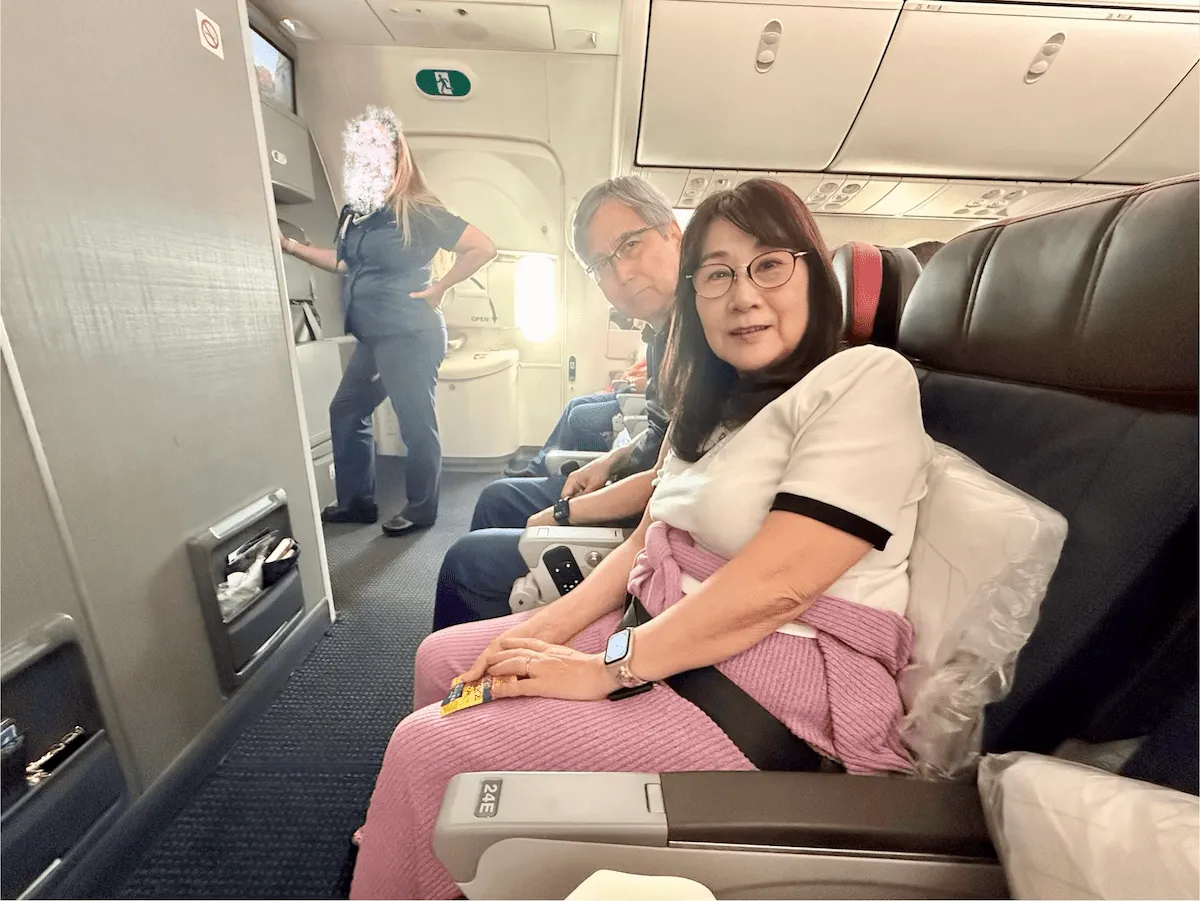
We have also actually flown
American Airlines Premium Economy
to Los Angeles.
We wanted something more comfortable than Economy
without paying Business Class prices.
For that kind of trip,
Premium Economy felt like a very practical option.
On a long-haul flight,
you spend so many hours sitting in the cabin
that even a little extra legroom can make the experience feel different.
We also noticed a difference in how tired we felt when we arrived.
We cover the seat,
meal
and our experience after spending many hours onboard
in a separate article.
The Widest Seat Pitch Does Not Always Mean the Most Comfortable Seat
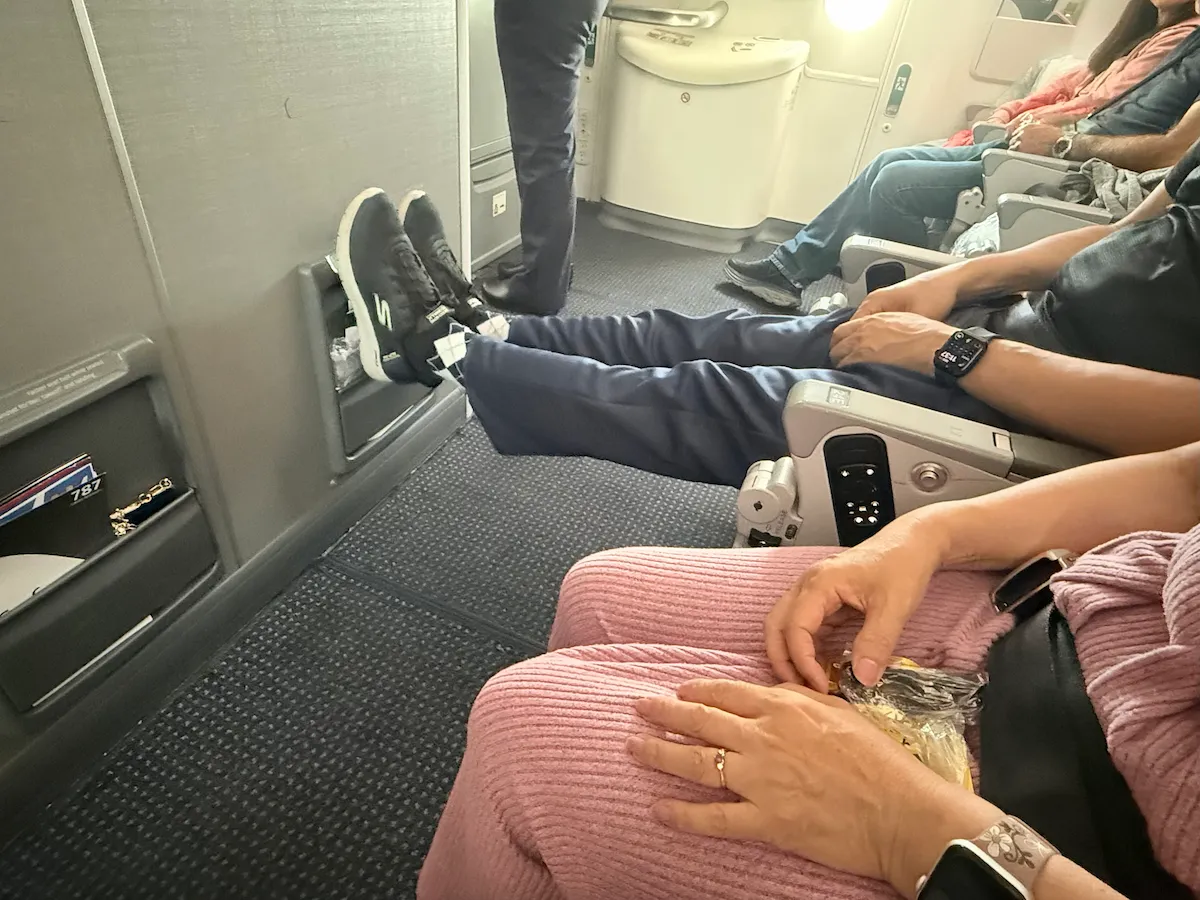
This is important.
A 42-inch seat pitch certainly sounds attractive,
but actual comfort is not determined by seat pitch alone.
Other factors include:
- Seat width
- Seat thickness and cushioning
- Recline mechanism
- Leg rest and footrest
- Distance from the passenger beside you
- Seatback design in front
- How easily you can reach the aisle and restroom
All of these can change how spacious or comfortable a seat feels.
And for long-haul travel in our 50s, 60s and beyond,
one thing we increasingly think about is:
“How much energy will we still have after we land?”
If you are travelling all the way overseas,
you want to enjoy the destination too.
Arriving completely exhausted before the trip has even properly started
is not ideal.
That is why we have started thinking of
comfort during the flight as part of the overall travel experience,
rather than looking only at the ticket price.
When Booking Premium Economy, Check the Aircraft Too
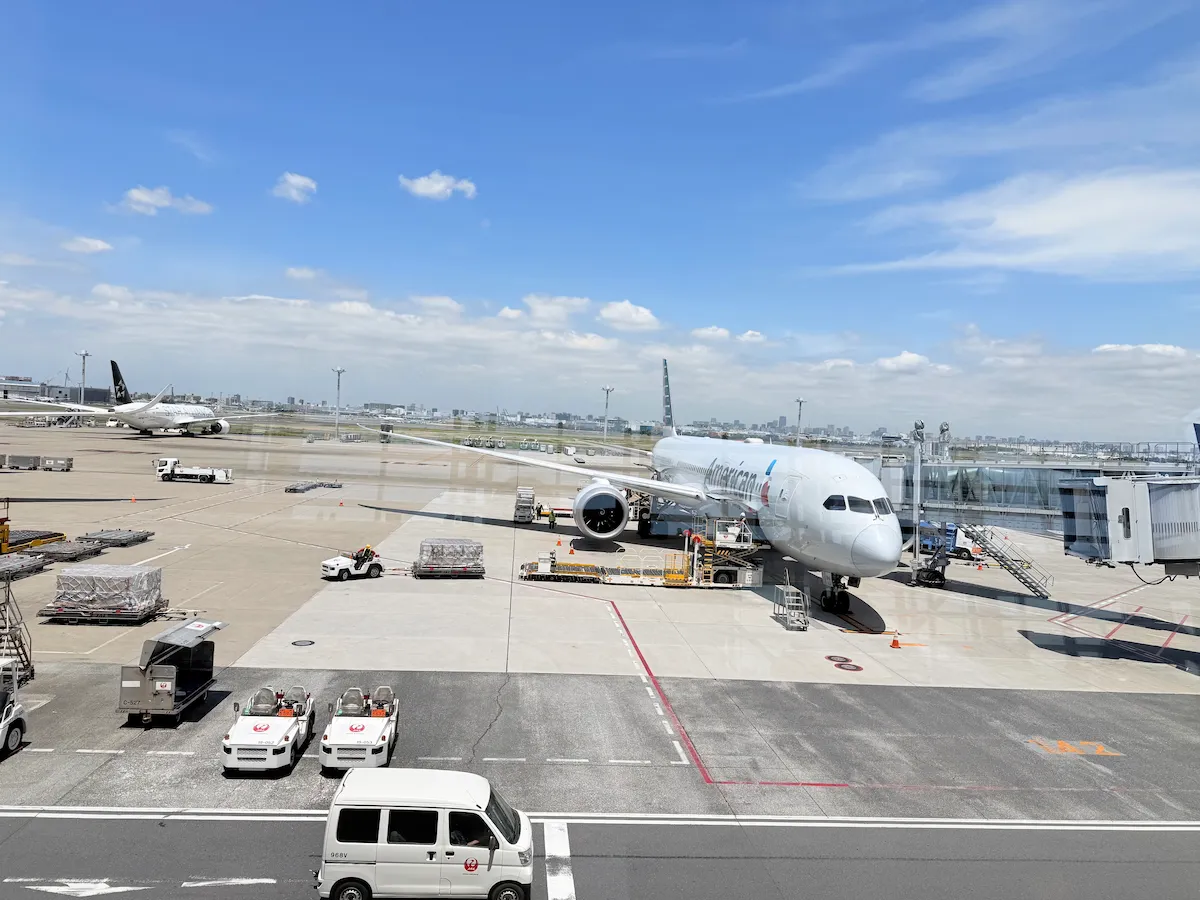
The biggest thing I learned from this comparison is:
the words “Premium Economy” alone do not tell you how much space you will actually get.
Even within the same airline,
and even on the same aircraft type,
different configurations can have different seats.
Before booking,
it is worth checking:
Airline → Aircraft type → Seat configuration → Seat map
rather than stopping at the airline name.
Of course,
the scheduled aircraft can also be changed for operational reasons.
Next, We Want to Compare More Premium Economy Seats in Real Life

Official specifications can tell us
how large a seat is on paper.
But what we really want to know is:
“After sitting there for more than 10 hours, is it actually comfortable?”
At Kanreki Travel,
we hope to keep trying Premium Economy on different airlines
and compare things such as:
- Legroom
- Seat comfort
- Recline
- Leg rest and footrest
- How easy it is to sleep
- In-flight meals
- Access to the aisle and restroom
- How tired we feel after arrival
based on our own travel experiences.
The numbers in a seat chart are useful,
but we also want to answer the more practical question:
“What was it actually like after flying in the seat?”
We hope these firsthand comparisons will help travellers in their 50s, 60s, 70s and beyond
choose an airline and seat for their next long-haul trip.

