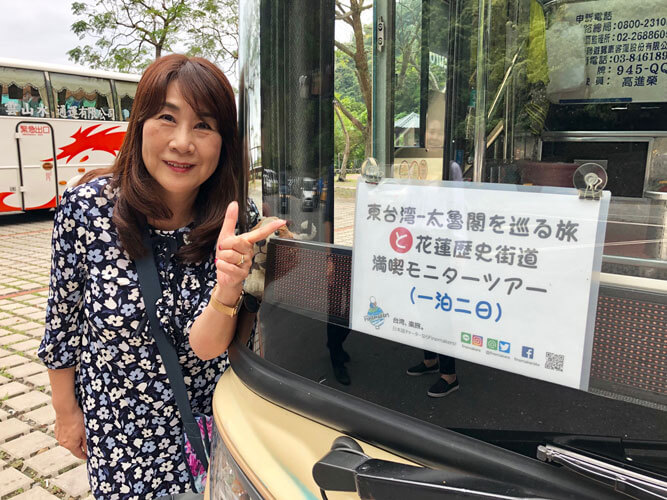
This is another story from our Finemakers tour through eastern Taiwan, Taroko and Hualien.
During our 2018 trip,
after visiting Swallow Grotto and the Eternal Spring Shrine in Taroko,
we headed to
Qingshui Cliffs.
Qingshui Cliffs remains one of Hualien’s most spectacular scenic spots.
Please note: This article is based on our firsthand visit in 2018 and has been updated with current information.
Some areas around Taroko are still affected by restoration work and changing traffic restrictions, so check the latest access information before visiting.
Qingshui Cliffs in Our 60s — Beautiful Even on a Cloudy Day!
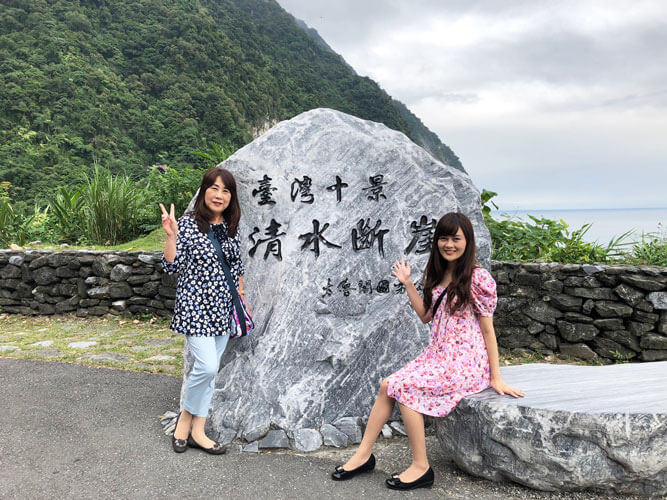
Qingshui Cliffs is one of the most dramatic landscapes on Taiwan’s east coast,
with steep green mountains dropping almost directly into the sea.
Looking out over the lush mountains and the ocean below
felt soooo good.
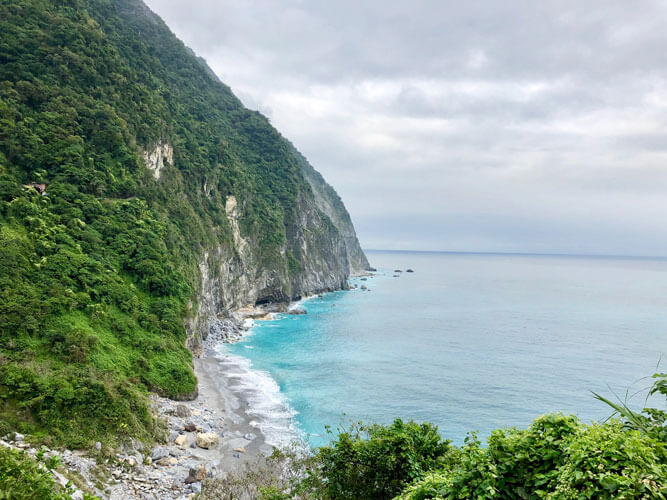
Ta-da!
It was cloudy that day,
and it was still this beautiful.
The color of the sea changes depending on the weather and light,
so I would love to come back and see it on a bright sunny day too.
I can only imagine how beautiful the water must look then!
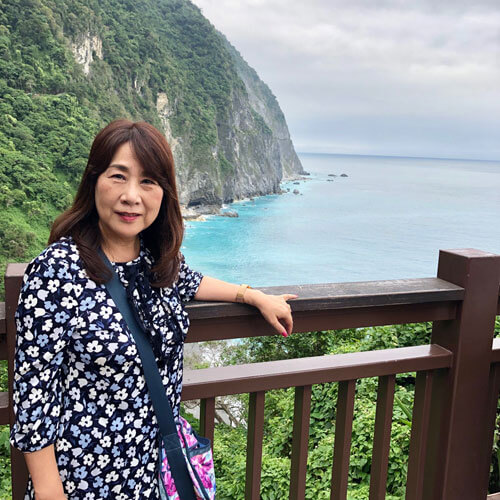
Mountains and ocean almost crashing together in front of us.
The scenery felt enormous.
We were blown away.
Mamarin in her 60s approved too.
The Chongde Recreation Area overlooking Qingshui Cliffs has reopened after restoration work following the earthquake.
However,
road restrictions and closures around the wider Taroko area can still change,
so it is worth checking the latest information before your visit.
Trying Indigenous Taiwanese Food — What Would It Taste Like?
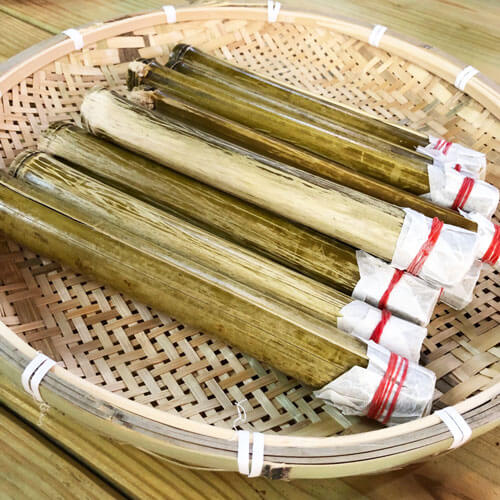
After enjoying the incredible scenery at Qingshui Cliffs,
we sat down for
Indigenous Taiwanese food.
Hualien is home to several Indigenous communities,
including the Truku people,
and Indigenous culture remains an important part of the region.
The dishes we tried were quite different from what we usually ate on our Taiwan trips.
First,
look at the rice inside this long, narrow bamboo tube.
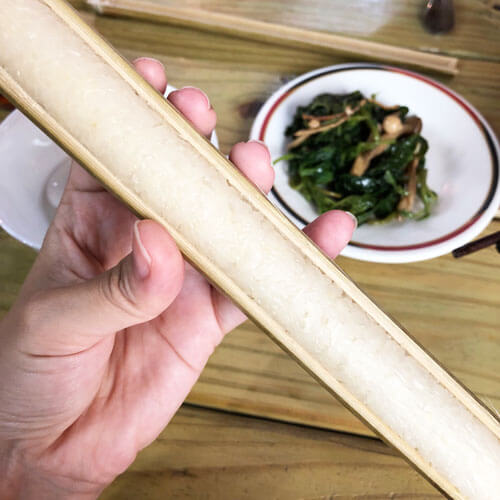
So interesting!
It was chewy,
with a texture a little like glutinous rice.
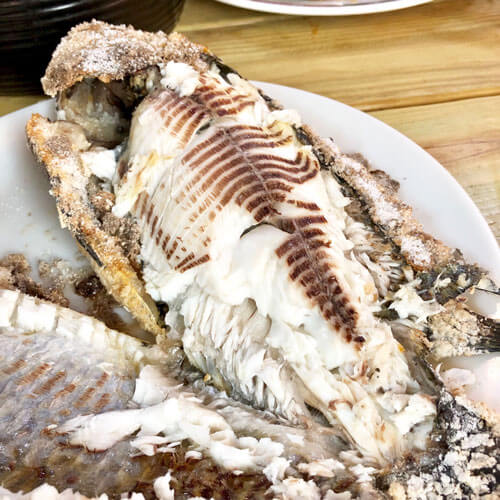
Next came this wonderfully fluffy fish.
The name of the fish was...
I forgot(笑)
But it was beautifully cooked
and very tasty.
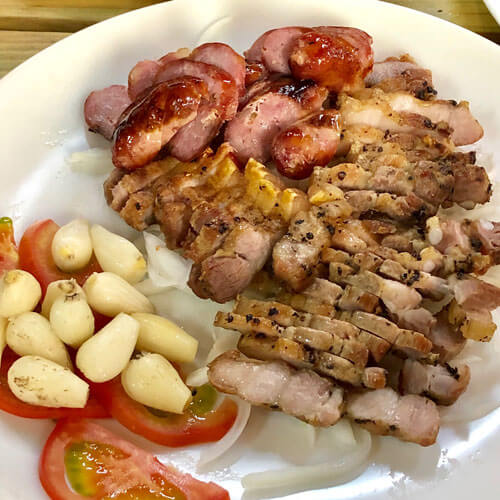
There was wild boar too!!
It came with plenty of pickled shallots.
We do not eat wild boar very often,
so this really felt like one of those
“we’re definitely traveling” moments.
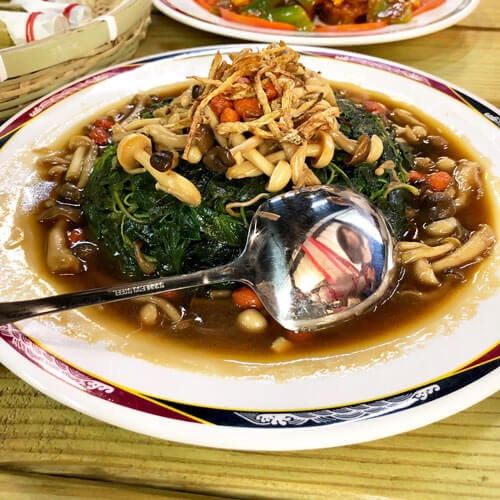
This dish was made with
sweet potato leaves.
We do not see them used very often in Japan,
so that was new for us too.
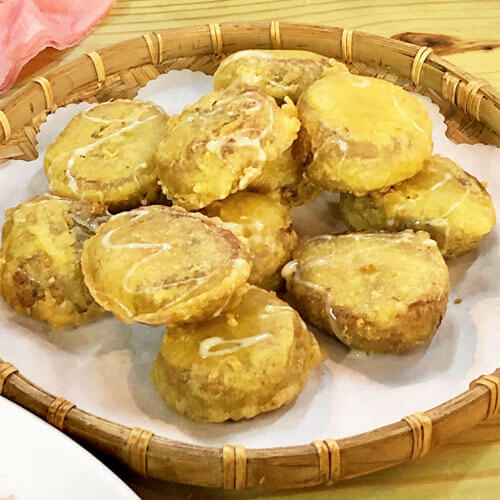
And this fried dish tasted like banana!
It was sweet.
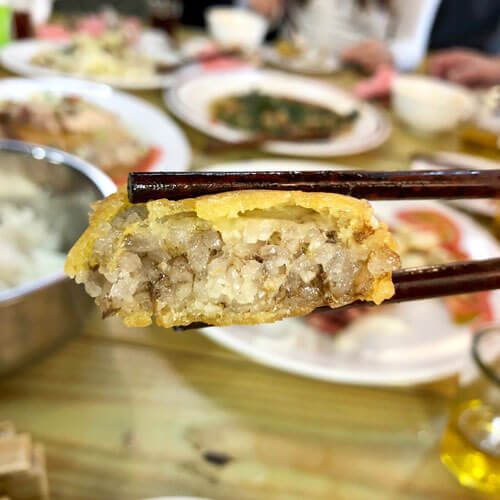
After 60 years of life, this was a flavor I had never tasted before!
The Indigenous dishes we tried that day were quite different from the Taiwanese and Chinese dishes we had been eating elsewhere.
Many had relatively gentle flavors,
which made them easy for Mamarin to enjoy too.
You can find xiaolongbao and other Taiwanese dishes in Japan,
but food that reflects the culture of a particular region is much harder to experience without actually going there.
It was a wonderful experience.
Taiwan Dogs — The Canine Version of a Cool, Understated Heartthrob!

We also kept seeing black dogs around Hualien.
Some were sleeping right in the middle of the road,
while others wandered around looking completely relaxed.
I kept thinking,
“This isn’t a Labrador... so what kind of dog is it?”
Then we were told it was a
Taiwan Dog.
It is a dog breed native to Taiwan.
You hardly ever see them in Japan.
I don’t think I had ever seen anyone keeping one back home.
And most importantly...
Taiwan Dogs have that cool, understated handsome look.
Very handsome.
Very chill.
🤣
Qixingtan Surprised Us — A Beach Made of Round Stones!
After lunch,
we headed to
Qixingtan.
Qixingtan remains one of Hualien’s best-known coastal scenic spots.
Unfortunately,
it was cloudy and very windy when we visited,
so we did not get the classic blue-sky-and-blue-ocean view.
But something else about this beach surprised me.
The ground.
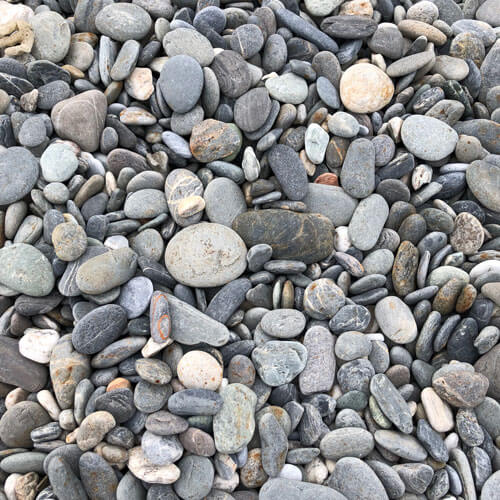
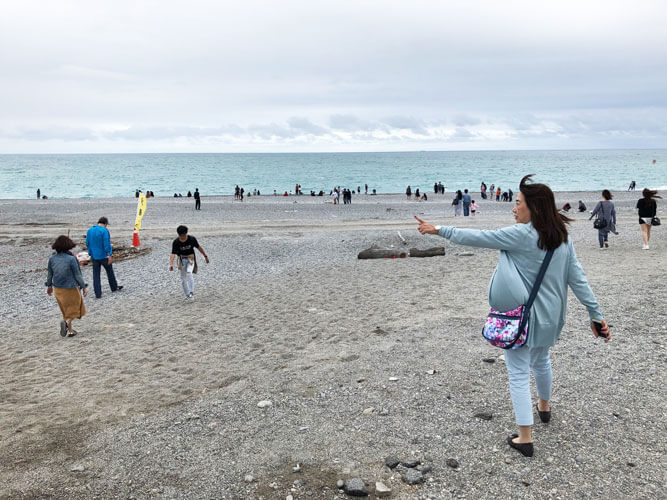
The beach is covered in round stones like these.
It isn’t a sandy beach!
Qixingtan is known for its smooth,
dark-colored pebbles.
So even when you are not looking at the sea,
there is something interesting right under your feet.
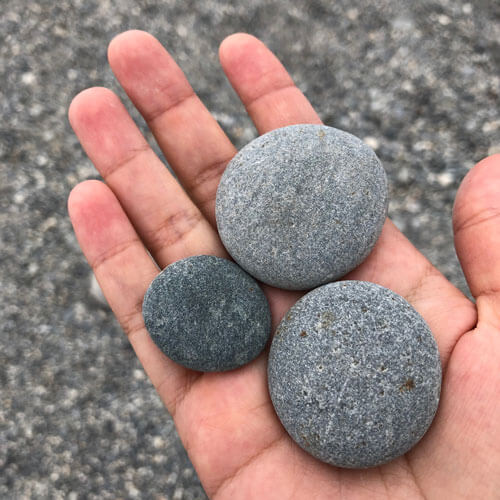
We entertained ourselves by trying to find
the roundest stone possible!

I also found a flat one shaped almost like
a traditional gua sha tool!
It is funny how little things like this
sometimes become some of your strongest travel memories.
Please enjoy the stones where you find them and leave them on the beach so that Qixingtan’s natural scenery can be preserved.
Hualien in Our 60s — Nature, Food and a Few Unexpected Surprises
Day two of our tour was all about enjoying Hualien’s natural scenery.
At Qingshui Cliffs,
we saw mountains and ocean creating an incredibly dramatic landscape.
At lunch,
we tried Indigenous Taiwanese dishes we had never eaten before.
At Qixingtan,
we discovered a beach covered not in sand,
but in smooth round stones.
And for some reason,
one of the things that stayed in my memory was...
the very handsome Taiwan Dogs(笑)
It felt completely different from exploring the busy streets of Taipei.
Even in your 60s, Hualien’s dramatic scenery is absolutely worth experiencing.
However,
conditions around Taroko National Park can change because of earthquake recovery work, weather and road restrictions.
If you plan to travel into the mountain areas,
check the latest official information before your trip.
More Taiwan Travel Stories
The scenery around Taroko was just as dramatic as Qingshui Cliffs.
Here are more places in Hualien that made us think,
“Now THIS is worth seeing!”
After all that spectacular scenery,
we also explored Hualien’s historic architecture and railway heritage.
We even went inside an old air-raid shelter.
And if you want more Taiwan food,
we also loved the famous rice noodles we tried in Hsinchu.
Disclosure:
Our Taiwan trip in 2018 was hosted by Finemakers.
At the time,
we were guided in Japanese,
which made the trip easy to enjoy even though we were relatively new to traveling in Taiwan.
Please note that Finemakers’ current tours, language support and booking arrangements may differ from those available during our trip.