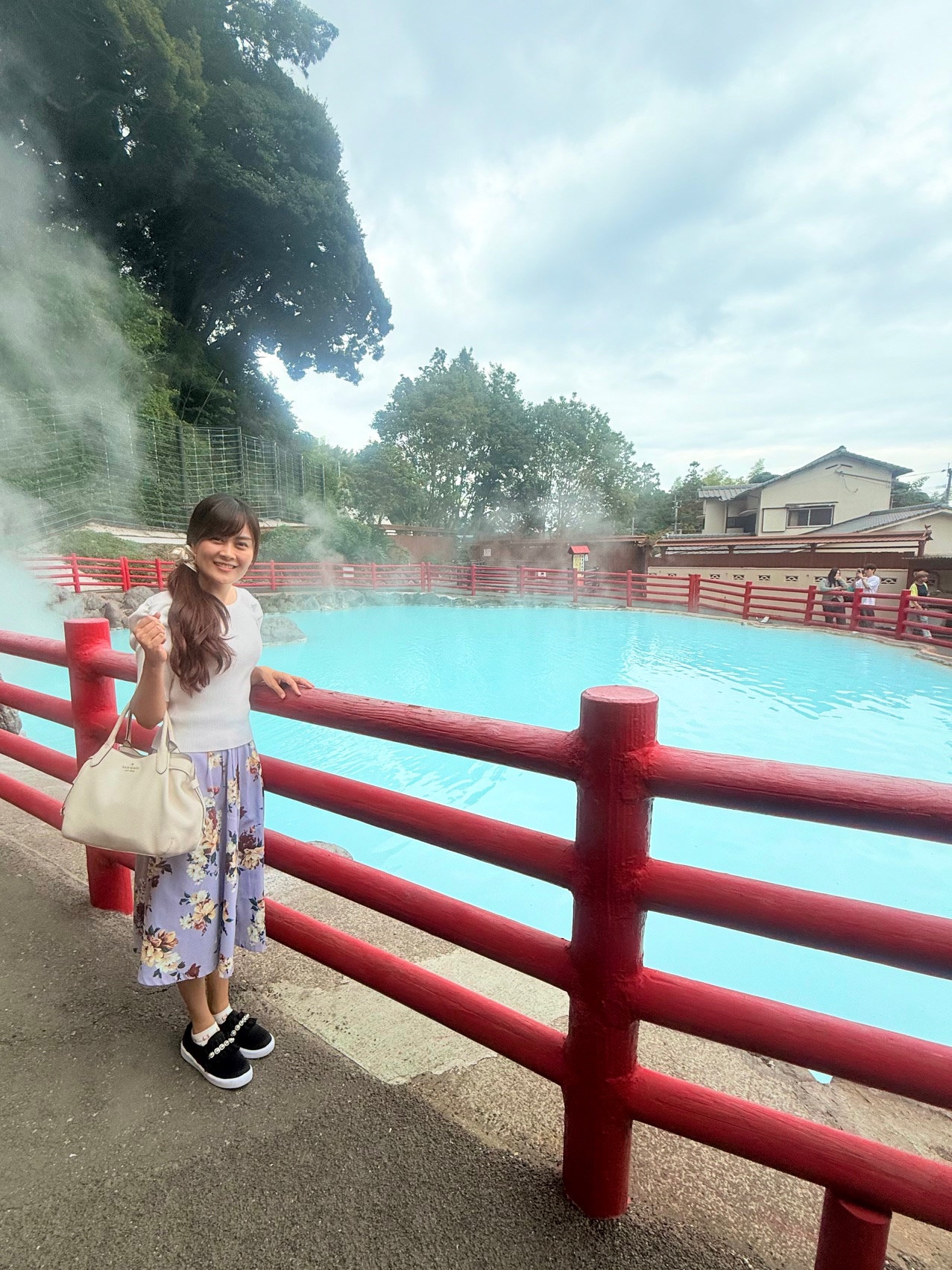
Our Oita trip continued with a short train ride
from Oita Station to Beppu.
It takes only about
15 minutes by train from Oita Station to Beppu Station.
From there,
we used local buses to visit
Okamotoya Shop for its famous Jigoku Mushi Pudding
and several stops on the
Beppu Hells Tour, or Jigoku Meguri.
Beppu has a useful local bus network,
so
you can enjoy many of the major sightseeing spots without renting a car.
This is especially convenient
if you do not drive in Japan
or simply prefer not to worry about parking and navigation.
▶Find hotels near the Beppu Hells on Rakuten Travel
▶Find hotels near the Beppu Hells on Rakuten Travel
 ▶Check Beppu Hells admission tickets on KKday
▶Check Beppu Hells tickets on KKday
Jigoku Mushi Pudding at the Famous Okamotoya Shop in Beppu
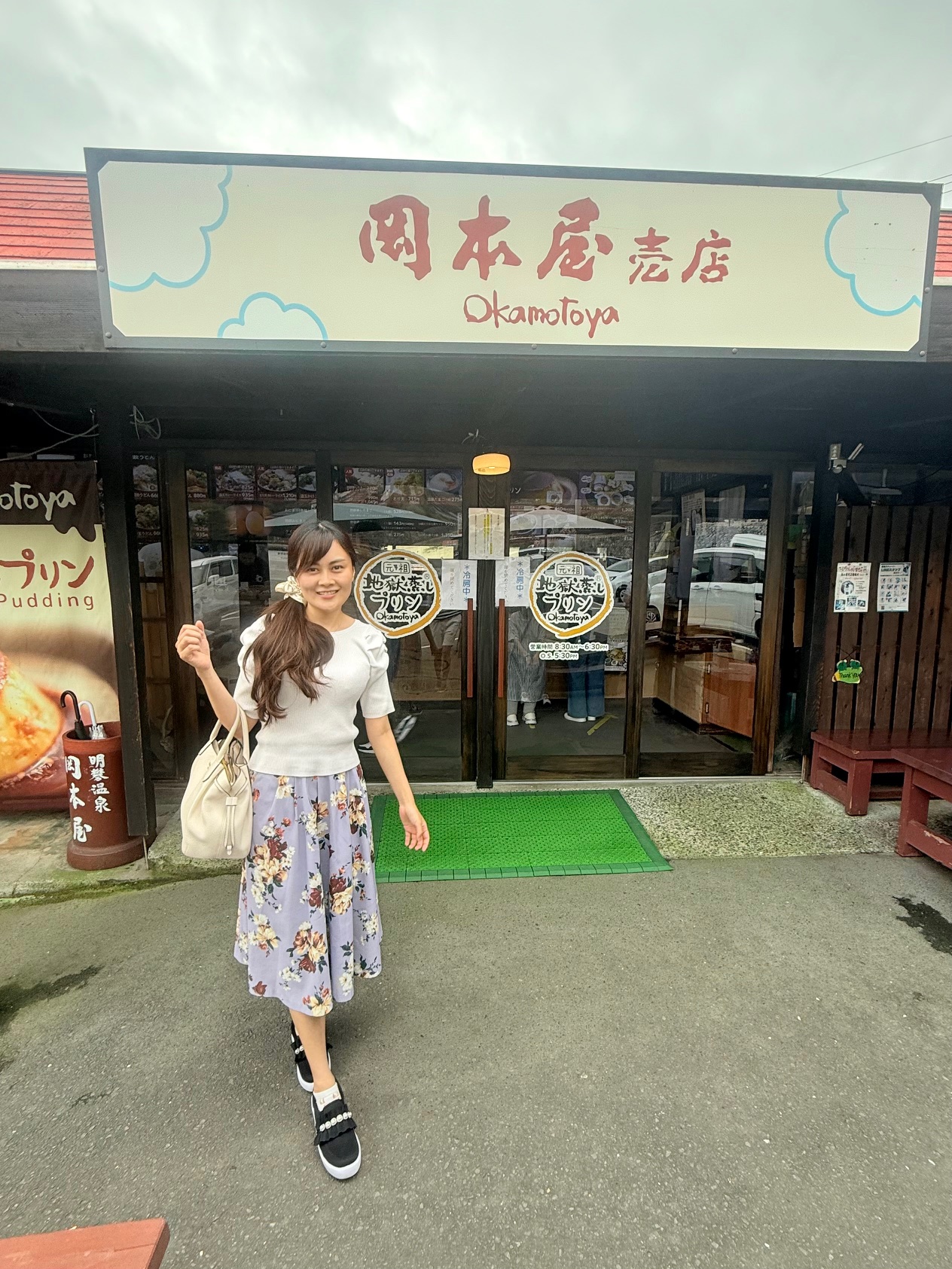
Our first stop was
Okamotoya Shop
near the entrance to Myoban Onsen in Beppu.
The shop has a nostalgic atmosphere
and is well known in Beppu,
with many visitors sharing it on YouTube and Instagram.
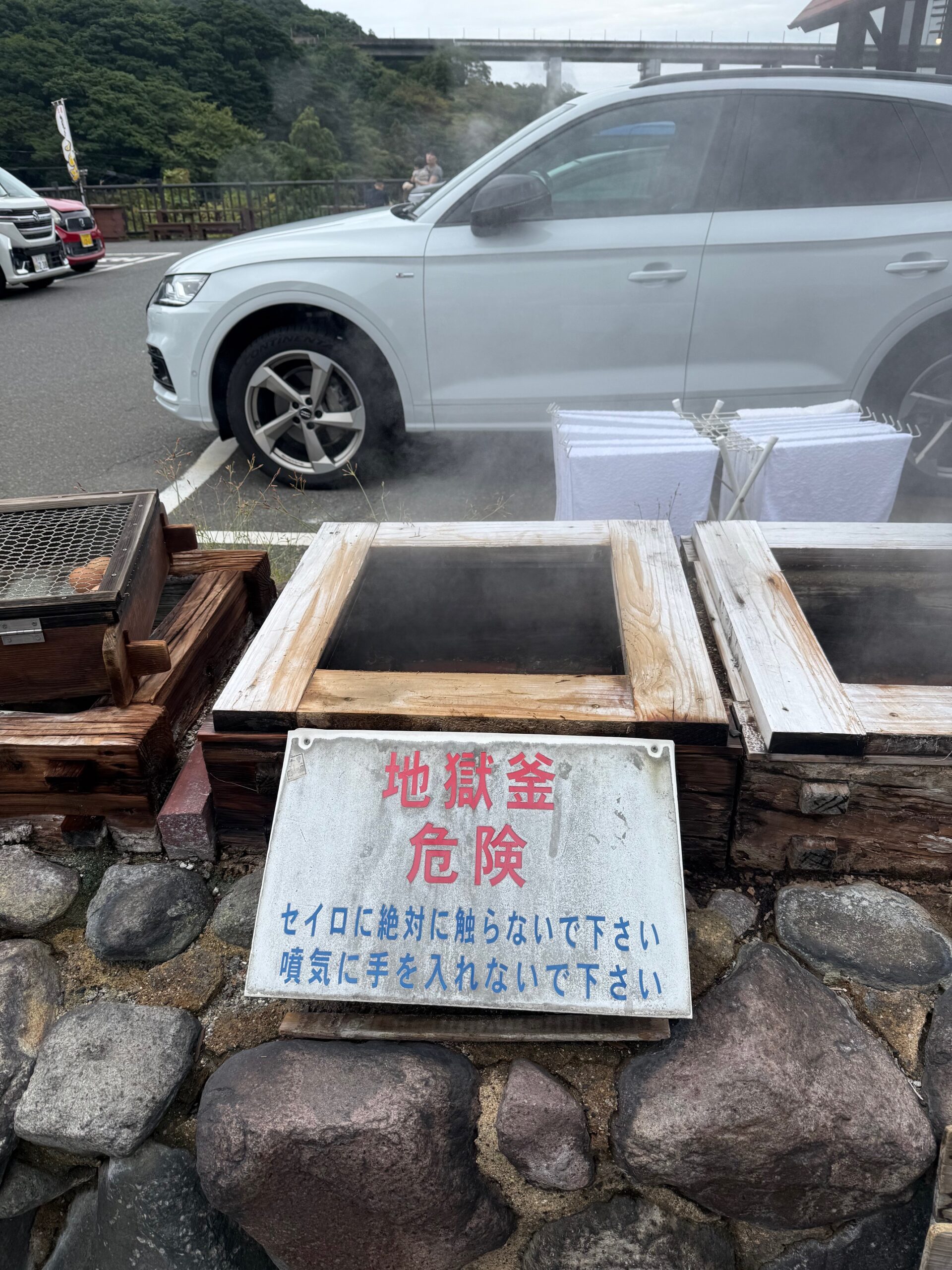
Outside the shop,
we found a traditional geothermal steam cooking area.
There were warnings not to touch the steamers or cooking equipment
because of the extremely high temperature.
Even standing nearby,
we could immediately feel the intense heat.
It really gives you a sense of
Beppu’s geothermal energy.
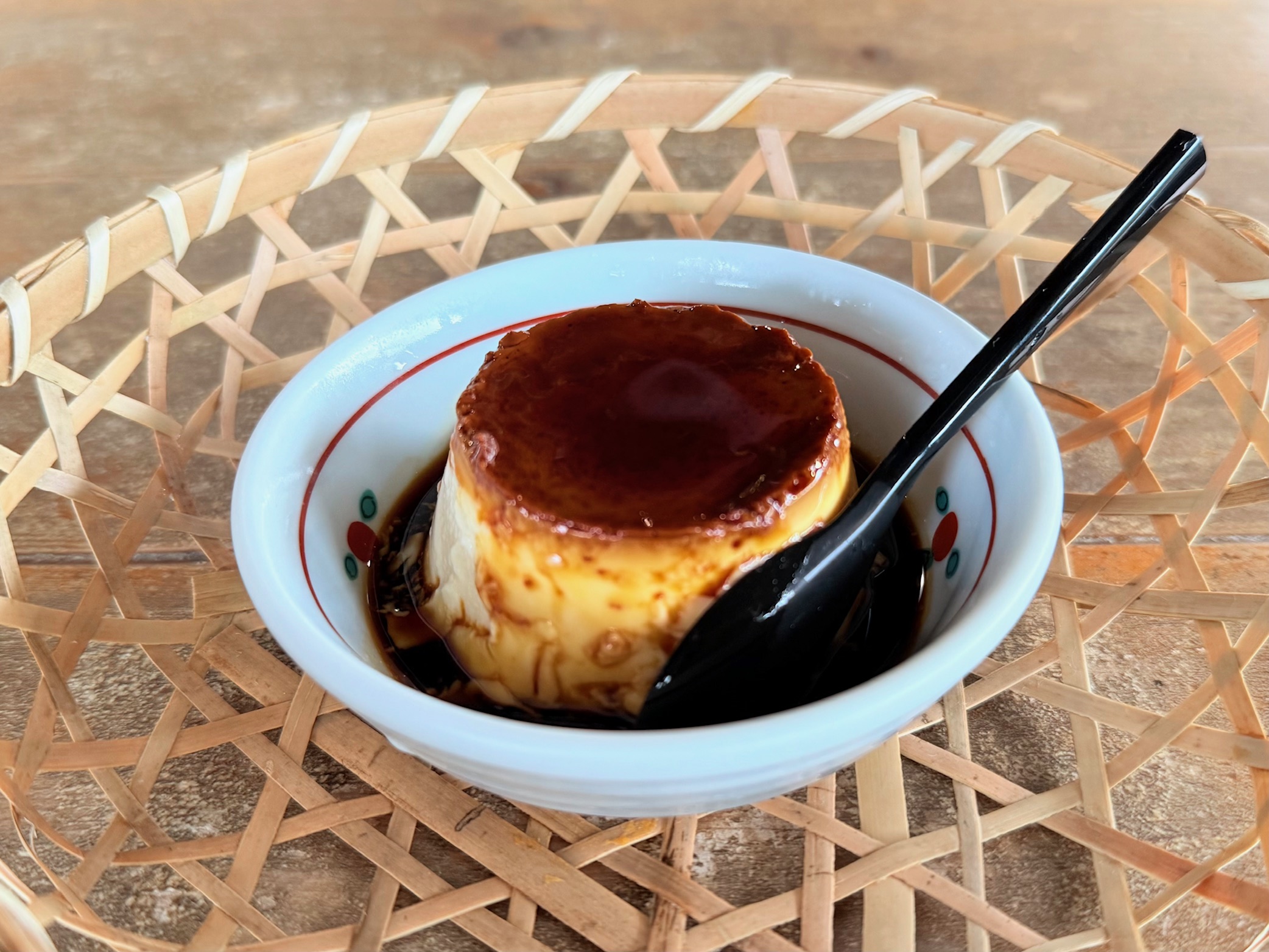
We ordered the shop’s famous
Jigoku Mushi Pudding.
At the time of our visit,
one pudding cost
¥440.
The caramel had a slightly bitter roasted flavor,
while the custard had a rich egg taste.
The texture was firmer than many modern puddings,
reminding me of a classic Japanese retro café dessert.
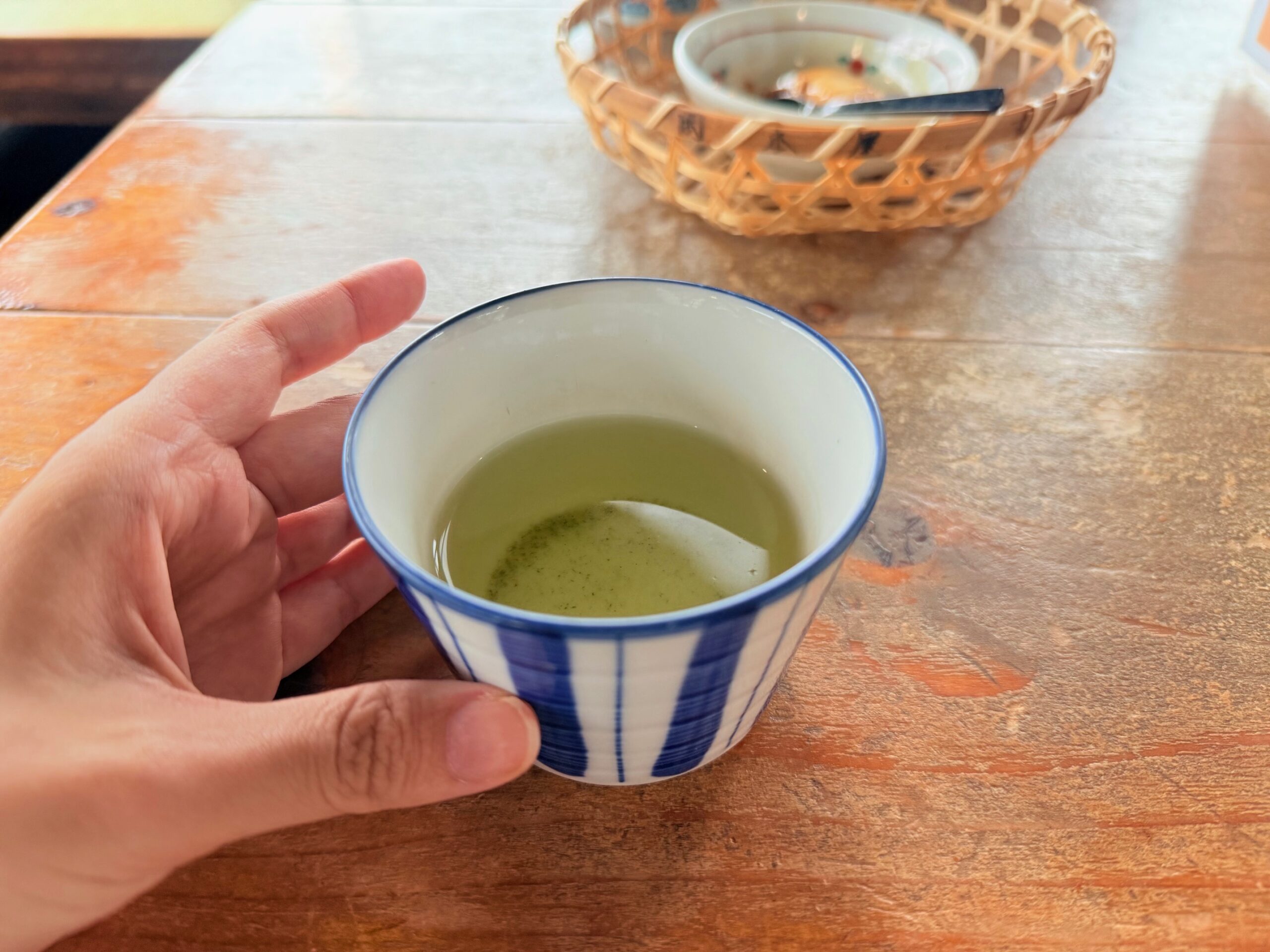
Complimentary hot tea was available inside the shop,
which made it easy to relax for a while
while looking out at the rising steam.
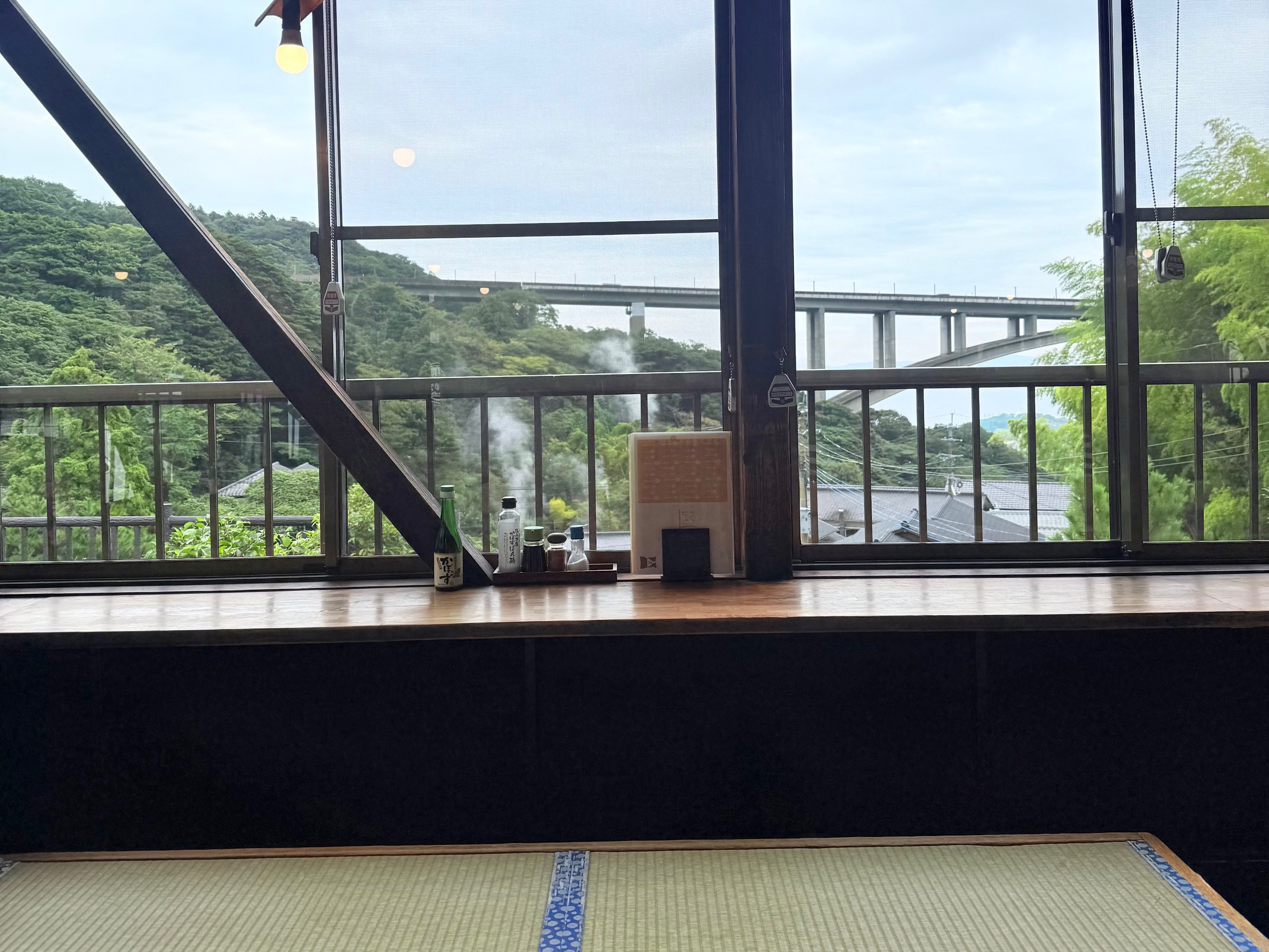
From the large windows beside the tatami seating area,
we could see green mountains,
a bridge,
and clouds of geothermal steam.
It felt like a scene that captured
the atmosphere of Beppu perfectly.
Taking the Bus from Okamotoya Shop to the Beppu Hells
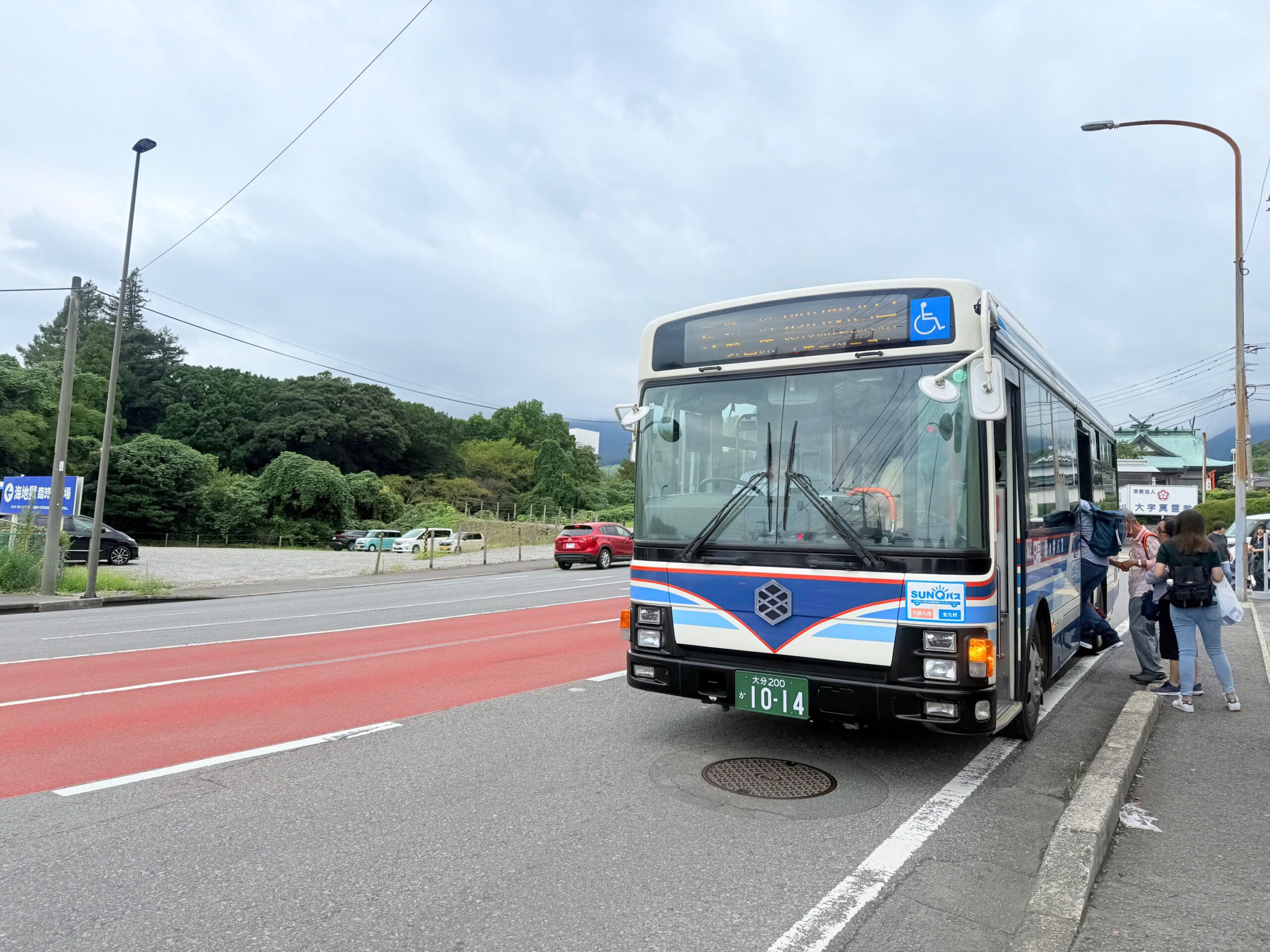
After enjoying the pudding,
we took a bus from the stop directly in front of Okamotoya Shop
to the Beppu Hells area.
The distance is not very far,
and traveling by bus was simple and convenient.
Exploring Beppu’s Famous Hells, Jigoku Meguri
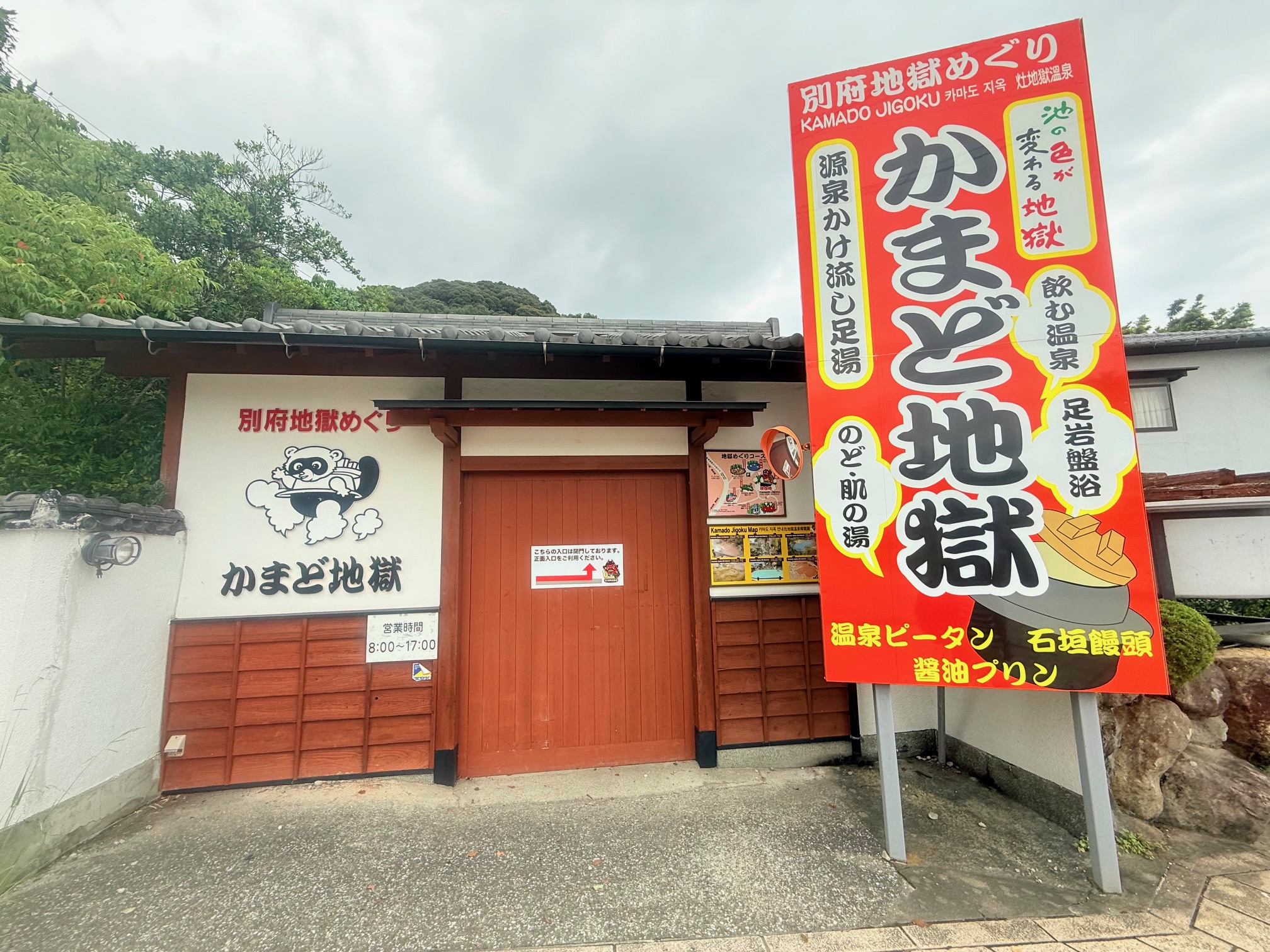
The closest hell to our bus stop was
Kamado Jigoku,
so we started there.
There are
seven official hells on the Beppu Hells Tour.
However,
you do not have to visit all seven.
If walking around all of them feels too tiring,
you can choose individual hells
and visit only the ones that interest you most.
Tickets are available for individual attractions,
as well as a combined admission ticket for all seven.
Kamado Jigoku Area 1|A Brown, Steaming Hot Spring
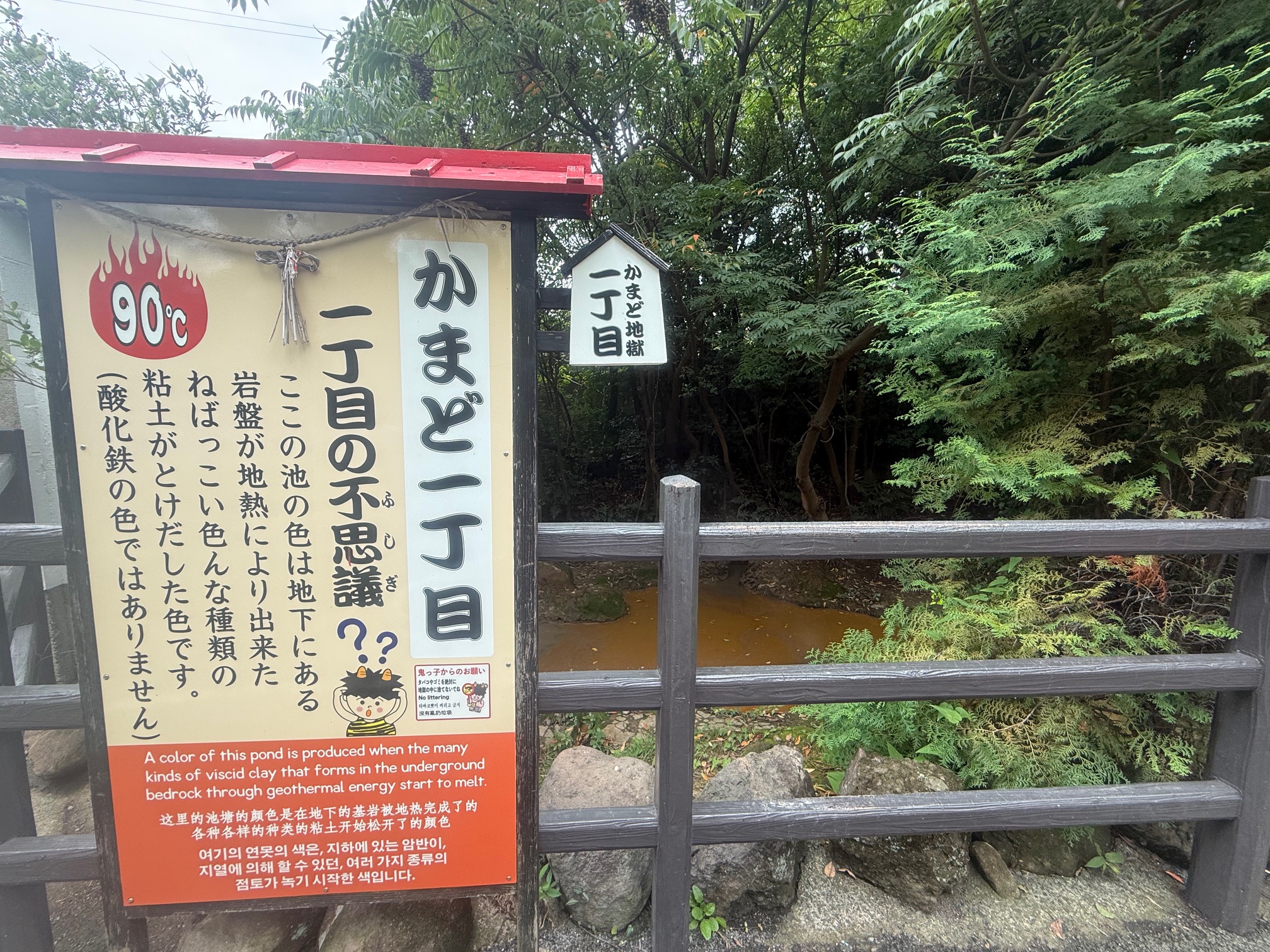
We began with
Kamado Jigoku Area 1.
The pond is a deep brown color,
created by clay-like material that rises from the underground rock layers.
The water is approximately
90°C.
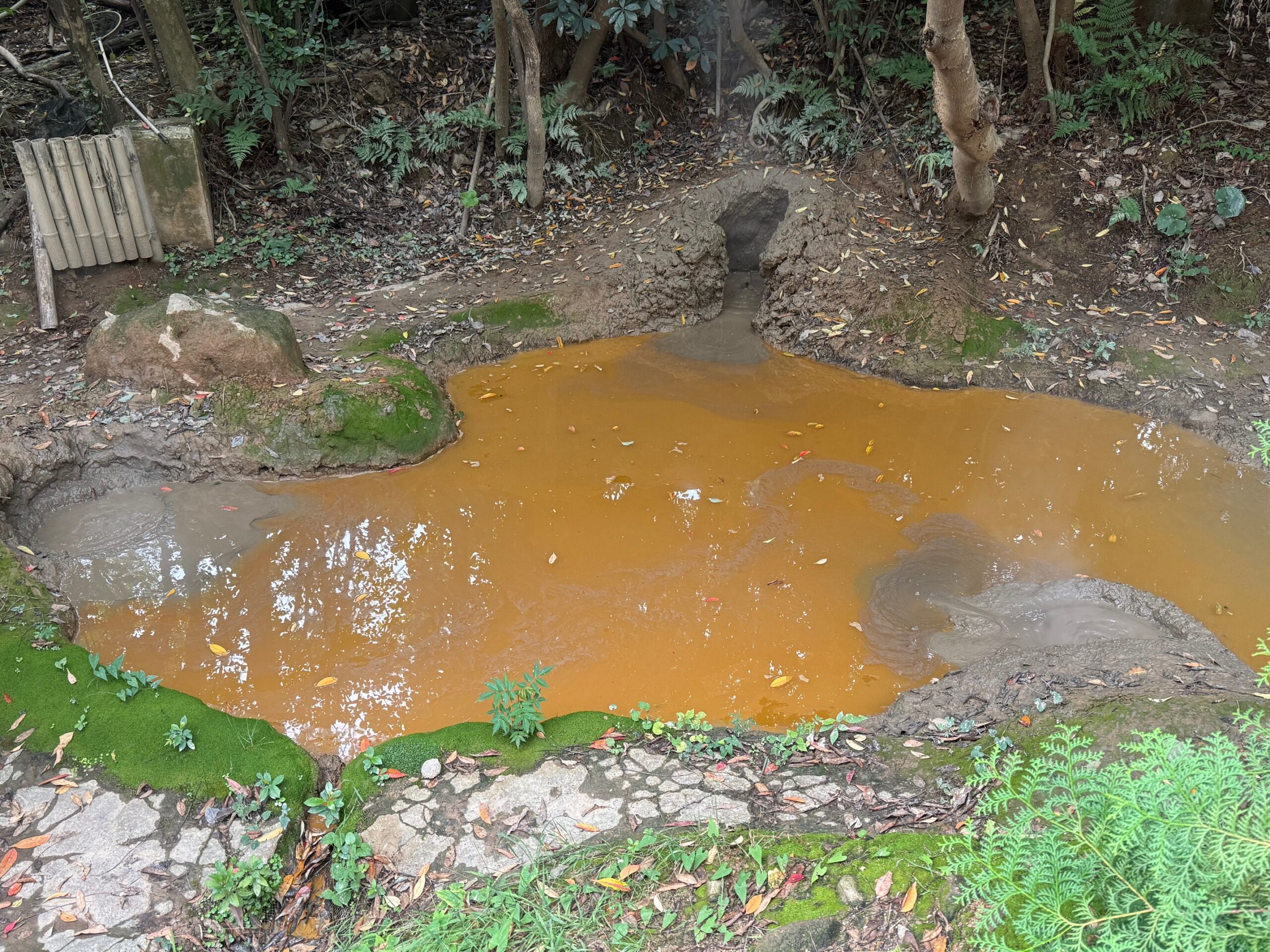
At first glance,
it almost looks like a simple brown pond.
But once you see all the steam rising from the surface,
it becomes a much more unusual sight.
Kamado Jigoku Area 3|A Beautiful Milky Blue Pond
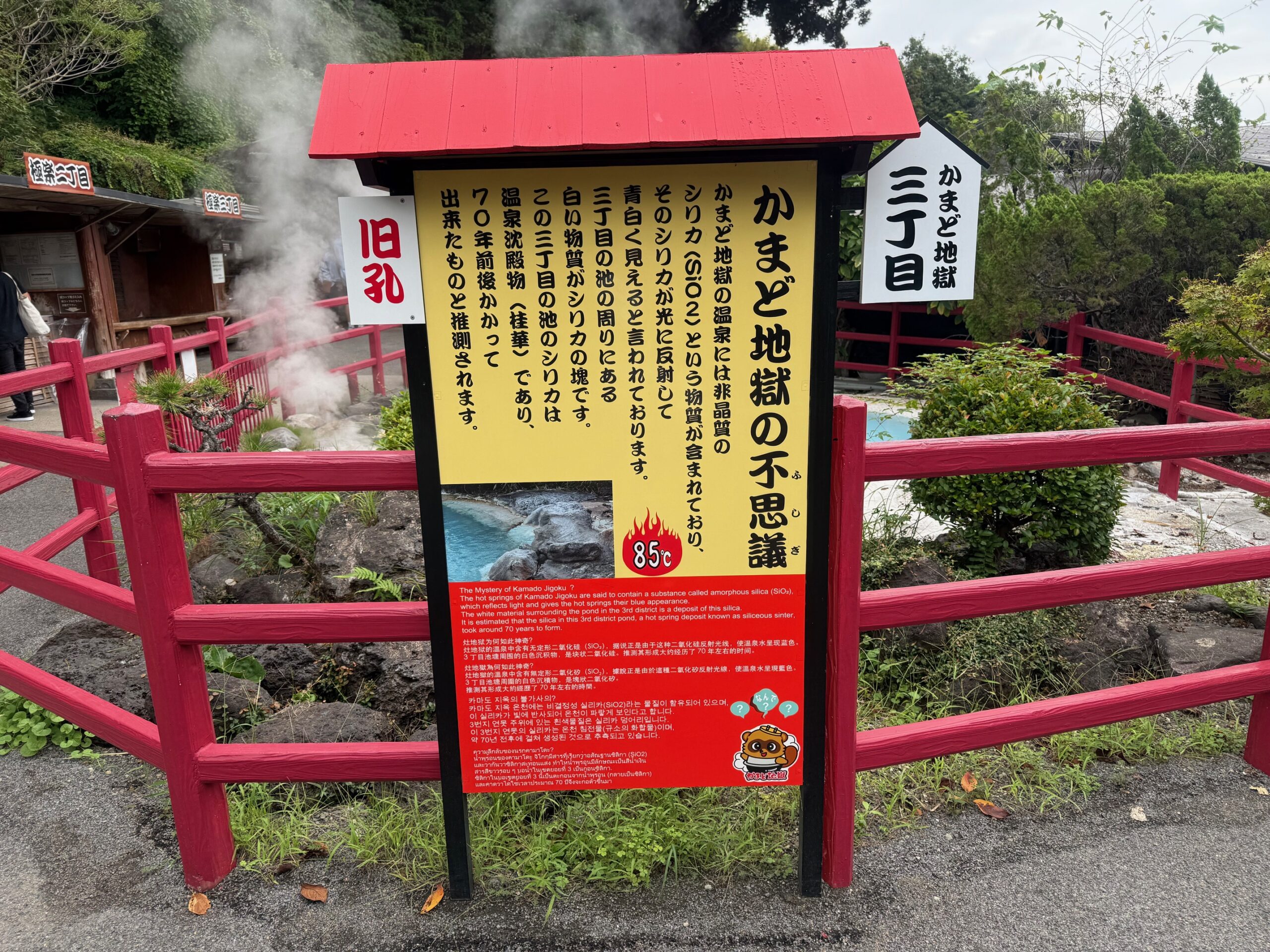
Next,
we visited Area 3.
This pond was a beautiful
milky blue
and looked even more vivid depending on the light.
The water temperature is approximately
85°C.
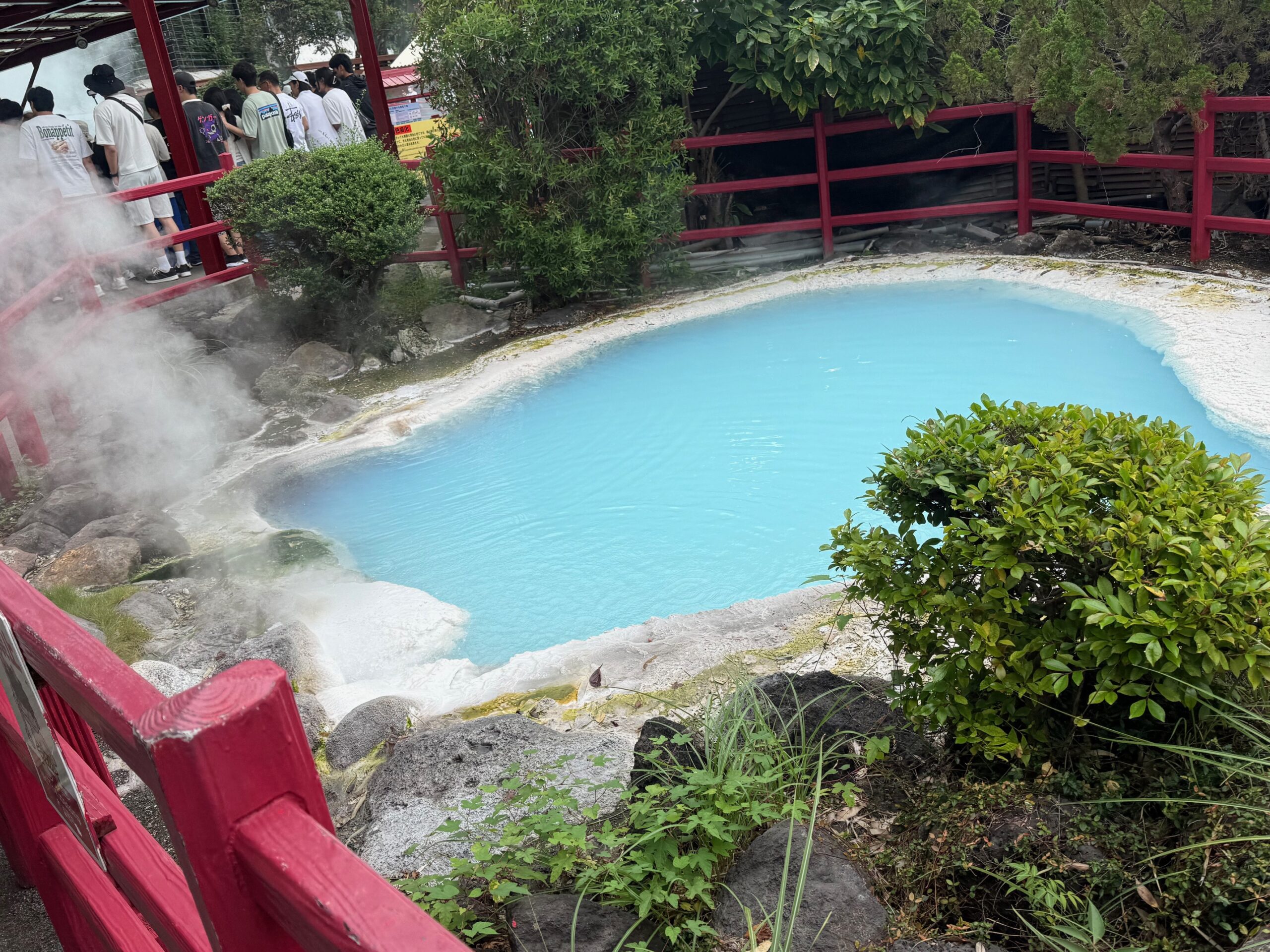
The contrast between the pale white edge
and clear blue water
was especially beautiful.
For me,
this was one of the most photogenic spots at Kamado Jigoku.
There are also information boards explaining the different geothermal features,
which makes the visit more interesting.
A Popular Photo Spot with the Demon Statue
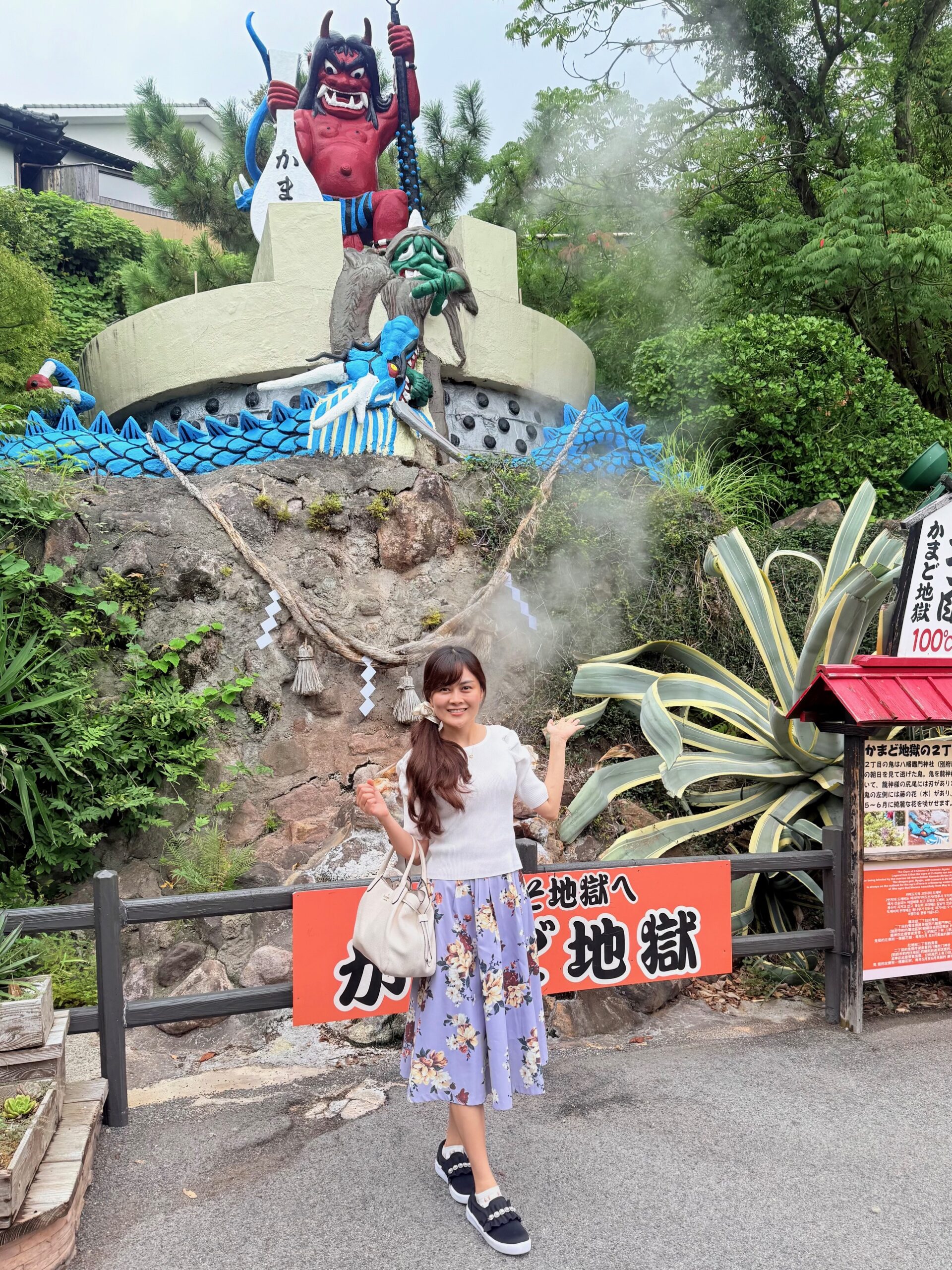
Near the entrance,
there is a large demon statue
that makes a fun photo spot.
If you take your photo while the steam is rising behind you,
it creates a very Beppu-like souvenir picture.
Trying the Drinkable Hot Spring Water
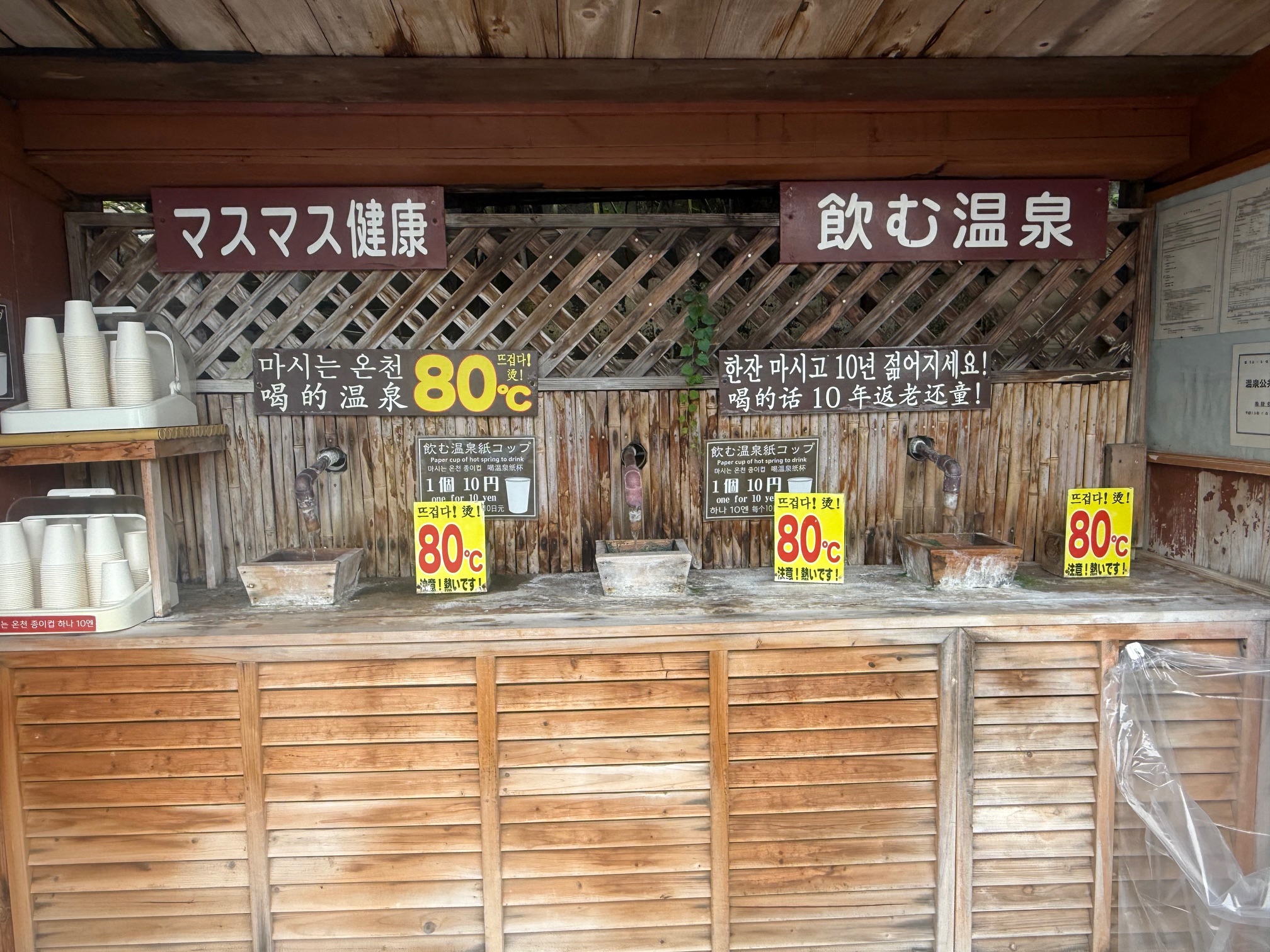
Kamado Jigoku also had
a small area where visitors could try
hot spring water for drinking.
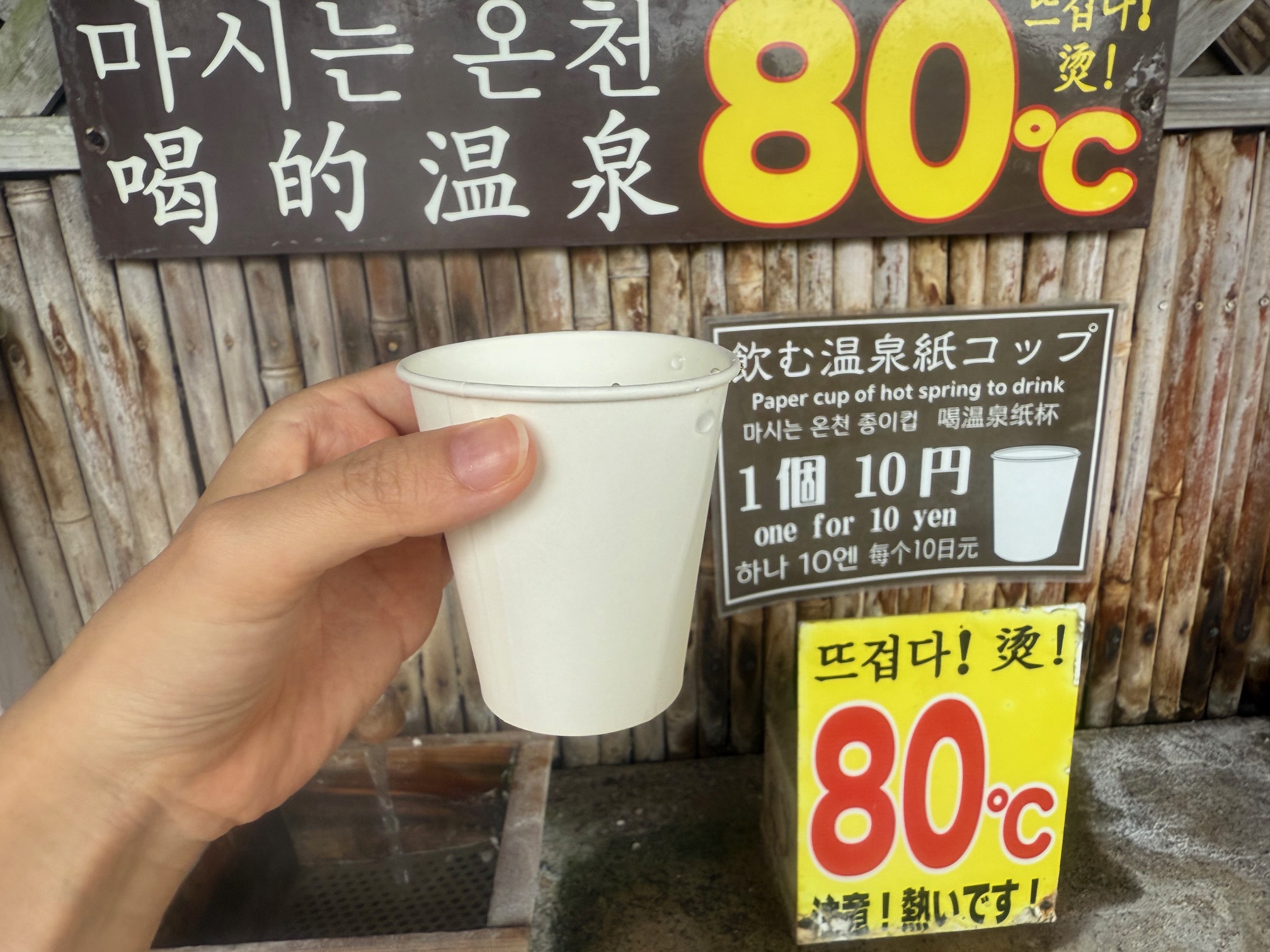
When we visited,
a paper cup cost
¥10.
I decided to try it.
There was a warning that the water was around
80°C,
and it really was hot.
As for the taste?
It was salty!
It was definitely one of the more unusual experiences during our visit.
※Only drink the water in designated areas and follow the instructions on site.
Steam Inhalation Experience at Kamado Jigoku
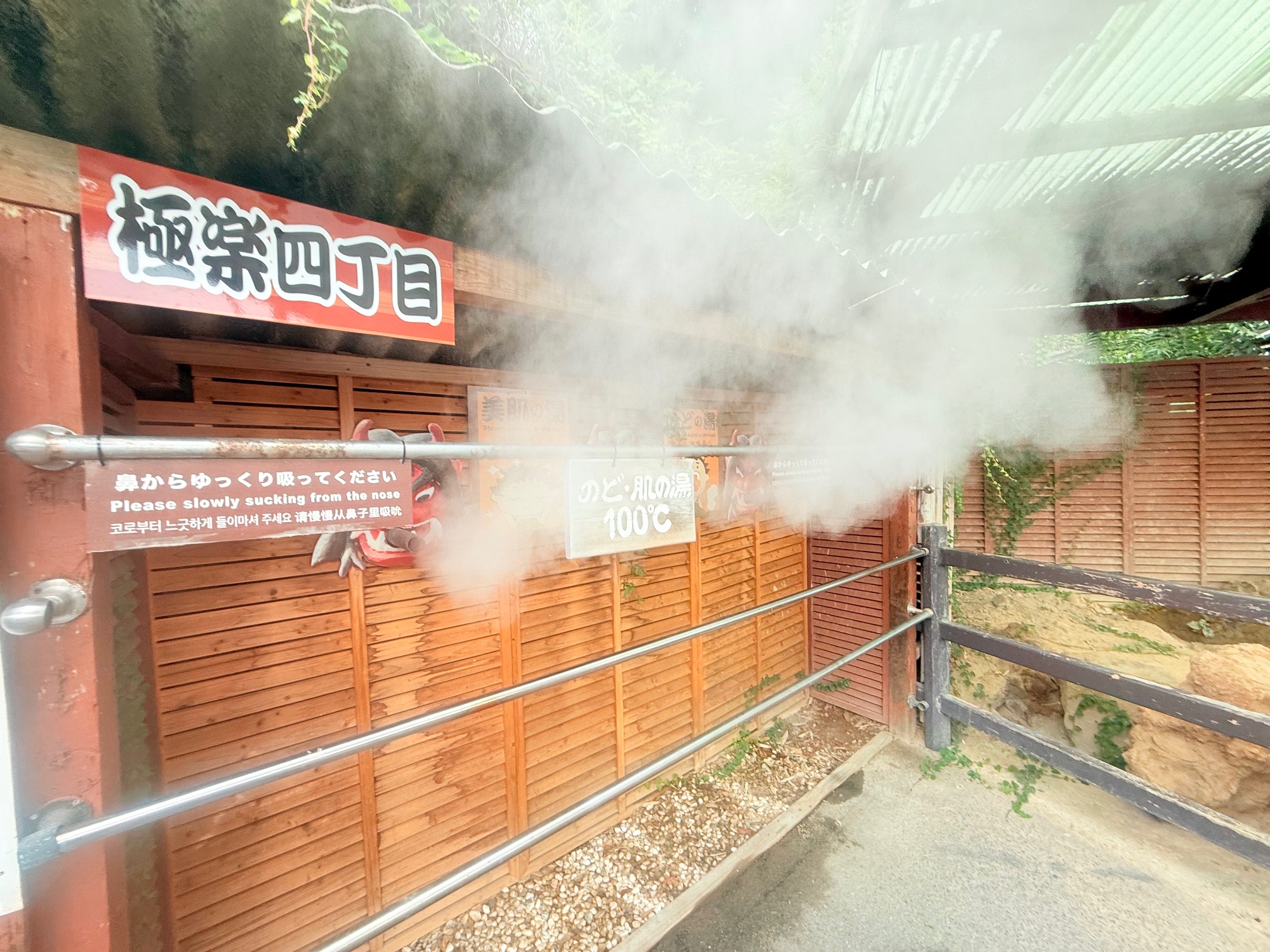
At another area,
white geothermal steam rises strongly from the ground.
Visitors can experience
breathing in the warm steam from a safe distance.
The steam comes from extremely hot spring water,
so it is important to follow the instructions
and avoid getting too close.
I tried taking a gentle breath
and found the warm steam surprisingly soothing.
※The steam is very hot. Keep the recommended distance and limit the experience to a short time.
Kamado Jigoku Area 5|A Pond That Changes Color
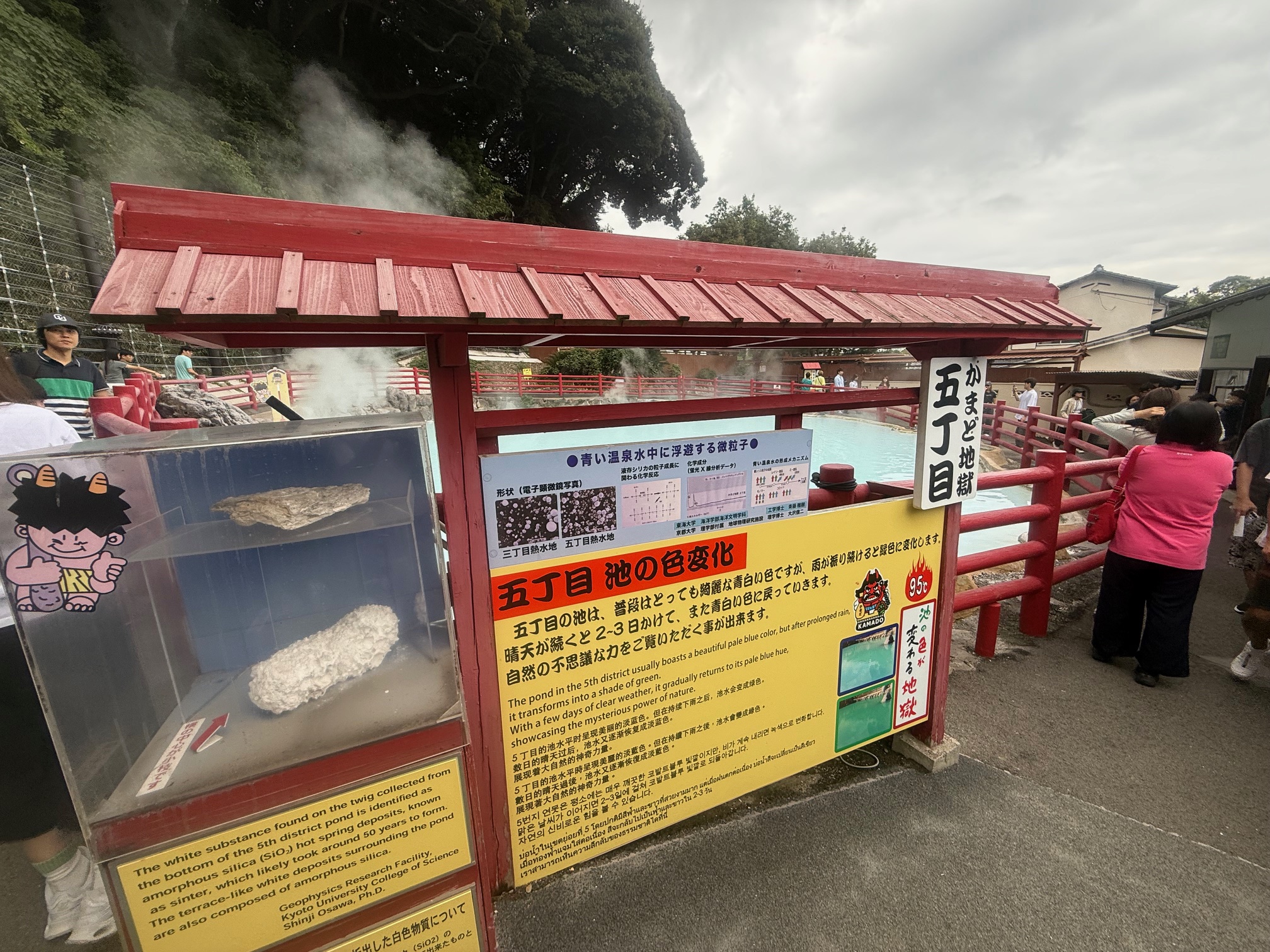
Next was
Kamado Jigoku Area 5.
The pond can appear different colors depending on weather and other conditions.
After rainy periods,
it may look greener,
while during clearer weather
it can appear pale blue or whitish.
It was cloudy on the day we visited,
but the water still looked
soft blue-white and milky.
The red railings created a beautiful contrast,
especially with the steam floating across the pond.
The color is influenced by minerals such as silica
and the way light reflects through the water.
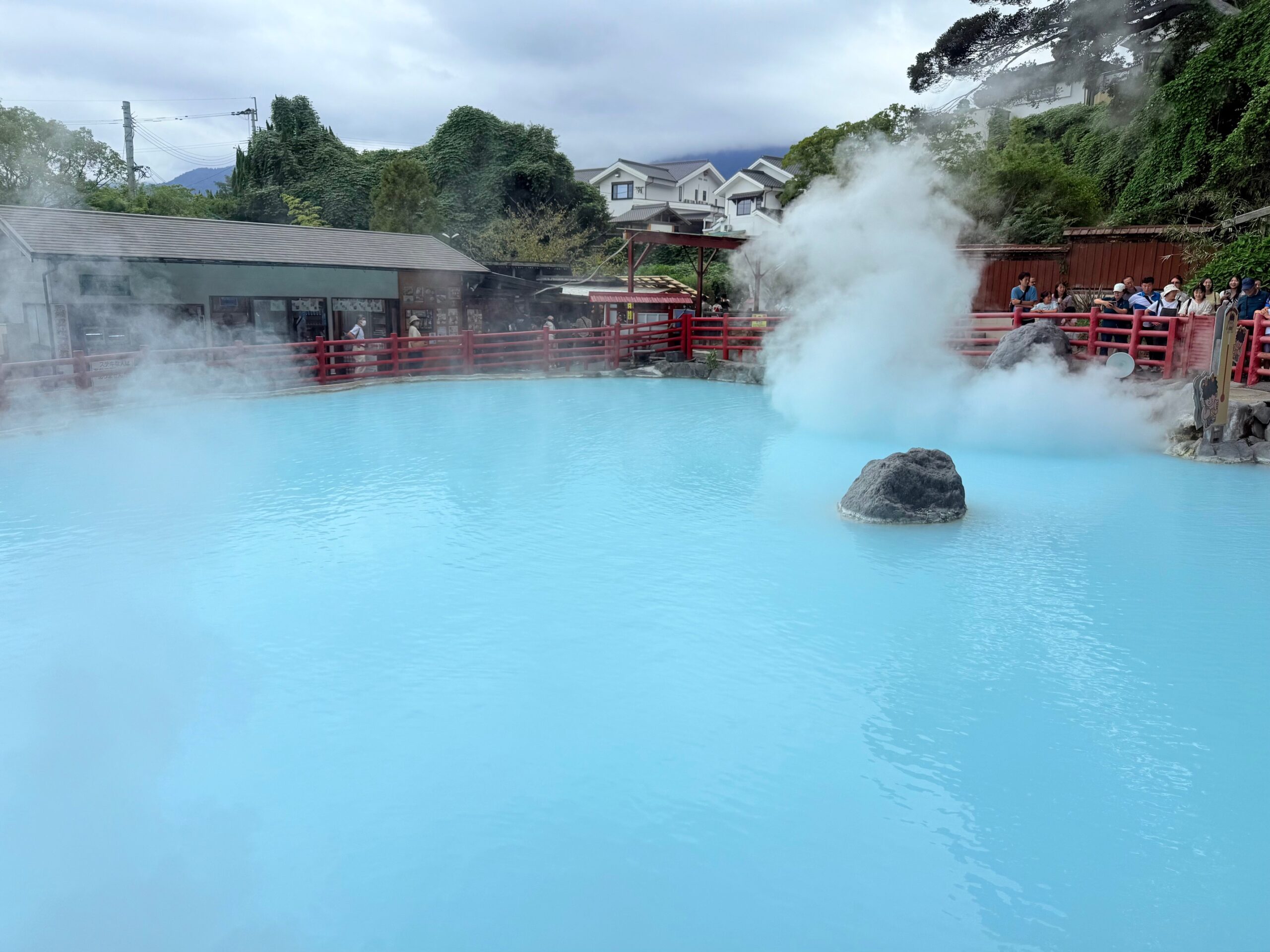
I especially loved the color of this pond.
Kamado Jigoku Area 6|A Dramatic Reddish-Brown Hell
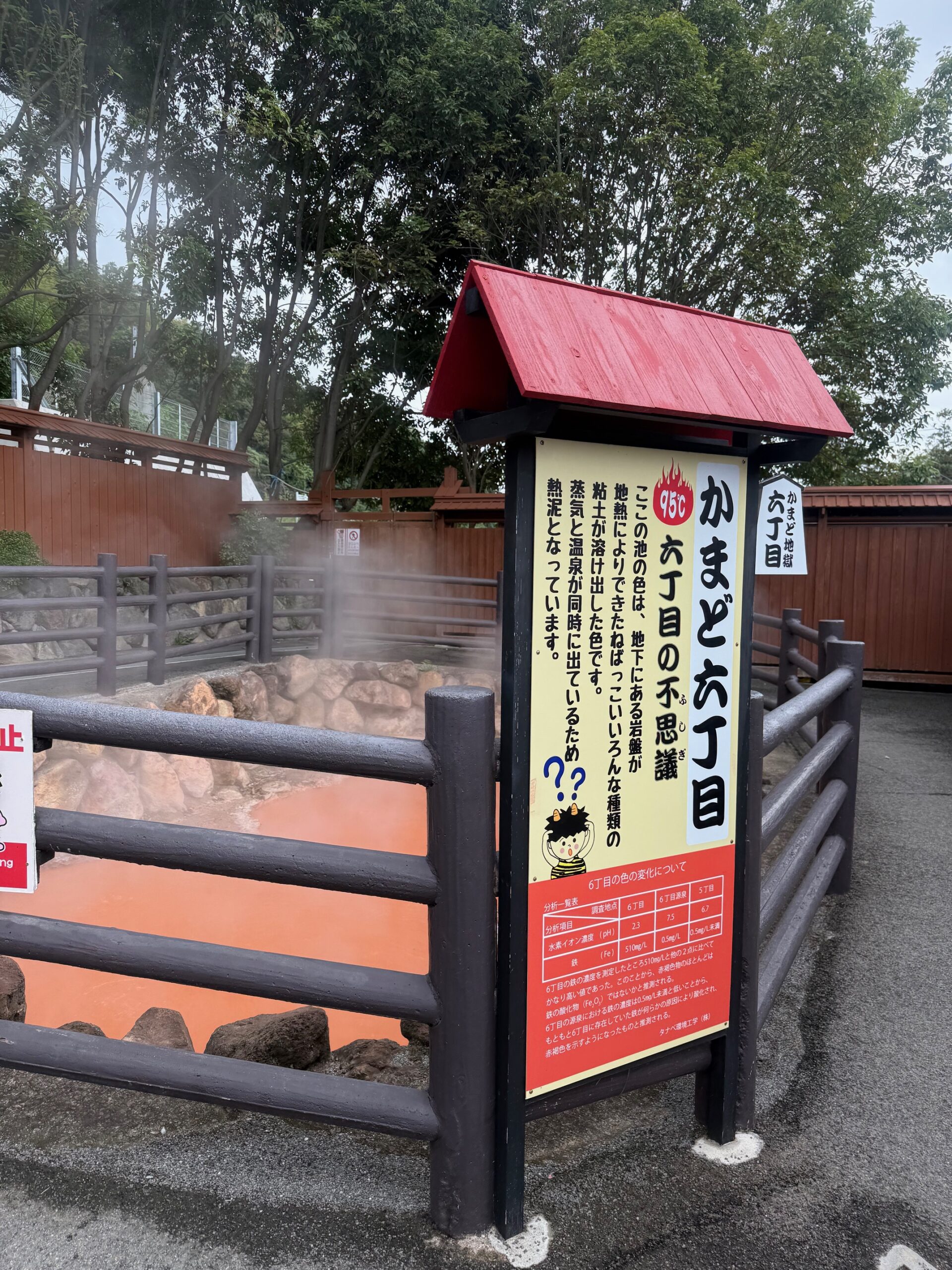
Our final stop inside Kamado Jigoku was
Area 6.
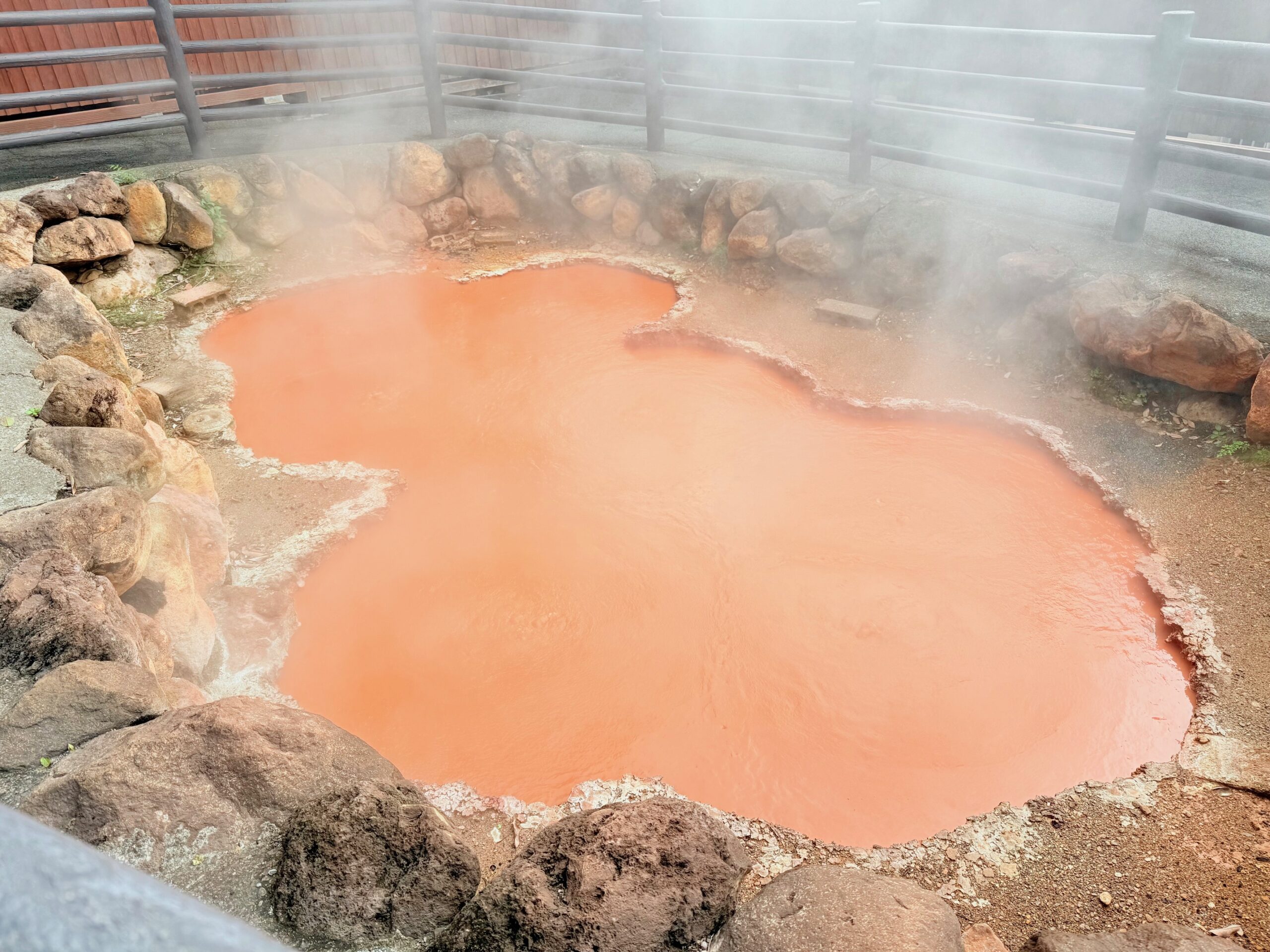
The pond is reddish brown,
with hot steam rising continuously from the surface.
The dramatic color comes from underground clay,
iron,
and other mineral components.
The deep red color really matched
the image of a Japanese “hell.”
Oniyama Jigoku|A Hell Filled with Crocodiles
After Kamado Jigoku,
we continued to
Oniyama Jigoku,
also known for its crocodiles.
As soon as we entered,
we saw many large crocodiles.
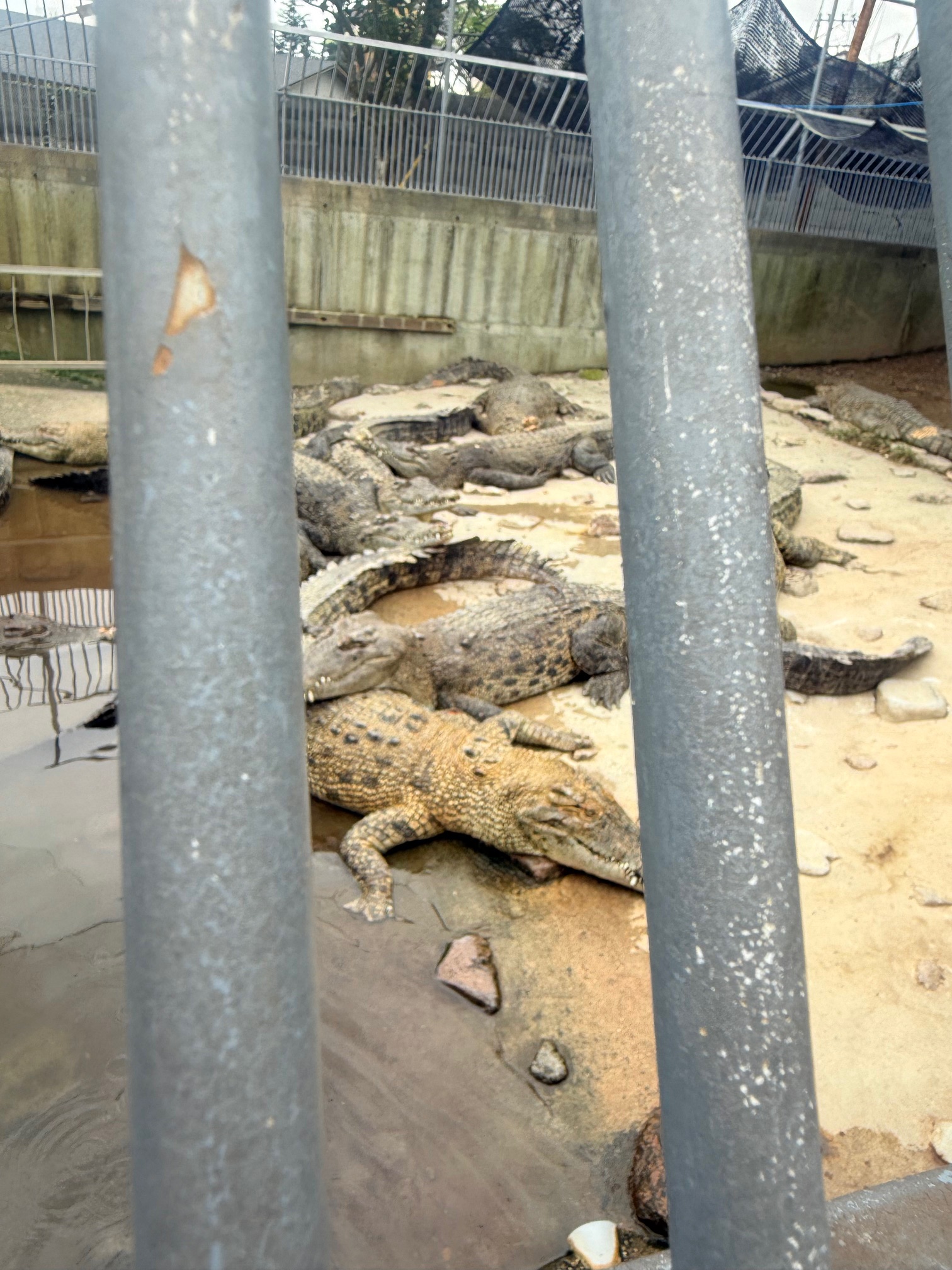
Geothermal heat is used to help maintain a warm environment
for the crocodiles.
Many of them looked surprisingly relaxed.
Some were lying close together,
while others were resting in the water.
Of course,
they are still powerful animals,
so always stay behind the safety barriers
and follow the facility rules.
A zoom lens is more than enough for photos.
A Small Spiritual Stop Near the Beppu Hells
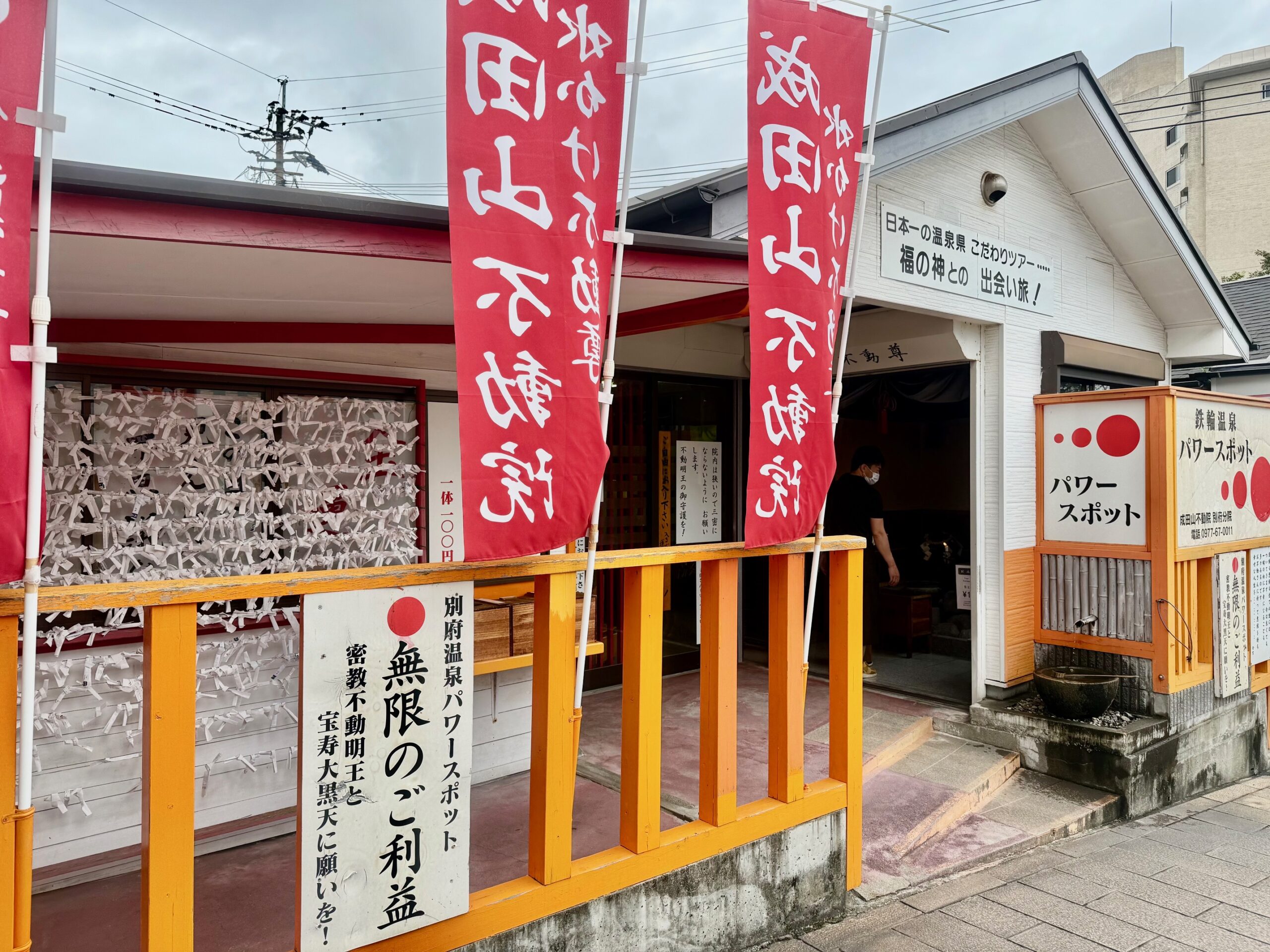
Within walking distance of the hells,
we also found a small place of worship.
We stopped to pray for
safe travels,
good health,
and good relationships.
There were also omikuji fortune slips,
goshuin stamps,
and ema wooden prayer plaques.
I chose not to take photos inside the sacred area.
After walking through Beppu’s steamy streets,
it was a peaceful little stop.
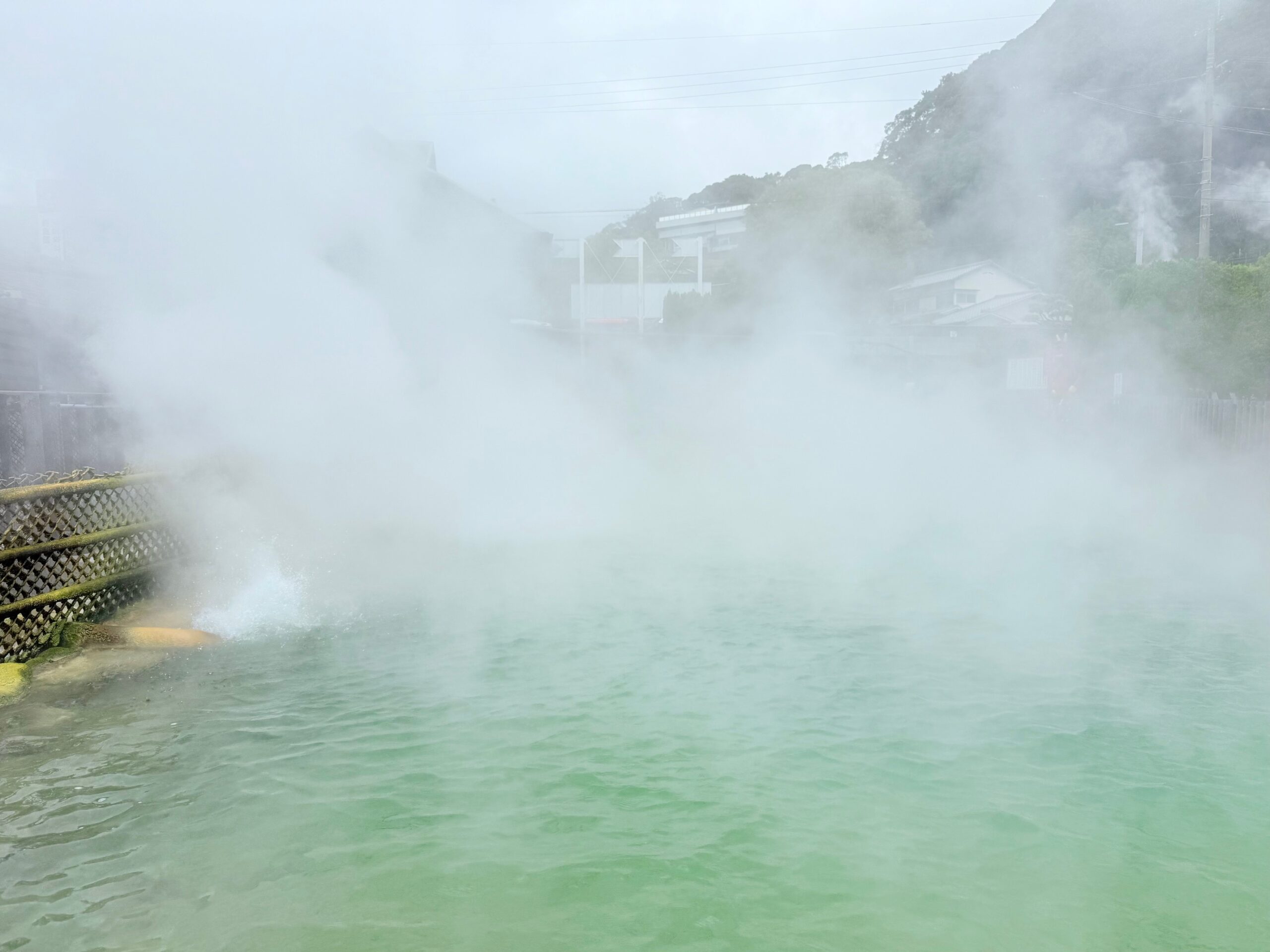
Shiraike Jigoku|A Mint-Green Hot Spring in a Japanese Garden
Next,
we visited
Shiraike Jigoku.
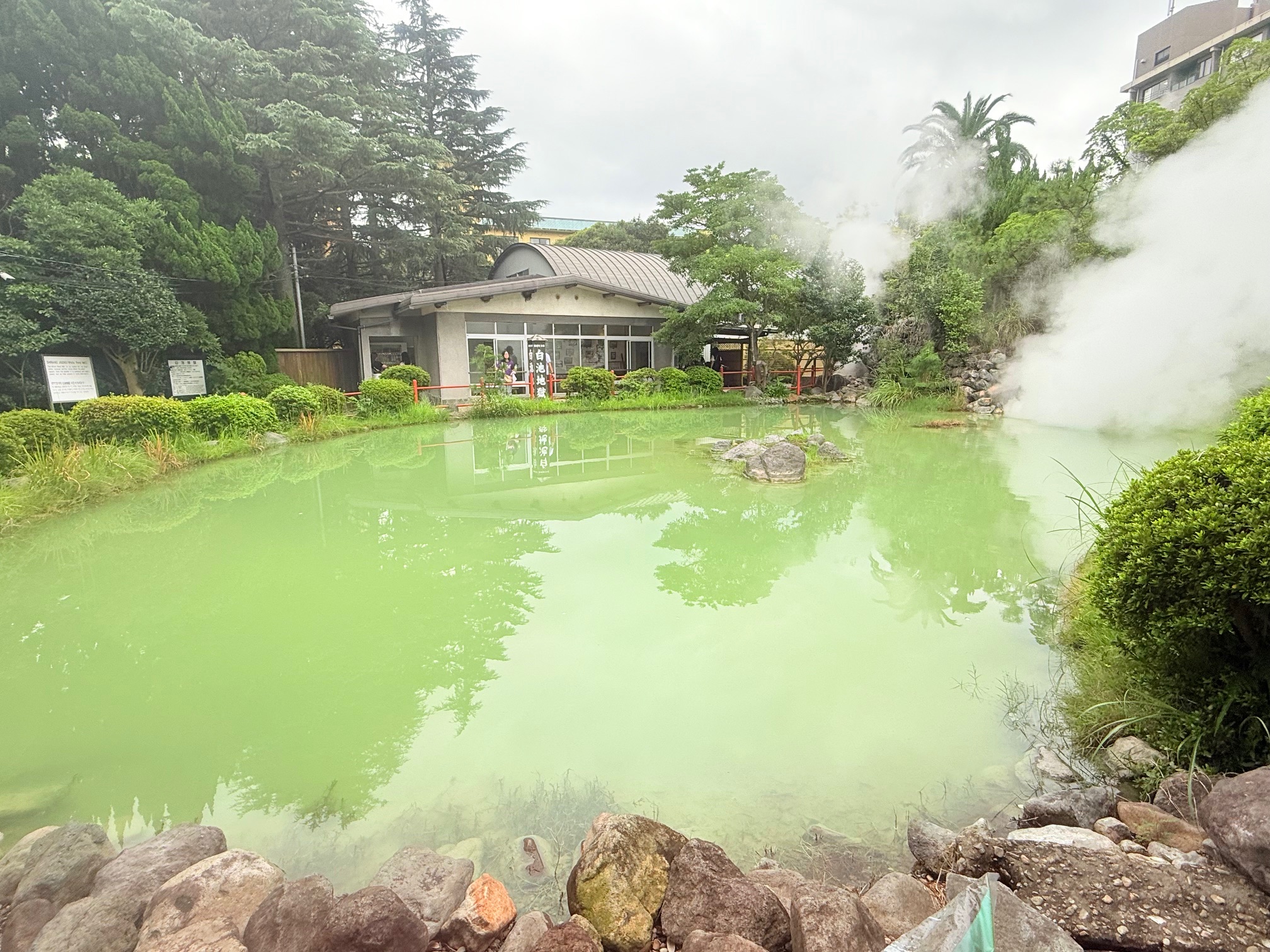
Inside the Japanese-style garden,
a large pale green hot spring spreads out in front of you.
Compared with the previous hells,
the color looked especially soft and green.
The exact appearance of the water can vary
depending on minerals and weather conditions.
On the day we visited,
it had a beautiful mint-green tone.
The red bridge,
surrounding trees,
and green water made it especially photogenic.
Why Are There Tropical Fish at Shiraike Jigoku?
Inside Shiraike Jigoku,
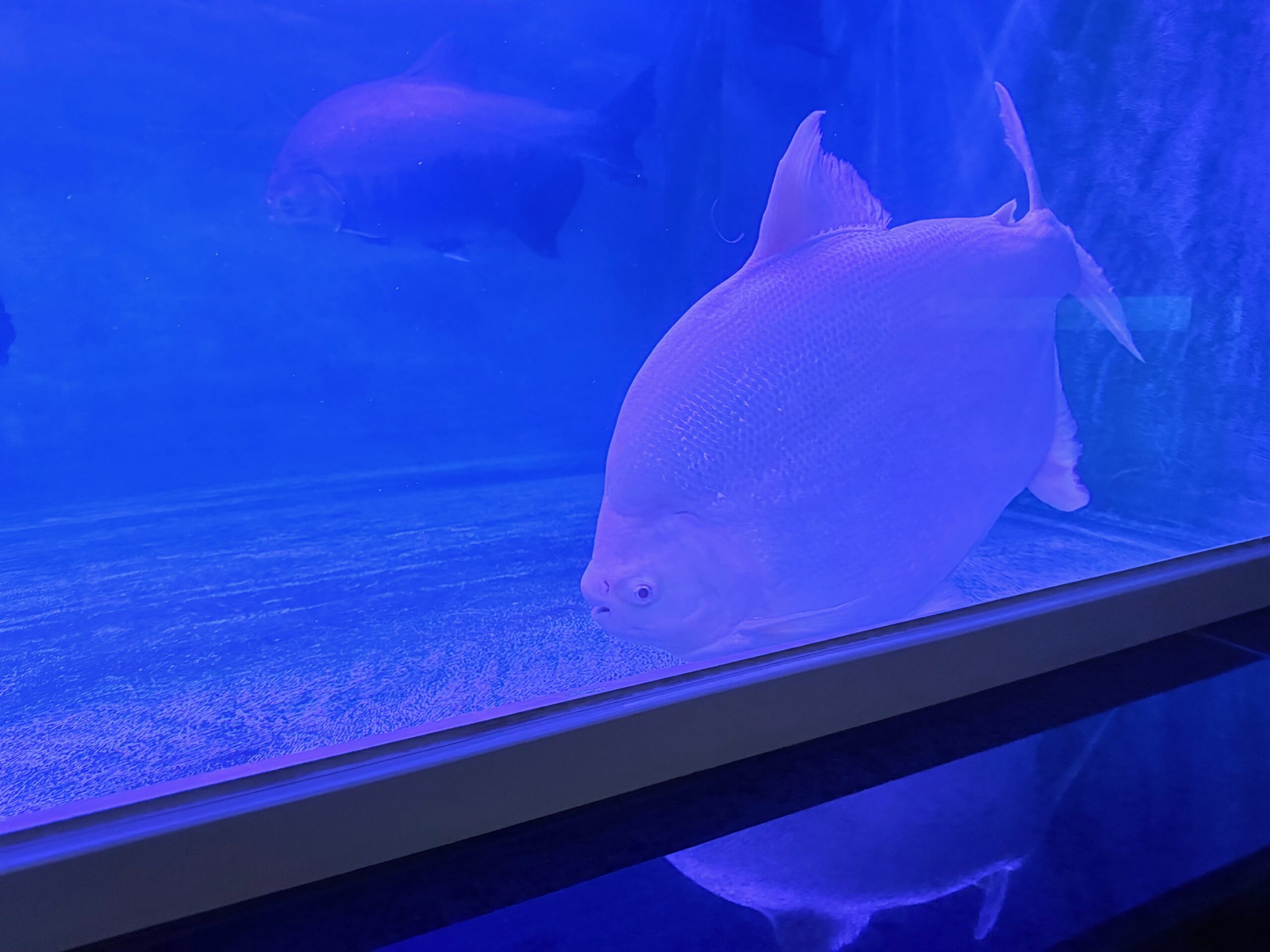
there is also an aquarium area
where tropical fish are displayed.
The warm environment makes use of geothermal heat,
which is a very Beppu-like feature.
After spending time around the hot steaming ponds,
the softly lit aquarium
felt like a relaxing change of pace.
Each hell had its own character,
which made the experience much more interesting than I expected.
▶Find hotels near the Beppu Hells on Rakuten Travel
▶Check Beppu Hells advance tickets on KKday
Take a Break at the Beppu Jigoku Onsen Museum
On the way toward Shiraike Jigoku,
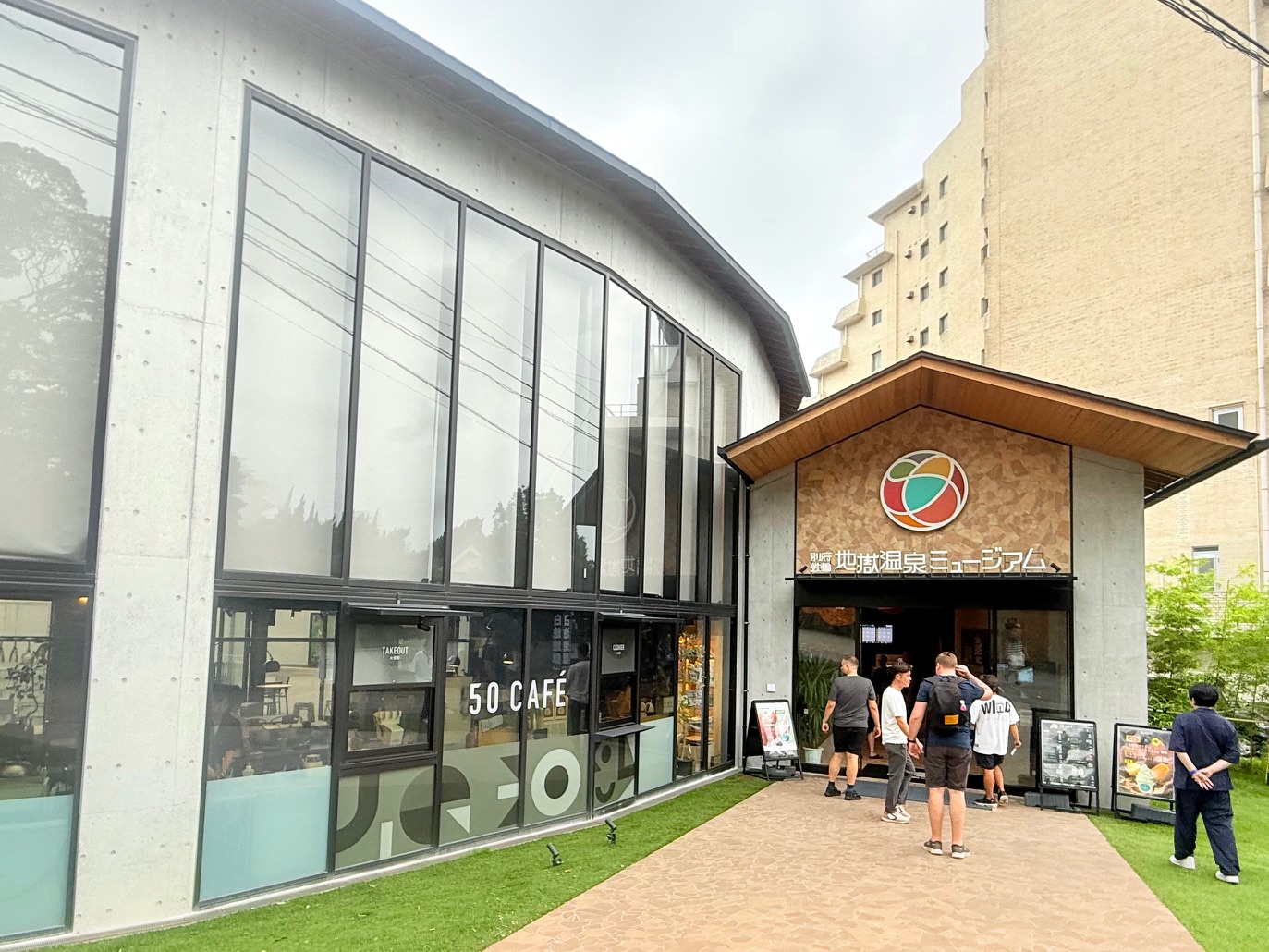
you will also find the
Beppu Jigoku Onsen Museum.
It is an interactive museum where visitors can learn
how Beppu’s hot springs are formed.
Exhibits and videos explain
geothermal activity,
the history of the area,
and the hot spring system.
There are also interactive experiences and AR elements.
The building is modern and clean,
with a café and shop inside.
We were getting tired,
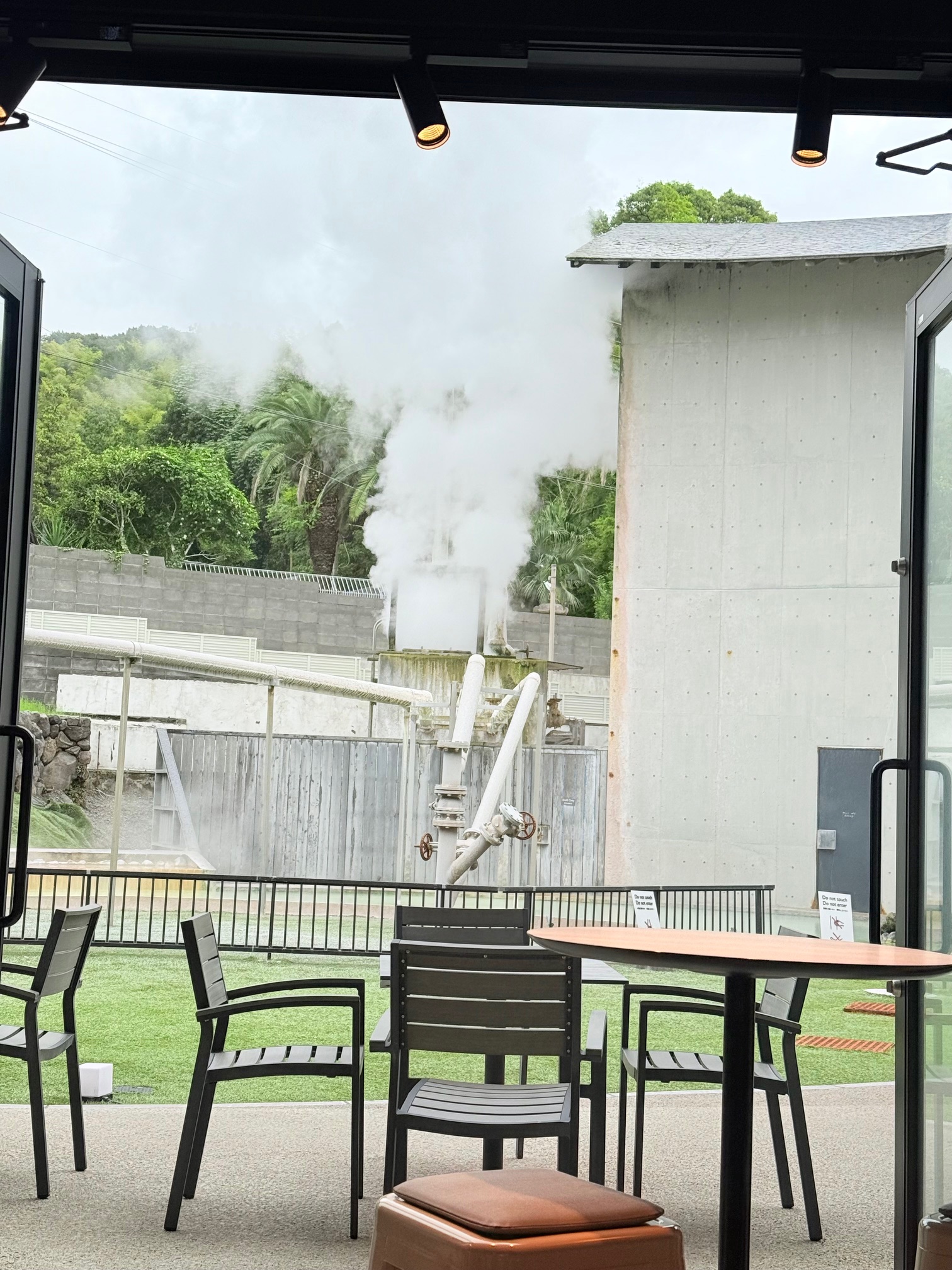
so we stopped at the café for a break.
Being able to sit down with a coffee
while looking out at the steam
was very relaxing.
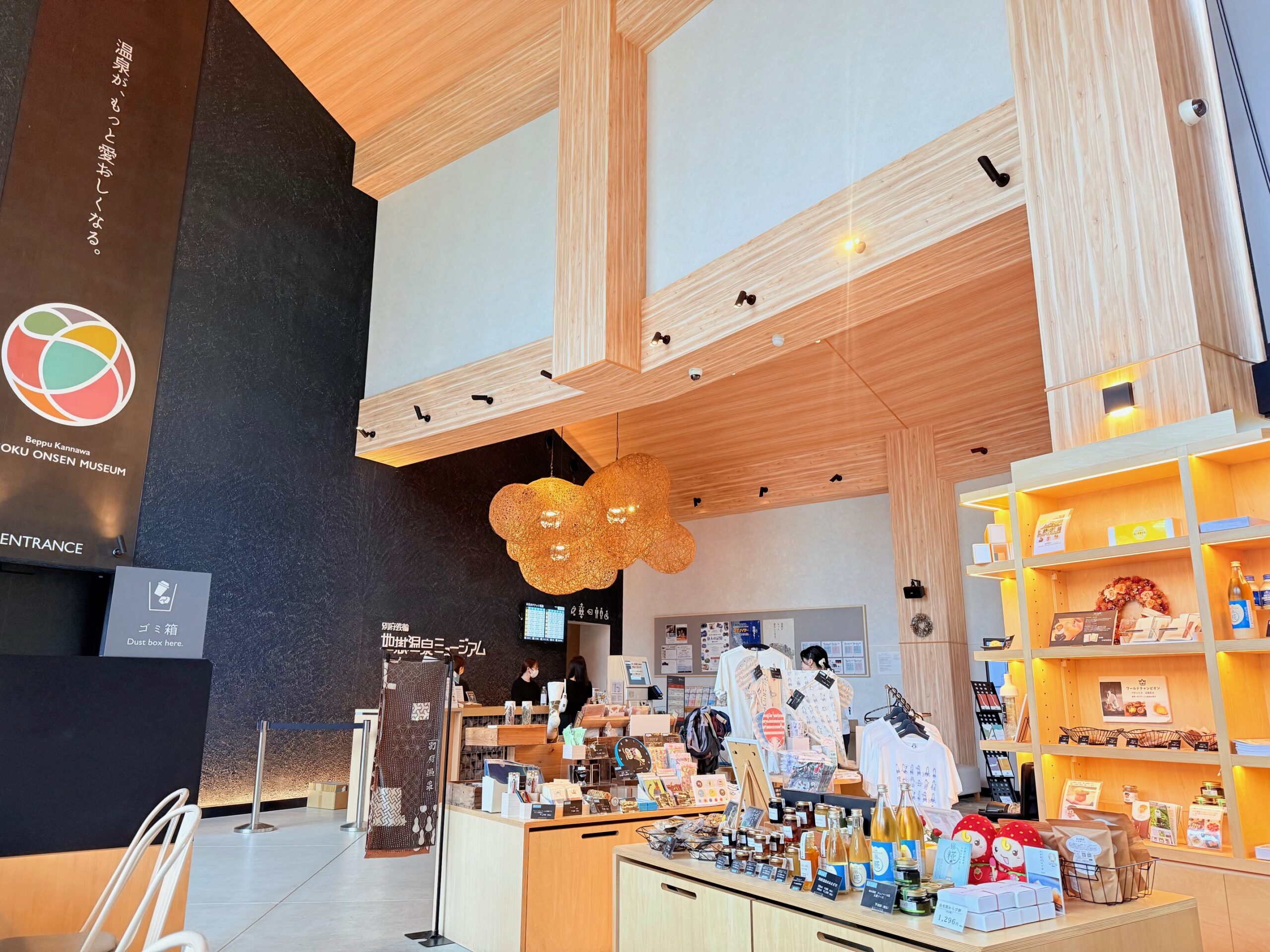
There is also a souvenir shop.
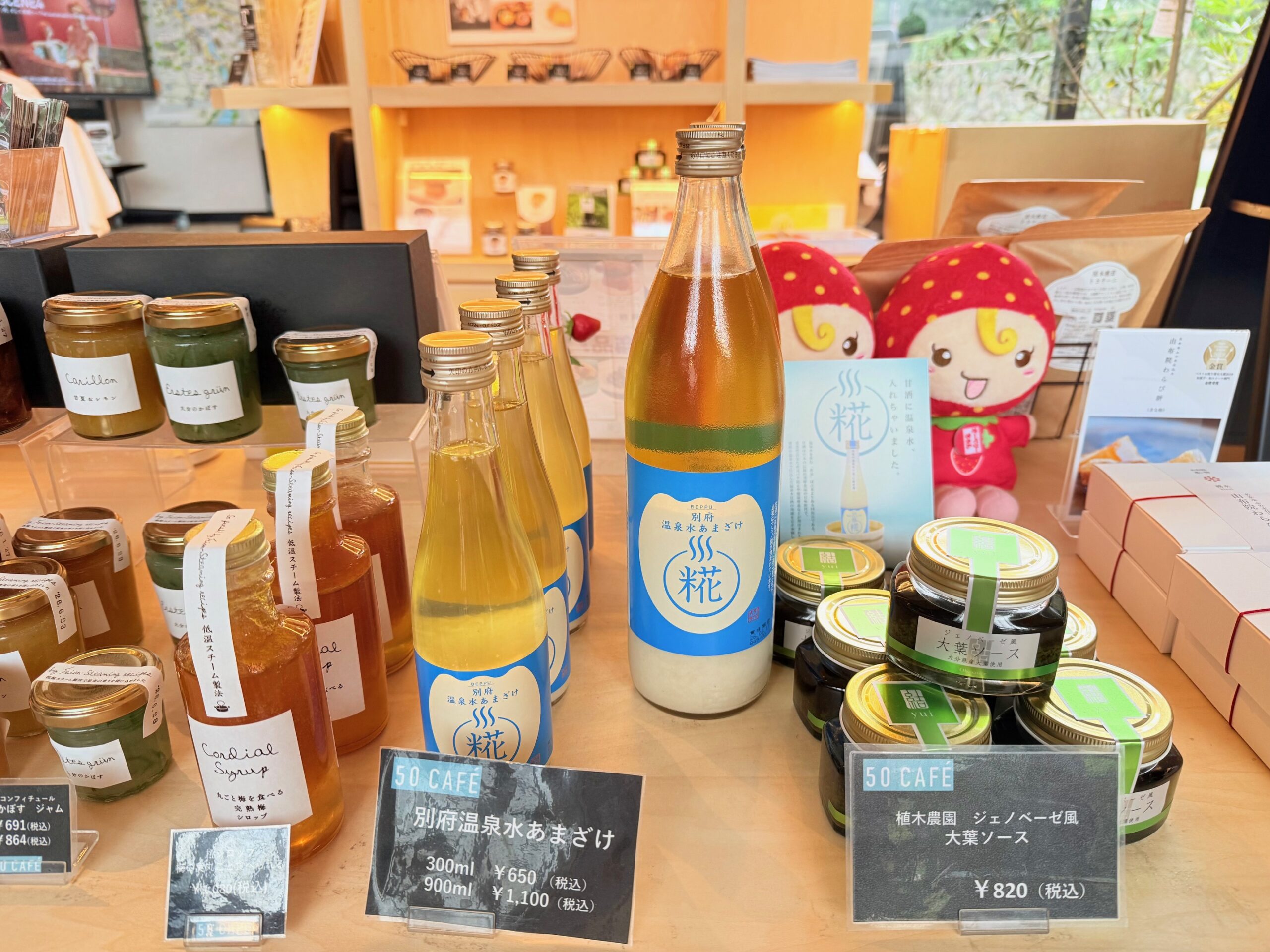
When we visited,
we found unusual products such as
amazake made with hot spring water
and kabosu citrus jam.
I had not seen the Beppu hot spring water amazake elsewhere,
so it was an interesting souvenir to find here.
Beppu Hells Tour Without a Car|Our Final Thoughts
Traveling from
Oita Station to Beppu by train,
then using local buses to visit
Okamotoya Shop and the Beppu Hells
was much easier than we expected.
At Kamado Jigoku,
we saw brown,
milky blue,
and reddish hot spring ponds,
as well as unusual experiences such as
drinkable hot spring water
and geothermal steam.
At Oniyama Jigoku,
the large number of crocodiles was unforgettable.
At Shiraike Jigoku,
the mint-green water and Japanese garden created a completely different atmosphere.
The Beppu Jigoku Onsen Museum was also a useful place
to take a break,
have coffee,
and browse souvenirs.
Beppu is relatively easy to explore by public transportation,
so you do not necessarily need a rental car.
Comfortable walking shoes
and plenty of water
will make the day easier.
For travelers in their 60s,
it is also nice that you can choose only a few hells
instead of trying to complete all seven in one day.
We visited
Kamado Jigoku, Oniyama Jigoku, and Shiraike Jigoku
and still felt that the experience was very satisfying.
A local taxi driver later recommended
Umi Jigoku and Chinoike Jigoku
as well,
so those are on our list for our next visit.
Staying near the Beppu Hells can make sightseeing easier,
especially if you want to visit several of the seven hells.
▶Find hotels near the Beppu Hells on Rakuten Travel
▶Find hotels near the Beppu Hells on Rakuten Travel
Advance tickets for the Beppu Hells are also available.